Could Prior Pilot Warnings Have Prevented the Fatal Runway Collision at LaGuardia Airport?
LaGuardia runway crash on March 23, 2026 killed two pilots and injured 41, as NTSB probes clearances and vehicle controls.
Ayla Demirhan ·
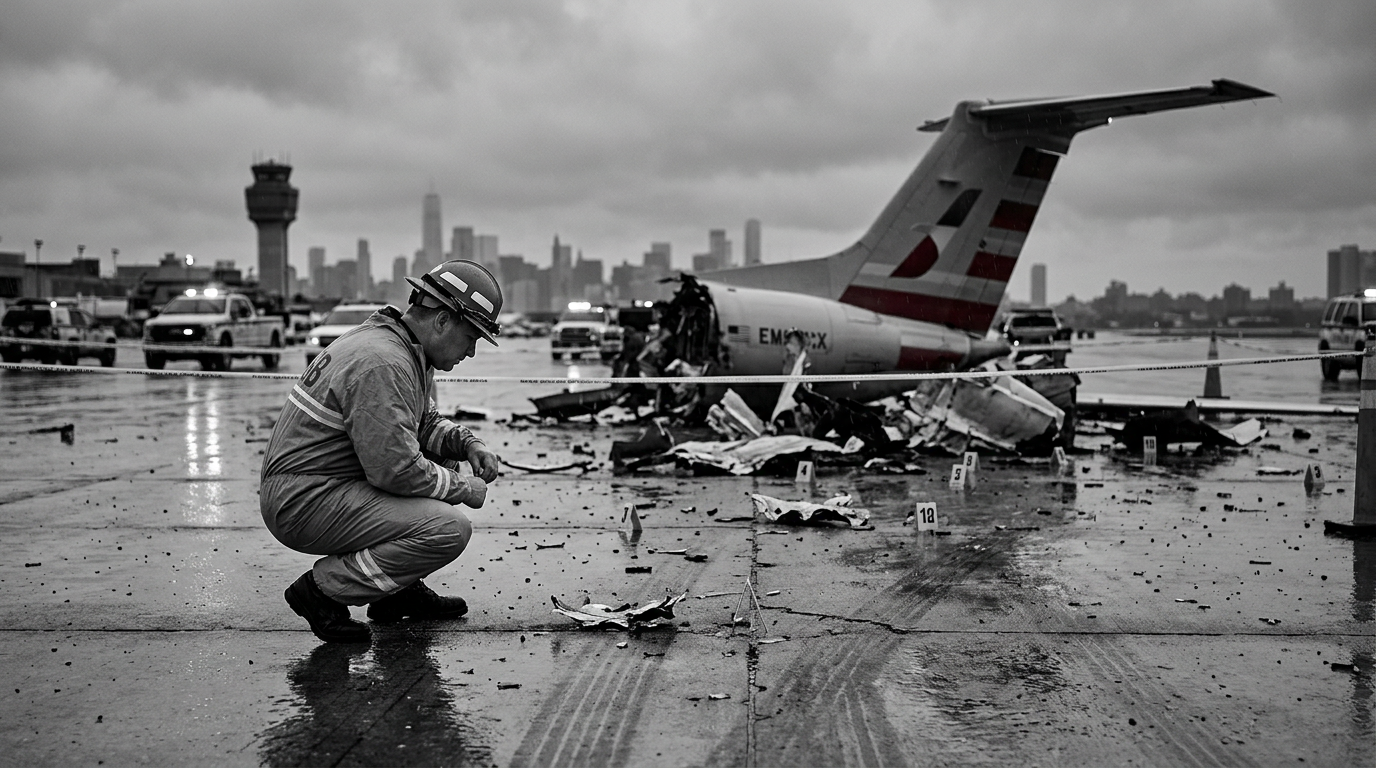
An Air Canada Express aircraft struck a Port Authority fire truck at New York’s LaGuardia Airport on March 23, 2026, shortly after the plane touched down. Two pilots died and 41 other people were hurt, setting off a federal investigation focused on how runway and vehicle movements were managed.
The aircraft involved was Air Canada Express Flight 646, which had arrived from Montreal. Flight data recorders have been recovered, and investigators are working to reconstruct the sequence of events from physical evidence and recorded data.
What is known so far
Reports described the fire truck as having been cleared to cross the runway shortly before the collision. Initial accounts also said an air traffic controller tried to stop the vehicle after first authorizing it to proceed.
Investigative reports further stated that the controller later said he had been handling an earlier emergency and “messed up.” The available information does not specify the timing of each transmission, the exact runway involved, or the precise location of the truck at the moment the landing aircraft rolled out.
Investigation scope and next steps
The National Transportation Safety Board has opened an investigation and is examining the crash site while analyzing the recovered recorder data. Investigators are expected to review runway clearances, vehicle movement controls, and the communications chain between the tower and airfield vehicles.
Any interim safety recommendations could apply to LaGuardia’s procedures and may also influence practices at other US airports, depending on what the evidence shows. The NTSB has not released findings in the material provided, and the causes remain undetermined at this stage.
Prior safety reports add context
The runway collision comes after months of pilot-submitted safety reports describing operational pressure at LaGuardia. Those filings, logged in NASA’s Aviation Safety Reporting System, cited heavy traffic and alleged instances where controllers did not provide sufficient guidance.
Pilots also described multiple near-miss situations involving aircraft at the airport. One report from the previous summer warned that the pace of operations was increasing and said controllers were “pushing the line,” while drawing a comparison to a fatal mid-air collision over the Potomac River in January 2025.
System strain and policy relevance
The incident has intensified attention on operational strain across US airports, with the source material linking that strain to air traffic controller staffing shortages and aging equipment in the national air traffic control system. While those factors are presented as context rather than confirmed causes of this crash, they frame why the investigation’s conclusions could carry broader policy weight.
For airlines, airports, and regulators, the immediate issue is whether runway-crossing permissions and stop instructions were issued in a way that maintained safe separation between an arriving aircraft and an airfield vehicle. For passengers and carriers operating in congested hubs, the longer-term question is whether staffing levels and modernization plans will be accelerated following the NTSB’s work.