Kevin Warsh joins central bankers at ECB Sintra summit
The ECB Sintra symposium convenes global central bankers as euro-area inflation, China PMIs and the US jobs report test the outlook for rate decisions.
Atlas Newsdesk ·
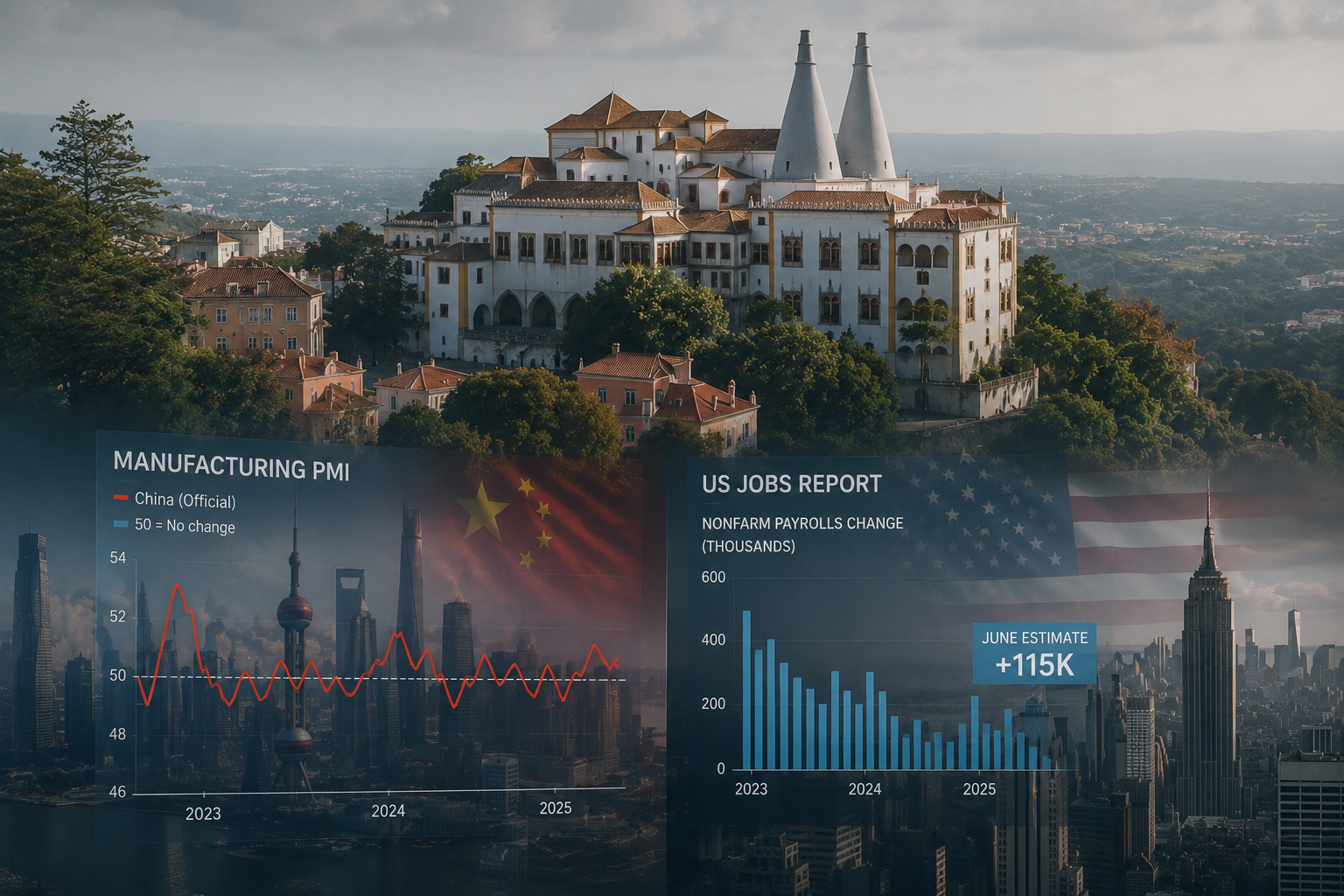
The ECB Sintra symposium is set to bring central bank leaders together as key inflation, manufacturing and labor-market releases shape expectations for interest-rate moves.
Former Federal Reserve official Kevin Warsh is expected to join counterparts at the European Central Bank’s annual gathering in Sintra, Portugal. The meeting arrives as policymakers across major economies weigh whether cooling price pressures and uneven growth justify holding or adjusting policy settings.
Sintra meeting coincides with euro-area inflation signal
European officials will have fresh regional data during the summit, including the final euro-area inflation report released ahead of the ECB’s next policy decision in July. The update is the last comprehensive read on price trends before that meeting, making it a focal point for officials calibrating their stance.
The Sintra conference has become a regular venue where central bankers compare notes on the global economy and communicate priorities to markets. Even when no formal decisions are made, remarks delivered there can influence expectations about the pace and timing of future moves.
With the July ECB decision approaching, the final inflation print may help clarify whether recent disinflation is broad-based and durable enough to support a steady policy path. Investors also tend to watch for differences in tone between European officials and other central banks attending the symposium.
Asia PMI week centers on China’s factory gauge
In Asia, a run of purchasing managers’ index releases is set to provide a near-real-time snapshot of activity at the end of the quarter. The week’s headline in the region is China’s official manufacturing gauge due Tuesday.
That report is expected to edge back into expansionary territory, signaling a modest improvement in factory conditions. A move above the 50 level typically indicates growth in manufacturing activity, while a reading below that threshold points to contraction.
Because China plays an outsized role in regional supply chains, shifts in its manufacturing momentum often feed quickly into expectations for trade, commodities and the health of export-oriented neighbors. Traders and policymakers will be scanning for confirmation that demand is stabilizing rather than slipping further.
US jobs report leads a holiday-shortened week
In the United States, attention is expected to concentrate on the June employment report scheduled for Thursday in a holiday-shortened week. Payroll data remain central to assessing whether the economy is cooling in an orderly way or sustaining growth that could keep inflation pressures alive.
Economists forecast that employers added about 115,000 jobs in June. If realized, that would cap what is described as the strongest first-half hiring performance in nearly two years, reinforcing the view that labor demand, while moderating, is still resilient.
The timing matters for markets because employment conditions can influence how long the Federal Reserve keeps policy restrictive. A print near expectations could support the notion of gradual cooling, while a larger surprise in either direction may reshape assumptions about the path of rates later this year.
Together, the Sintra discussions and the scheduled data flow create a concentrated week for policy signals. Market participants will be watching the combination of euro-area inflation, China’s factory pulse and US hiring for clues on whether major central banks are converging toward patience—or diverging in response to local conditions.