Spain inflation holds at 3.6% despite lower energy costs
Spain inflation stayed at 3.6% in June, beating forecasts and remaining well above the ECB’s 2% target as utility costs rose.
Claire Dubois ·
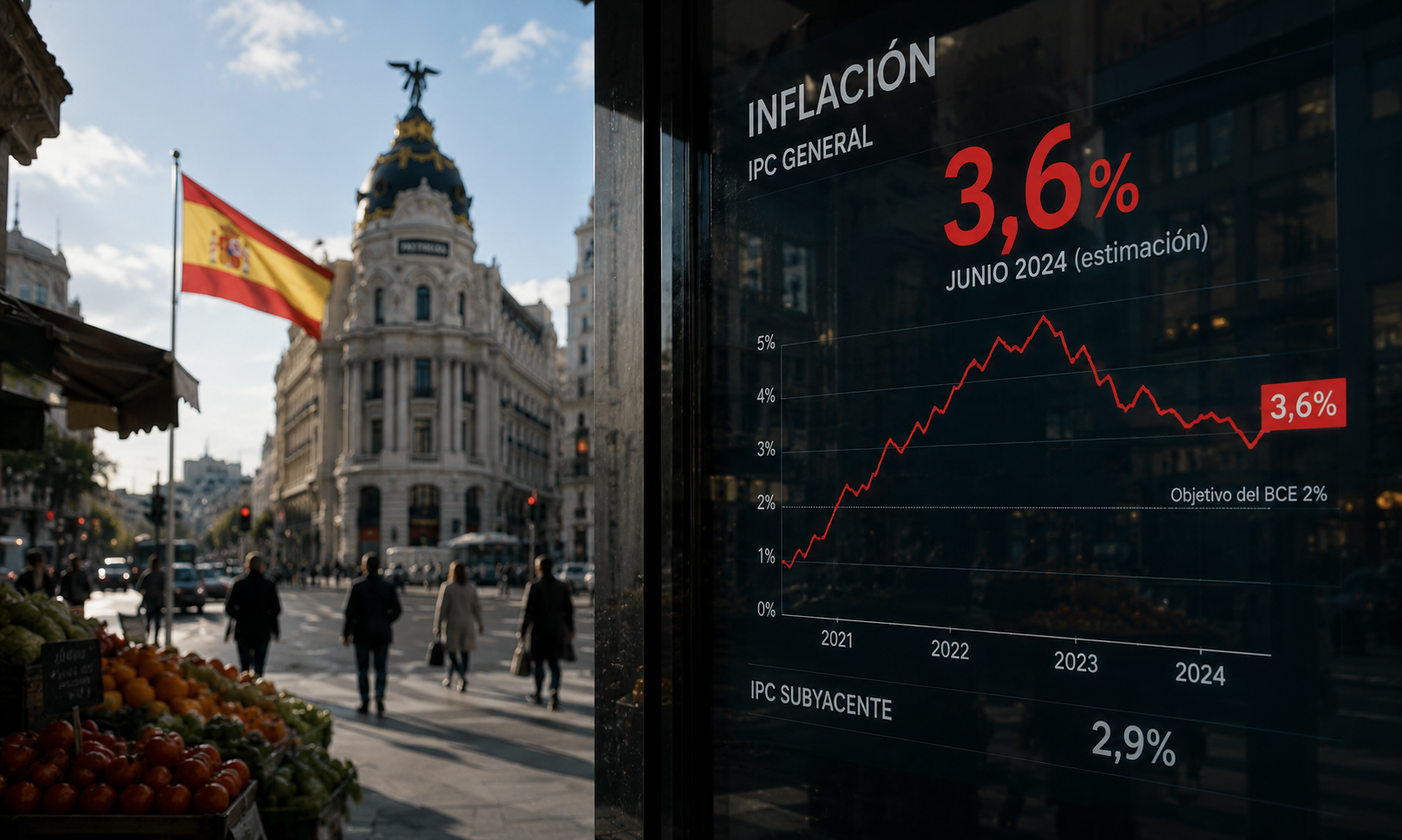
Spain inflation held at 3.6% in June, defying forecasts for a modest slowdown and keeping price growth far above the European Central Bank’s 2% goal.
The preliminary reading, released Monday by Spain’s statistics agency (INE), matched May’s rate. Economists surveyed by Bloomberg had expected the headline figure to ease to 3.4%.
Utility bills offset relief from cheaper fuel
INE pointed to electricity and natural gas as the main sources of upward pressure in June. At the same time, gasoline prices helped limit the overall rise, providing partial relief for households and transport costs.
Spain’s underlying inflation gauge, a national measure that strips out some volatile components, eased to 2.9%. That decline suggests parts of the price basket are cooling even as the headline number remains sticky.
The timing is notable because this is Spain’s first major inflation print since a US-Iran peace agreement that has pushed energy prices lower. Despite that backdrop, the June data indicate that regulated or retail utility costs can keep inflation elevated even when some energy inputs fall.
First major euro-area signal after ECB rate increase
Spain is among the earliest large euro-area economies to publish monthly inflation figures, making it a closely watched indicator for the bloc. Its June result arrives shortly after the ECB increased interest rates for the first time in three years earlier this month.
The ECB’s decision marked a shift toward tighter monetary policy after an extended period of near-zero rates. Central bankers have emphasized that future moves depend on incoming data, especially whether price pressures are broad-based or concentrated in a few categories.
Spain’s mix—headline inflation unchanged, but underlying pressures easing—complicates that assessment. It indicates that some inflation momentum may be fading, while energy-linked household bills can still distort short-term readings.
Euro-area releases due next, with mild cooling expected
Other large euro-area economies are scheduled to release inflation data on Tuesday. The euro area’s aggregate reading is due on Wednesday, with analysts expecting a slight moderation to 3.0% from 3.2%.
If the euro-zone number slows as forecast, Spain’s flat reading would stand out as an early sign of uneven disinflation across member states. Such divergence can matter for policy because the ECB sets one interest-rate path for economies experiencing different inflation dynamics.
For businesses, the June outcome reinforces the importance of energy and utility inputs in cost planning, particularly for sectors with heavy power use. For households, the composition of inflation will be key: cheaper gasoline can help discretionary spending, but higher electricity and gas bills can quickly squeeze budgets.
Next steps will center on whether utility-driven pressures prove temporary or persist through the summer, and whether Tuesday’s national releases and Wednesday’s euro-area print confirm the expected deceleration. Markets and policymakers will also watch whether underlying inflation continues to ease toward levels more consistent with the ECB’s 2% target.