Jersey Mike’s IPO plans aim for $1.09 billion public debut
Jersey Mike’s IPO plans target $1.09 billion in proceeds, a size that would put the chain near the top of U.S.-listed restaurant debuts.
Atlas Newsdesk ·
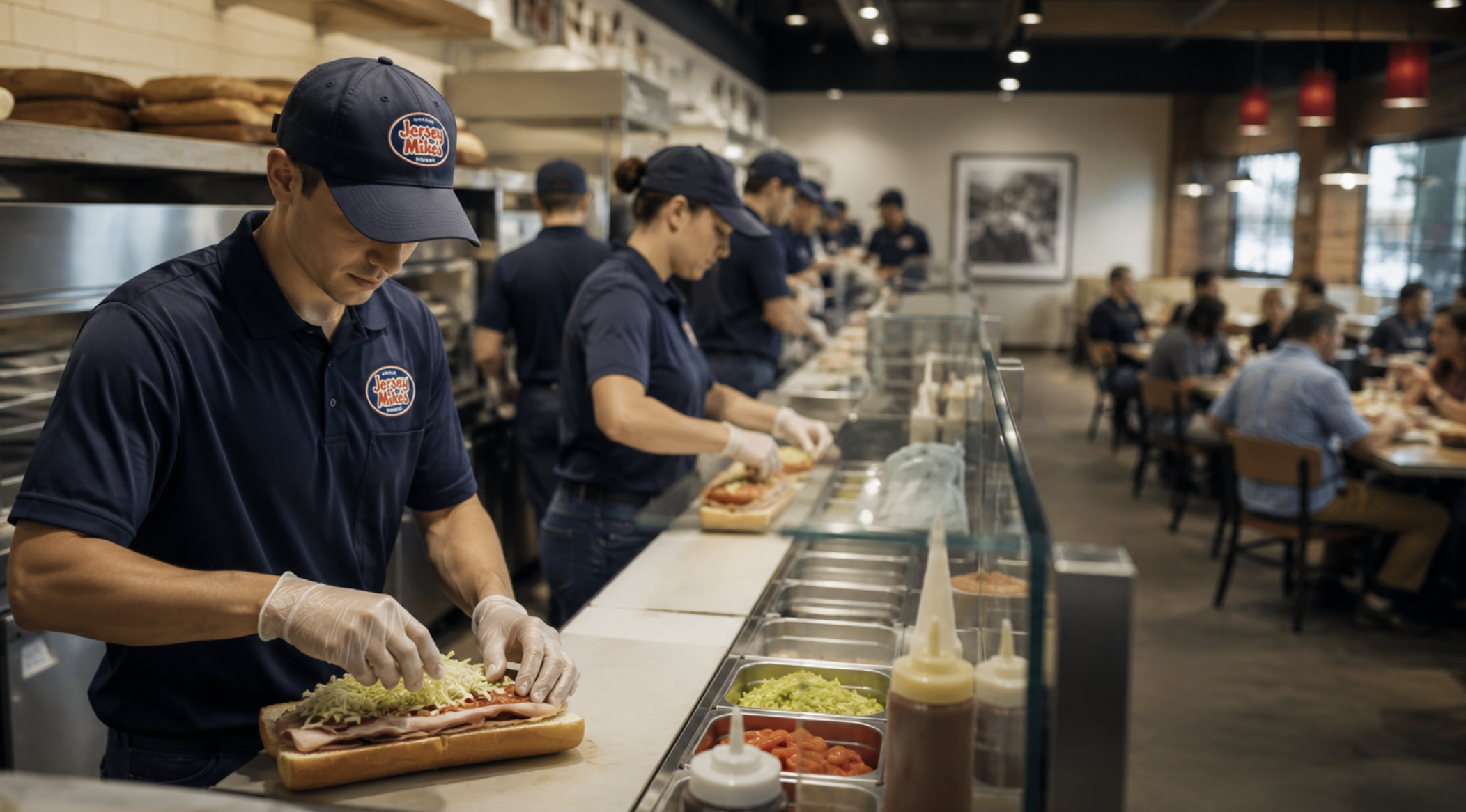
Jersey Mike’s IPO plans could raise $1.09 billion, putting the sandwich chain near the top of U.S. restaurant listings if completed as described.
The expected proceeds would make the offering the second-largest U.S.-listed restaurant IPO of all time, behind Arcos Dorados Holdings, the world’s biggest McDonald’s franchisee. The size gives the planned deal a broader market signal: investors are being asked to value a familiar fast-casual brand at a scale usually reserved for the strongest restaurant operators.
Blackstone deal raised stakes
Blackstone bought Jersey Mike’s in early 2025, according to the account provided, giving the sandwich chain a private equity owner shortly before the IPO plan came into focus. That timing matters because private equity-backed listings are often read as both a growth story and an exit test.
The company’s rise was built on a simple operating promise: sandwiches made quickly enough to handle heavy lines while keeping the product consistent. The account describes busy Jersey Shore stores more than a decade ago as an early sign that the chain had already developed the throughput needed for a larger footprint.
That operational detail is more than nostalgia. For a restaurant company entering public markets, speed, repeat traffic and brand recognition are core evidence points, especially when the offering is large enough to invite comparison with the biggest restaurant listings in U.S. market history.
$1.09 billion sets benchmark
The $1.09 billion proceeds figure is the central number in the deal. If reached, it would place Jersey Mike’s ahead of nearly every U.S.-listed restaurant IPO except Arcos Dorados Holdings, whose scale comes from its position as the largest McDonald’s franchisee worldwide.
The comparison highlights two different restaurant models. Arcos Dorados is tied to one of the world’s most recognized franchise systems, while Jersey Mike’s is a branded sandwich chain whose public-market case would depend on investors believing it can keep expanding without weakening store execution.
The source material does not provide a filing date, share count, valuation range, revenue, profit, debt level or intended use of proceeds. Those gaps matter because each would shape how investors judge the offering beyond the headline proceeds target.
For Blackstone, a successful listing would create a public valuation marker for an asset it acquired only months earlier. For Jersey Mike’s, public trading would bring new scrutiny over growth pace, franchise quality, same-store demand and costs that private owners can often discuss with less disclosure.
Restaurant investors face a test
The planned IPO also arrives as restaurant investors sort between brands with durable demand and chains exposed to tighter consumer budgets. Sandwiches can look defensive because they are everyday purchases, but public investors still examine labor, rent, food costs and traffic trends before rewarding growth.
If the $1.09 billion target holds, the offering could lift confidence around restaurant listings and give other private chains a pricing reference. The mechanism is straightforward: one large deal can reset expectations for valuation, liquidity and investor appetite across the sector.
If demand weakens before pricing, the effect would run in the other direction. Jersey Mike’s could still list at a smaller size, but a reduced deal would signal that public investors want more proof before backing restaurant expansion at premium levels.
A third path is delay. If market conditions or company disclosures do not support the planned sale, Blackstone could wait for a stronger window, leaving Jersey Mike’s private while the broader restaurant pipeline watches whether consumer brands can still command public capital.
The next signals are concrete: whether a formal filing appears, what financial history it shows, how much stock is offered and whether proceeds go toward growth, debt reduction or shareholder liquidity. Until those details are public, the IPO is best read as a potentially large market test rather than a completed transaction.