Italy weighs solar rail after Swiss trial, as EU rail decarbonisation tightens
Italy is being discussed as a potential next market for solar panels installed along rail tracks after a Swiss pilot, highlighting how hard-to-electrify rail…
Claire Dubois ·
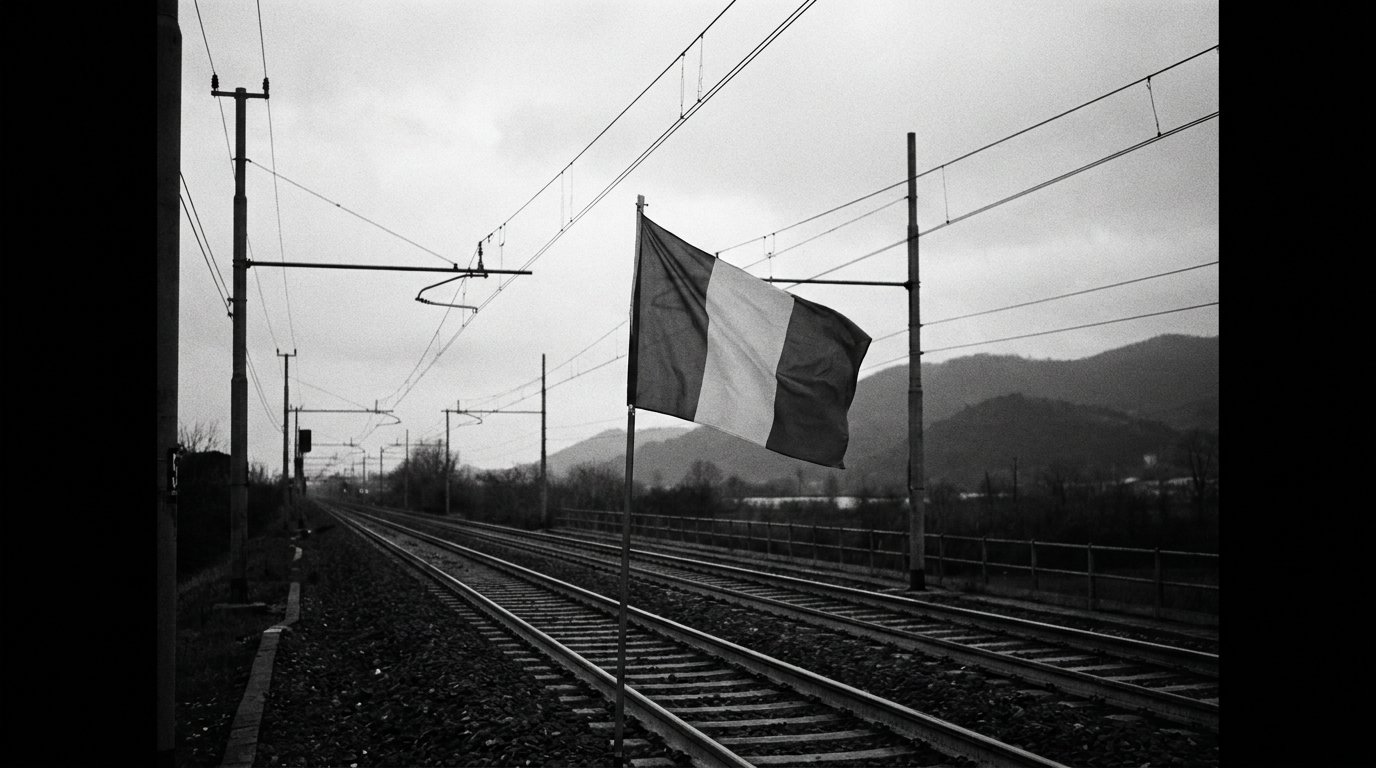
# Italy weighs solar rail after Swiss trial, as EU rail decarbonisation tightens
Italy could be the next country to test “solar railways” after a Swiss pilot drew attention to the idea of generating electricity by installing photovoltaic panels between or alongside rail tracks. The prospect matters less for novelty than for scale: Europe’s rail networks sit on long, linear corridors where power demand and grid connections are already nearby.
The Swiss trial, described as successful in the signal, is being used as a proof point for whether rail operators and regulators can treat rail rights-of-way as energy assets rather than purely transport infrastructure. Italy’s interest, if it turns into a formal pilot, would be a first step toward wider adoption across the continent.
For the euro area, rail decarbonisation sits at the intersection of energy policy, industrial strategy, and infrastructure funding. While the European Central Bank (ECB) does not set climate policy, its interest is indirect: energy costs feed into inflation and the ECB’s price-stability mandate, which is anchored to the Harmonised Index of Consumer Prices (HICP), the euro area’s common inflation gauge.
Fiscal decisions that would underpin any large rail-and-solar buildout would come from national governments and, in some cases, EU-level programmes. The central bank’s crisis tools are a separate lane: the Transmission Protection Instrument (TPI) is designed to counter “unwarranted” market moves that impair the transmission of monetary policy across countries; Outright Monetary Transactions (OMT) is an earlier bond-buying framework tied to strict conditionality. Neither is directly related to rail investment, but both shape the financing environment by influencing sovereign borrowing conditions.
What it means for the euro area
If solar rail concepts move beyond pilots, the near-term macro channel runs through investment and energy substitution rather than immediate growth or inflation effects. Capital spending on rail-linked generation could marginally lift demand in the construction and electrical-equipment supply chain, while locally generated power could lower operating costs for rail operators over time. The key constraint is practical rather than monetary: standards, safety certification, maintenance regimes, and the commercial arrangements for feeding power into the grid.
Markets would care if such projects become large enough to touch public capex envelopes. In that case, the usual euro-area markers apply: sovereign curves and the spread between Italian government bonds (BTPs) and German bunds can widen if investors perceive looser fiscal settings or execution risk. For banks, higher sovereign yields can raise funding costs and tighten credit conditions; for the euro, the impact would typically depend on whether the investment push is seen as productivity-enhancing (supportive) or fiscally risky (negative). At pilot scale, the effect is likely to be more sectoral: renewable developers, rail contractors, and utilities would be the first to price it.
A falsifiable marker will be whether Italy’s transport and energy authorities publish a concrete pilot plan that specifies location, capacity, permitting pathway, and grid-connection terms. If a named Italian ministry or rail operator formally launches a tender or authorisation process by 2026-10-31, it would signal the concept is shifting from media discussion to investable pipeline; if no public procurement step appears by then, the idea is more likely to remain a niche demonstration rather than a scalable euro-area infrastructure theme.