Israeli strike destroys last bridge linking south Lebanon
Israeli strike on April 16, 2026 destroyed Lebanon’s last bridge linking the south to the rest, a Lebanese security official said.
Lauren Collins ·
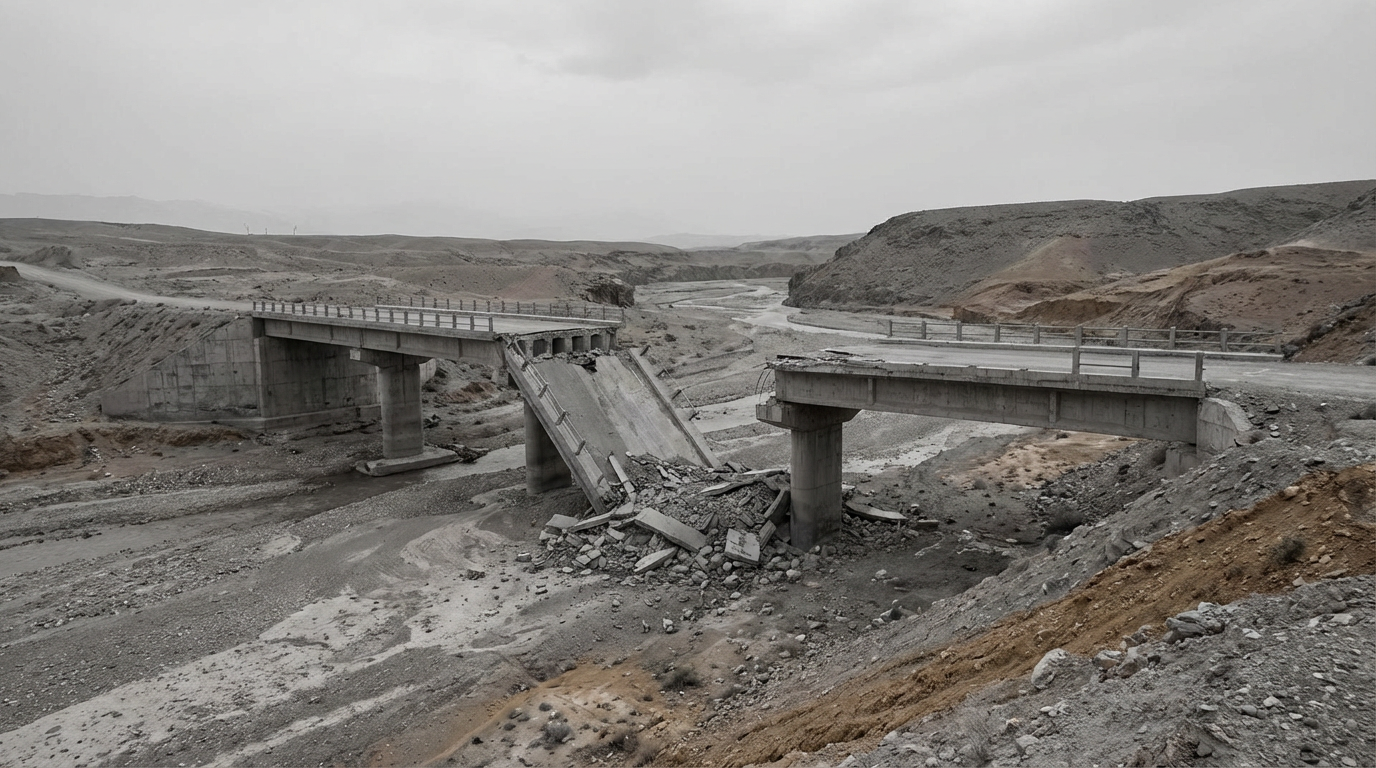
An Israeli strike on April 16, 2026, destroyed what a senior Lebanese security official described as the final bridge still connecting southern Lebanon with the rest of the country. The official said the structure was hit and left beyond repair, cutting a key transport route in a way that immediately changes how people and goods can move between regions.
According to the Lebanese official, the bridge was completely demolished, leaving no practical option to restore it quickly. With that crossing gone, the most direct link for travel and logistics between southern Lebanon and other areas has been removed. The official’s account framed the damage as total, underscoring that the impact is not limited to short-term disruption.
The loss of the bridge is expected to affect daily mobility for residents and complicate the movement of supplies. The source material notes that communities in southern Lebanon could face increased isolation as a result of the severed connection. It also highlights that the disruption may extend to local commerce, as transport constraints can slow deliveries and raise the difficulty of moving products and essential goods.
The incident was reported in the context of ongoing regional tensions. Within that setting, the destruction of a major piece of infrastructure carries implications for humanitarian access, particularly for organizations that rely on predictable road networks to reach communities. The source material states that aid groups operating in southern Lebanon may need to reroute operations, adjust schedules, or seek alternative paths to maintain access.
Beyond immediate travel disruption, the source material points to longer-lasting logistical challenges. With the bridge described as irreparable, residents and service providers may face longer travel times and more complex routing until alternative routes are established or reconstruction becomes possible.
The strike is presented as a direct military action with clear physical consequences for Lebanese infrastructure, with knock-on effects for connectivity and the practical functioning of transport networks.
Some key details remain unclear based on the available account, including how quickly alternative routes can absorb traffic and what timeline, if any, exists for rebuilding. What is clear from the Lebanese official’s description is that the bridge’s destruction removes a critical link at a time when access and movement are already sensitive issues in the region.