IRGC Navy Retains Hormuz Control Despite US Strikes
IRGC Navy keeps control signals in the Strait of Hormuz after reported U.S. strikes, with over 60% of its fast-boat fleet intact.
Lauren Collins ·
S. Officials and analysts describe Iran as operating two separate maritime forces with different missions and equipment. The regular navy fields larger, conventional ships associated with longer-range deployments and national prestige. Alongside it, the paramilitary Islamic Revolutionary Guard Corps (IRGC) runs its own navy built for close-in operations in the Persian Gulf and the Strait of Hormuz.
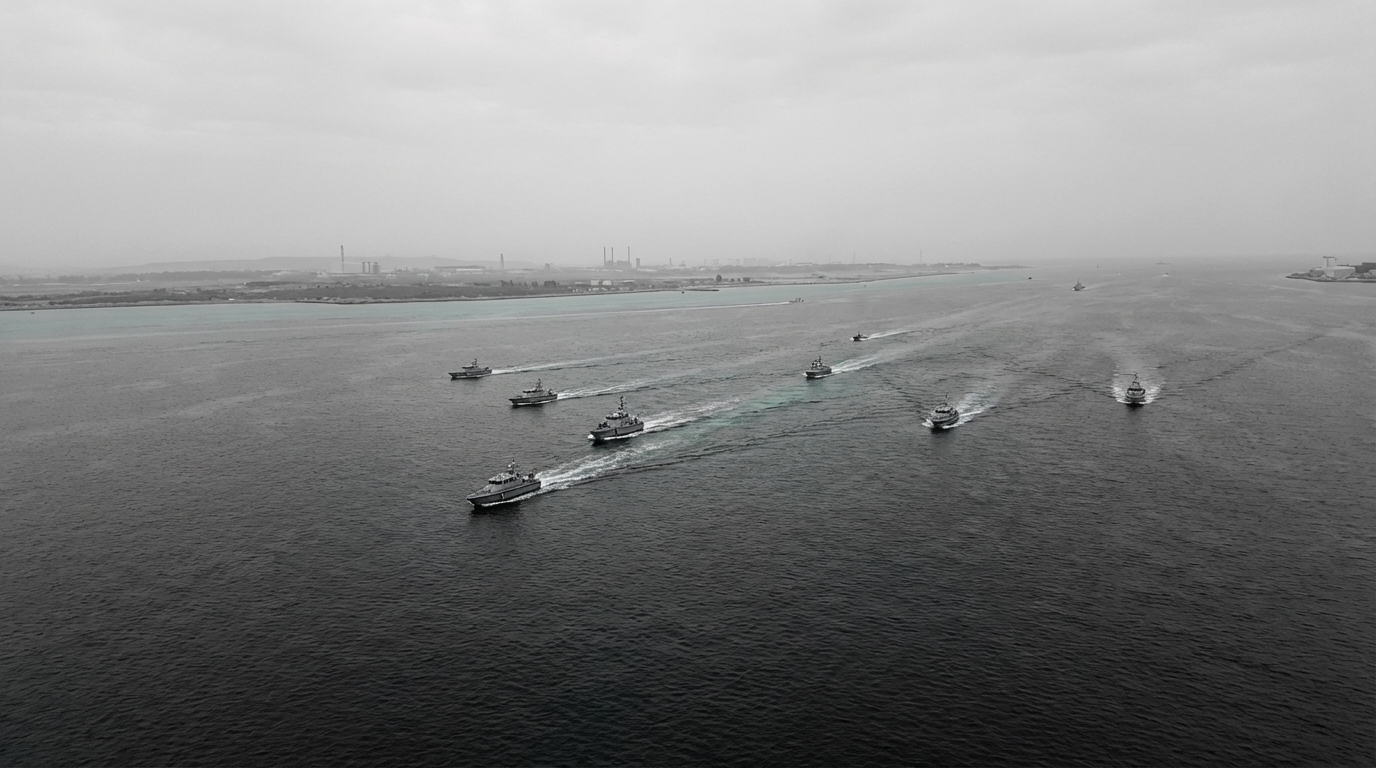
The IRGC navy is organized around asymmetric warfare rather than head-to-head engagements with technologically advanced forces such as the United States. Its approach relies on numerous small, fast, heavily armed craft designed to operate in groups and apply pressure through “swarm” tactics.
Analysts say these boats are supported by anti-ship missiles, sea mines, and a growing drone program, creating multiple tools to harass or deter both commercial traffic and military vessels in the narrow waters around the strait.
S. action has degraded Iran’s conventional naval assets, assessments cited in the source indicate the IRGC’s core capabilities remain largely available. Farzin Nadimi, a senior fellow at the Washington Institute, said over 60% of the IRGC’s fast-attack and speedboat fleet remains intact and fully operational. S. destroyed a significant portion of Iran’s regular naval assets, but that this did not remove the IRGC’s commanding presence in the Gulf.
The source describes a recent episode that underscored the IRGC’s continued leverage over the Strait of Hormuz. Following a reported two-week ceasefire agreement aimed at reducing tensions and reopening the waterway, the IRGC issued warnings over marine radio channels. The paramilitary force said any ship attempting to cross without its direct permission risked being targeted and destroyed, a message presented as a reassertion of de facto control over the passage.
The source frames the IRGC’s posture as a persistent challenge for the United States and its allies: conventional superiority may neutralize state-level platforms, but a decentralized force optimized for disruption can still threaten maritime security. The uncertainty highlighted by the source is how quickly the IRGC could translate intact small-craft capacity and supporting systems into real-world interference with shipping, even after reported damage to Iran’s regular navy.