Iraqi President Nizar Amedi Elected After Key Vote
Iraq President Nizar Amedi was elected in a second-round parliamentary vote, starting a 15-day timeline to name a cabinet-forming nominee.
Lauren Collins ·
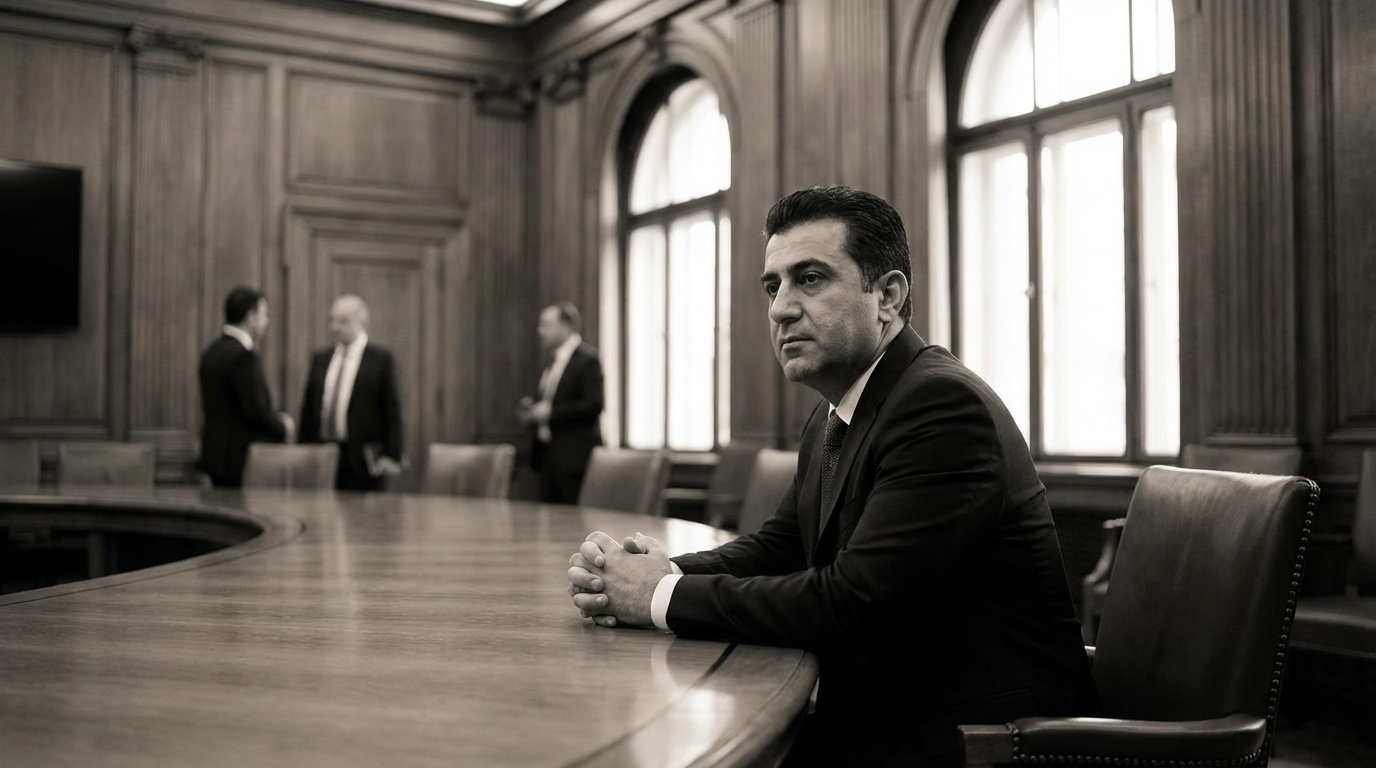
Iraq’s parliament elected Nizar Amedi as president, a move that officials described as a key step toward breaking months of political deadlock and starting the next government-formation process. Amedi, nominated by the Patriotic Union of Kurdistan (PUK), won in a second round of voting in the 329-seat chamber with 227 votes, exceeding the simple majority required.
The session also exposed continuing fractures in Iraq’s political arena. Major blocs including the Kurdistan Democratic Party (KDP) led by Masoud Barzani and the State of Law Coalition headed by former Prime Minister Nouri al-Maliki did not attend, boycotting the sitting in protest. The absence of these factions underscored the depth of disagreement even as the presidency was filled.
The election followed a two-stage process. In the first round, no candidate reached the constitutionally mandated two-thirds threshold of 220 votes, forcing a runoff. In the second round, Amedi prevailed over his principal challenger, Fuad Hussein, the sitting foreign minister and the KDP’s nominee, in a contest that highlighted the long-running rivalry between the PUK and KDP as the two leading Kurdish parties.
Amedi, born in 1968 in Duhok, has held senior roles in Iraqi politics and the presidency. He served as Iraq’s minister of environment from 2022 to 2024 and previously worked in the presidential office under former presidents Jalal Talabani and Fuad Masum. His elevation delivers a notable institutional win for the PUK, led by Bafel Talabani, in its competition with the KDP for influence in both the Kurdistan Region and federal decision-making in Baghdad.
The outcome fits Iraq’s post-2005 informal power-sharing arrangement, commonly referred to as the “muhasasa” system. Under this convention, the presidency is held by a Kurd, the prime minister is a Shia Muslim, and the speaker of parliament is a Sunni Muslim. The presidency carries a four-year term and may be renewed only once.
What happens next is set by the constitution’s timetable. With a president now in place, Amedi has 15 days to formally designate the nominee of the largest parliamentary bloc—traditionally a Shia coalition—to attempt to form a cabinet. Officials indicated that the success of this stage will be a central test for the durability of Iraq’s new political arrangement, while the earlier boycott leaves uncertainty over how smoothly the next steps can proceed.