Iran warns Gulf oil flows could stop over US sanctions plan
Iran warned that countries joining President Trump's sanctions drive could face retaliation, including threats to Gulf oil routes through the Strait of Hormuz.
Omar Farouk ·
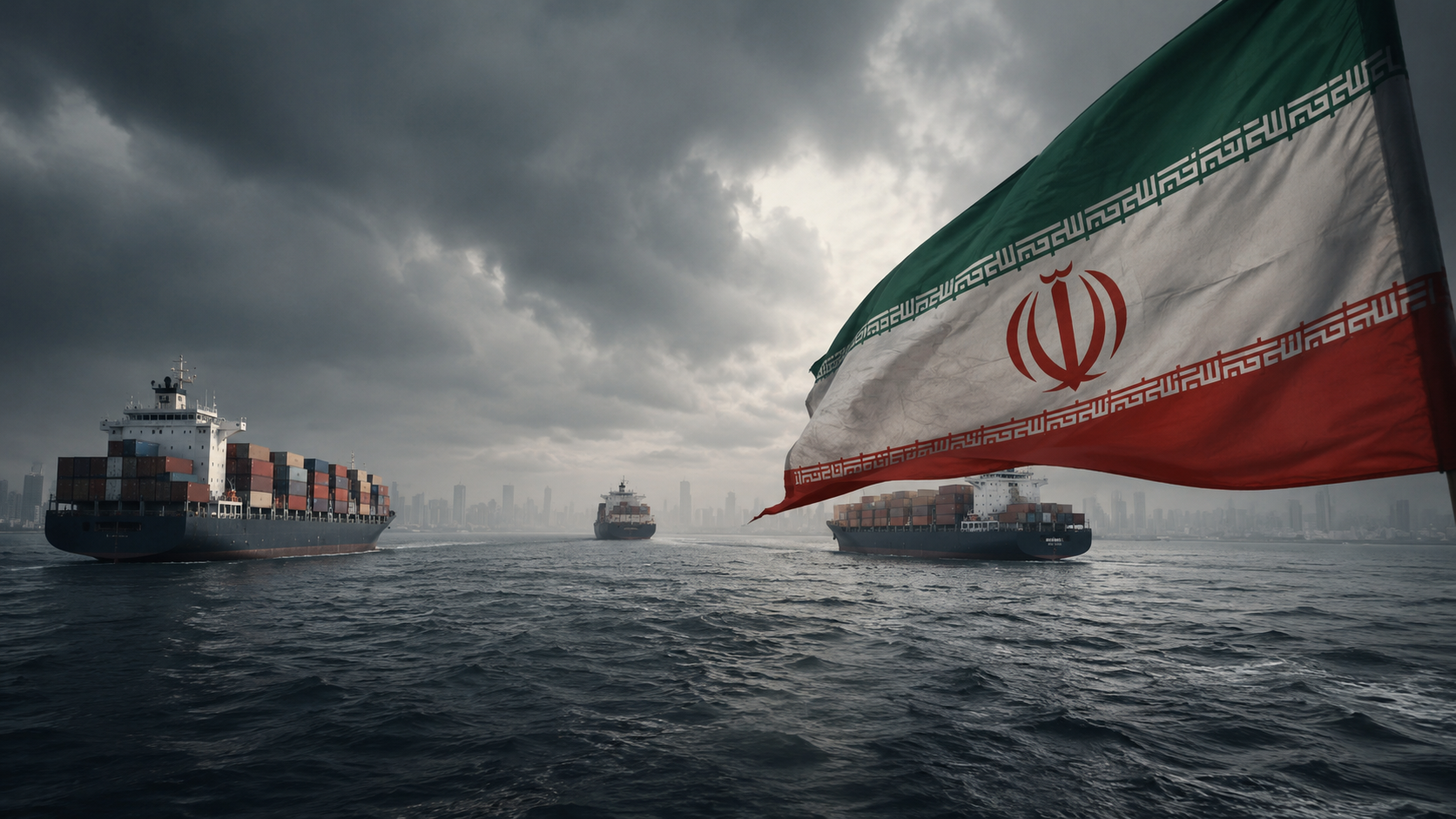
Iran sanctions tensions widened Saturday as Tehran warned countries joining President Trump's campaign risked disruption to one-fifth of global energy exports.
Mohsen Rezaei, secretary of Iran's Supreme National Security Council, said in remarks broadcast on state television that governments imposing new economic restrictions would be treated as hostile. The warning came before a planned Monday announcement of new US sanctions that Tehran says would deepen pressure on its already strained economy.
Rezaei targets sanctions partners
Rezaei urged countries, including Iran's neighbors, not to take part in what he called Washington's "economic war." "Any country that takes part in imposing economic restrictions on us will be regarded as an enemy," he said, adding that Iran's response would be "seismic."
The language broadened Tehran's warning beyond the United States to governments that may help enforce or extend the sanctions. President Donald Trump has said his administration would pursue what he called the "most crushing economic operation" against Iran and threatened economic consequences for any country giving Tehran a financial lifeline.
Hormuz threat reaches Gulf routes
Rezaei tied the sanctions dispute to oil exports from the Gulf, warning neighboring countries that participation in US economic pressure could halt regional shipments. He said "not even a drop of oil" would leave the Gulf region if they joined President Trump's campaign, including through export routes designed to bypass the Strait of Hormuz.
The strait is the central chokepoint in the warning: in peacetime, about one-fifth of global oil and gas exports move through Hormuz. Shipping through the waterway has already decreased during the months-long conflict, according to the information available, though no vessel-count benchmark was provided.
The threat also lands in a region where US military infrastructure is widely distributed. The United States operates facilities in more than a dozen locations across the Middle East and North Africa, including Bahrain, Kuwait, Qatar, Saudi Arabia and the UAE, with thousands of troops also stationed in Jordan and elsewhere.
War strains diplomacy and trade
The conflict began on February 28 after Washington argued that Tehran was close to acquiring nuclear weapons. US intelligence assessments and the UN's IAEA nuclear watchdog have challenged that premise, while diplomatic efforts to end the fighting have stalled.
Iran has attacked US military installations and civilian locations since the war began, according to the available account of the conflict. The combination of sanctions, military exposure and shipping risk has turned a bilateral confrontation into a test for Gulf exporters, Asian energy importers and insurers pricing voyages through Hormuz.
If Monday's sanctions mainly target financial channels and oil buyers, the direct pressure would fall first on Iran's trade revenues and access to hard currency. For the global economy, the mechanism would be tighter enforcement rather than an immediate supply loss; for the energy sector, compliance costs and payment risks would rise before physical shortages appear.
If Tehran instead tries to deter participation by moving against Gulf export routes, the macro effect would come through higher freight, insurance and energy-risk premiums. Iran would face a greater chance of regional escalation, while Gulf producers and shipping companies would have to test whether alternative routes can handle enough volume to offset lower Hormuz traffic.
The main open question is whether governments threatened by both Washington's penalties and Tehran's retaliation choose to enforce the new measures fully. That decision will determine whether the next phase remains centered on sanctions paperwork, or shifts toward the oil lanes that carry a large share of the world's traded energy.