Iran planning reports flag Europe, Hormuz cable risks
Iran planning reports cite US assets in Europe and Hormuz subsea cables as potential pressure points; officials’ responses were pending.
Mateo Fernandez ·
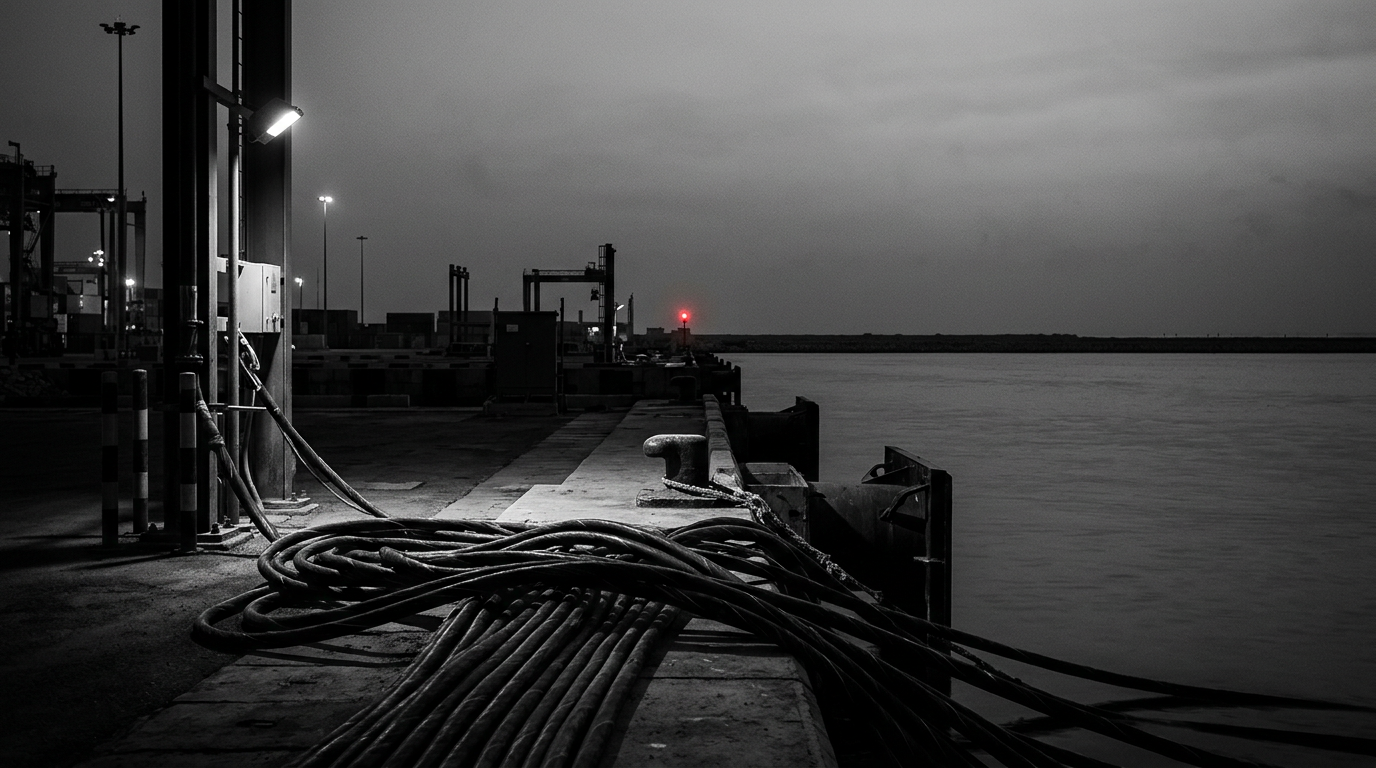
Unverified reports circulating on August 19 said Iranian contingency planning has identified two potential pressure points tied to any further deterioration in tensions with Washington: US military assets in Europe and subsea fiber-optic cables near the Strait of Hormuz . The same accounts described the activity as scenario planning for an escalation, not as evidence of an imminent operation.
No official confirmation was included in the reports, and responses from the governments concerned were described as still pending. Until any public statements emerge, the claims remain unverified and framed as conditional planning rather than an operational move.
Hormuz focus widens from shipping to communications links Hormuz focus widens from shipping to communications links According to the reported details According to the reported details, Iranian planners have examined potential methods to disrupt undersea fiber-optic cables that pass through the Strait of Hormuz. The accounts did not say Iran has taken steps to interfere with cable infrastructure, and they did not describe any order to do so. The reports presented this as a possible change in how risk around Hormuz could be discussed. In addition to the strait’s frequent association with energy flows and shipping lanes, the accounts argued that the risk set could extend to communications infrastructure used by governments, companies, and financial systems. The same telling did not provide technical specifics or timelines for any interference scenario. It also did not include evidence that a disruption attempt is underway, keeping the emphasis on contingency concepts rather than action.
US assets in Europe cited as a second pressure point United States The reports also pointed to US military assets in Europe as another area under review in the planning described. They did not state that Iran has ordered an attack on US facilities in Europe, and they did not provide evidence of steps beyond contingency considerations. For the United States, the accounts suggested that a Europe-linked dimension would broaden the confrontation’s geographic scope beyond the Gulf and place allied territory within a wider escalation framework. For Iran, the reports described any targeting of US military assets in Europe as carrying the risk of a larger NATO and EU security response if host countries are drawn directly into a crisis. Officials in relevant capitals were described as yet to respond in the reporting, leaving uncertainty over how force-protection postures or diplomatic messaging might change. Confidence effects highlighted, with markets not cited as moving The accounts characterized the most immediate macroeconomic transmission as a confidence channel, rather than a market reaction observed so far. They argued that if the reported threats remain at the planning stage, impacts may stay concentrated in diplomatic alerts and force-protection measures. United States The However, the reports said that if infrastructure disruption becomes credible, possible knock-on effects could include higher insurance costs, greater caution in shipping, pressure on data-routing resilience, and risk premiums tied to Gulf exposure. No specific figures were provided for any of these potential effects.
Next 24 hours set as the near-term watchpoint
The reports identified August 19, 2026 as the forward watchpoint, with attention on the next 24 hours for any US, European, or Iranian confirmation, denial, or force-protection steps. Until such statements appear, the planning described remains unverified and portrayed as contingent rather than operational.