Iran launched missiles at US-UK military base in the Indian Ocean.
Iran launched two intermediate-range ballistic missiles at a U.S.-U.K. base in Diego Garcia on March 21, 2026, missing the target.
Lauren Collins ·
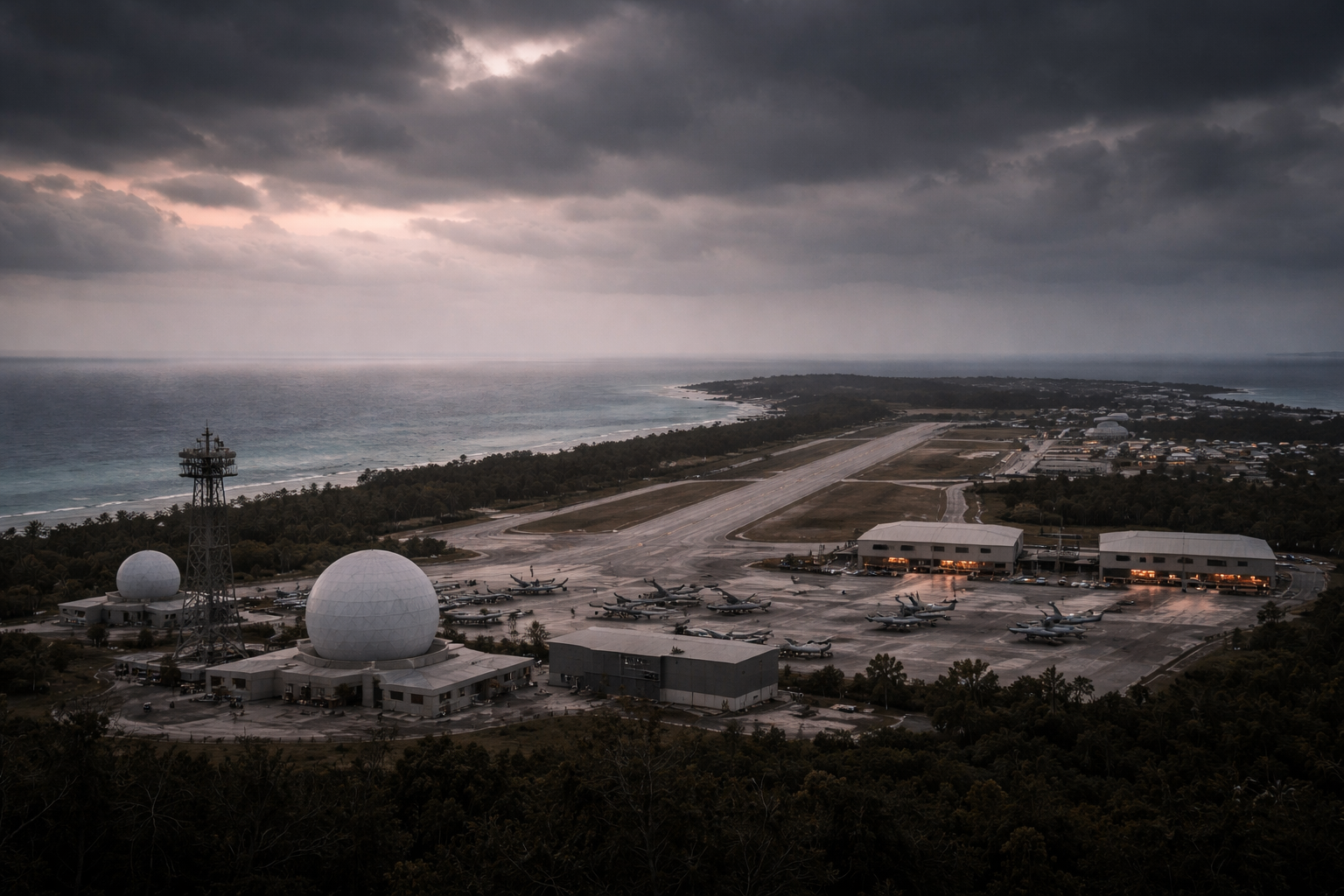
Iran launched two intermediate-range ballistic missiles on Friday, March 21, 2026, targeting a joint U.S.-U.K. military facility located on Diego Garcia in the Indian Ocean. The projectiles did not reach their intended target, falling short by an unspecified distance. This event marks the first documented attempt by Iran to strike the remote naval and air base, situated approximately 3,000 kilometers from the Iranian coastline.
This action raises significant questions regarding Tehran's evolving strategic objectives and the advancement of its long-range missile capabilities. The incident suggests a potential departure from a previously established policy, which had limited Iran's ballistic missile range to 2,000 kilometers.
This self-imposed restriction, instituted in 2017 by then-Supreme Leader Ali Hosseini Khamenei, was widely interpreted as an assurance to European nations that they were not within the range of Iranian ballistic missile threats.
Strategic Intentions and Missile Capabilities
Analysts suggest that the death of Supreme Leader Khamenei may have empowered certain factions within Iran's military, particularly the Islamic Revolutionary Guard Corps (IRGC), to pursue more aggressive strategic postures. The targeting of Diego Garcia, a critical logistics hub for U.S. and British military operations across the Middle East and Indo-Pacific, sends a clear message about Iran's ambition to project power and threaten high-value American assets far beyond its immediate region.
While the strike was unsuccessful, the attempt itself is a notable development. It compels military planners in Washington and London to re-evaluate the security of bases previously considered safe from Iranian ballistic missile threats. The failure of the missiles to reach their target could indicate technical challenges, but the intent to demonstrate long-range power projection is now evident.
Iran's Missile Arsenal and Space Program
Iran's existing missile inventory includes systems such as the Sejjil and Khorramshahr ballistic missiles, both with reported ranges of 2,000 kilometers. The country also possesses the Soumar cruise missile, which is believed to have a range of up to 3,000 kilometers. The use of ballistic missiles in this attempt is particularly significant due to their high speed and trajectory, which make them more challenging to intercept compared to slower cruise missiles.
Experts also highlight Iran's burgeoning space program as a pathway to enhanced long-range missile capabilities. Technologies utilized in its satellite launch vehicles (SLVs), such as the Ghaem-100, are considered dual-use. The multi-stage rocket technology and guidance systems necessary for placing satellites into orbit are fundamentally similar to those required for developing intercontinental ballistic missiles (ICBMs) capable of reaching targets in Europe or North America.
Geopolitical Implications and Alliance Concerns
The incident has generated concern among U.S. allies, particularly in Europe. European nations have historically balanced hosting U.S. military assets with efforts to de-escalate tensions with Tehran. This missile launch could intensify worries that supporting U.S. operations, especially those potentially targeting Iranian missile facilities, might expose them to direct retaliation.
A senior European diplomatic source, speaking anonymously, indicated that the event would likely prompt urgent consultations within NATO. A primary concern is the potential for a regional conflict to escalate rapidly, drawing in European countries that perceive themselves as being on the frontline of any such expansion. U.S. military strategists will prioritize reassessing the defensive postures of critical global bases that were previously considered beyond Iran's reach.
Implications
Country Impact: The incident could prompt a re-evaluation of defense strategies in the U.S. and U.K., particularly concerning the security of overseas military installations. It may also lead to increased diplomatic pressure on Iran from Western nations.
Industry Impact: The defense industry may see increased demand for advanced missile defense systems and long-range surveillance technologies. Energy markets could experience volatility due to heightened geopolitical tensions in the Middle East.
Market Impact: Global financial markets may react to increased geopolitical risk, potentially leading to shifts in investor sentiment towards safe-haven assets. Oil prices could rise if concerns about supply disruptions in the Persian Gulf intensify.