Iran Missiles Hit Kuwait, Bahrain as US Strikes Qeshm
Iran and the U.S. exchanged missile strikes in the Gulf, escalating tensions and threatening a return to full-scale conflict.
Lauren Collins ·
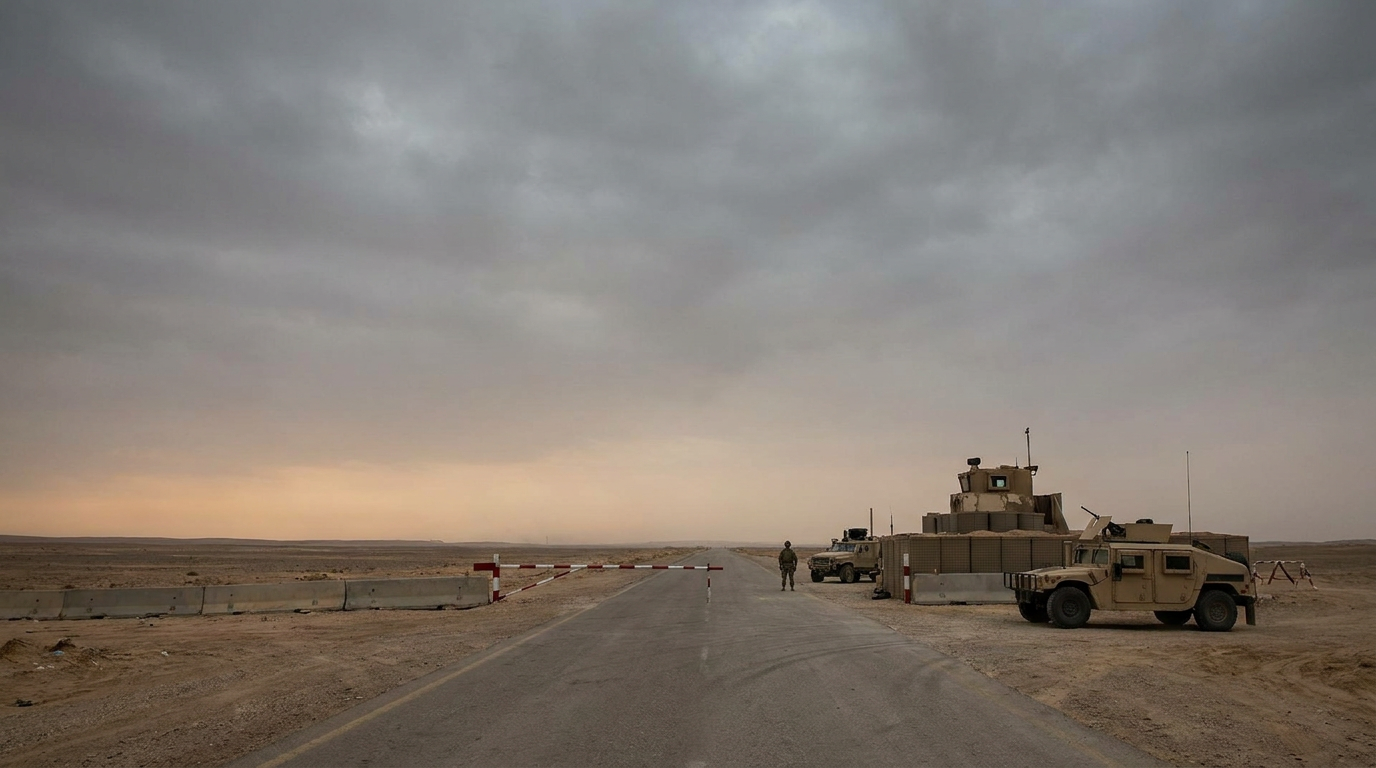
Iran fired missiles and drones toward Kuwait and Bahrain early Wednesday, June 3, 2026, and the United States struck targets on Iran’s Qeshm Island, in an escalation of hostilities in the Gulf. The flare-up came as diplomatic efforts remained stalled nearly 100 days into a conflict between Tehran and Washington. The violence raised questions about the durability of a temporary ceasefire that took effect on April 8 after being mediated by Pakistan.
Kuwait’s state news agency KUNA reported that Iranian missiles and drones hit Kuwait International Airport, causing injuries, damage to facilities, and flight suspensions and diversions. U.S. Central Command (CENTCOM), however, said two Iranian missiles aimed at Kuwait either fell short or broke apart in flight, and that several ballistic missiles failed to reach their targets.
Iran’s Tasnim news agency said the Islamic Revolutionary Guard Corps (IRGC) targeted U.S. helicopters in a regional country in an apparent reference to Kuwait. The report did not clarify whether the helicopters were at the airport or whether intercepted projectiles fell on the facility unintentionally.
Strikes and interceptions across the Gulf
Tasnim also reported that the IRGC fired missiles and drones at a U.S. airbase and at the headquarters of the U.S. Fifth Fleet in Bahrain, where sirens warned residents of a possible attack. CENTCOM said it intercepted projectiles aimed at Bahrain and that no U.S. personnel or assets were harmed in the attacks on Kuwait and Bahrain.
CENTCOM said U.S. forces hit a telecommunications tower on Iran’s Qeshm Island and downed Iranian drones that were targeting civilian ships in regional waters. Iranian officials said U.S. forces struck an Iranian oil tanker near the Strait of Hormuz, damaging its engine room.
Competing narratives and ceasefire accusations
Iran’s Ministry of Foreign Affairs condemned the U.S. strikes on Qeshm Island as a violation of the ceasefire. It said Kuwait and Bahrain bore “direct and clear responsibility” for the attacks, alleging their territory and facilities had been used to support U.S. military operations against Iran.
Tehran said it reserved the right to self-defense and warned of severe consequences if the security of the Strait of Hormuz is disrupted. The U.S. and Iran offered competing accounts of the sequence of events, though both sides described escalating actions involving ships and drones in regional waters around the strait.
Officials in both countries signaled that tensions remained elevated, with the risk that the latest exchange could broaden beyond the immediate targets in Kuwait, Bahrain and on Qeshm Island.
Diplomatic developments and any further military action in or near the Strait of Hormuz are likely to shape the next phase of the standoff.