Iran strike hits U.S. assets at Saudi Prince Sultan base
Iran reportedly hit Prince Sultan Air Base on March 28, 2026, damaging U.S.-used aircraft; Washington and Riyadh have not confirmed.
Lauren Collins ·
Latest reported strike
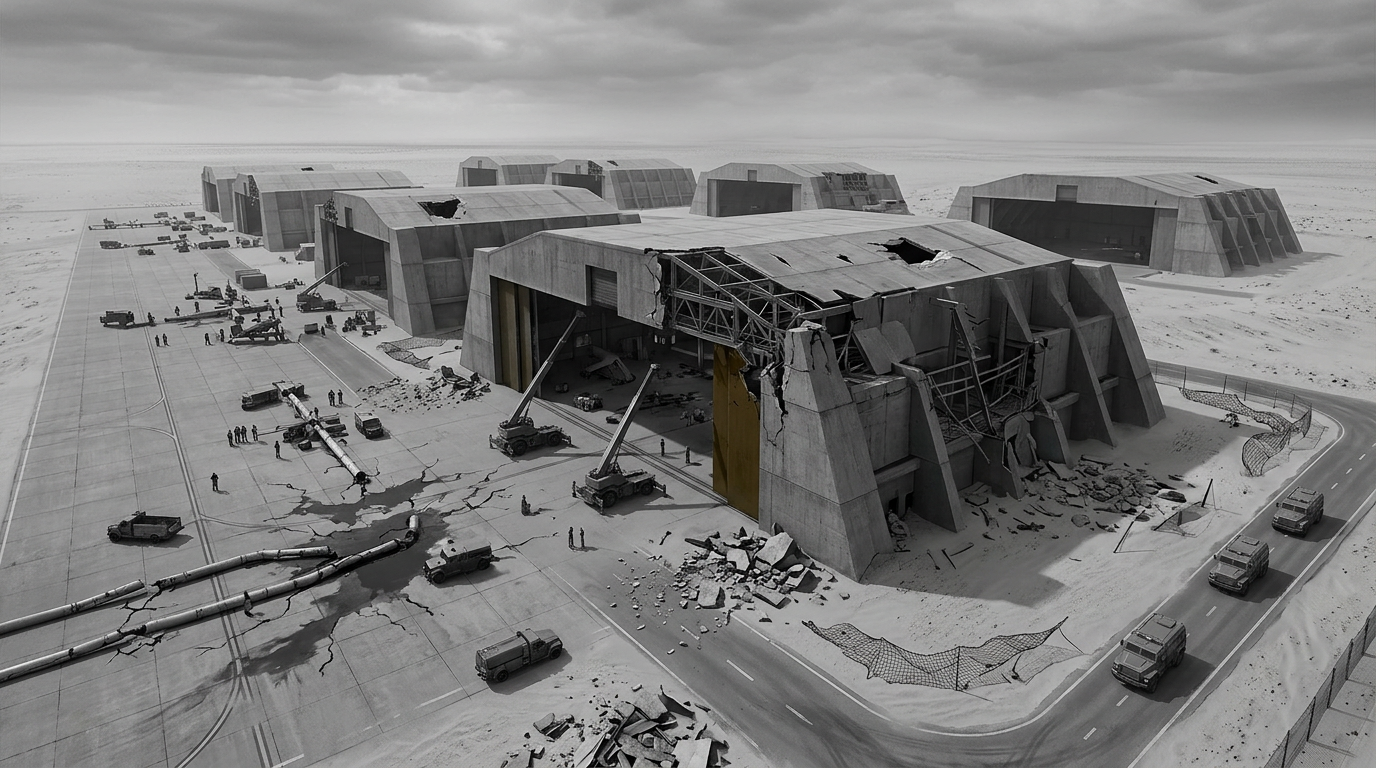
Iran carried out missile and drone attacks targeting U.S. military assets in Gulf states beginning on February 28, 2026, in what it described as a response to a U.S.-Israeli military campaign against Iran. A new reported incident on March 28, 2026, involved a missile and drones striking Prince Sultan Air Base in Saudi Arabia, a site used by U.S. forces.
Unnamed sources cited by The Associated Press said the March 28 strike damaged multiple KC-135 aerial refueling aircraft and an E-3 Sentry Airborne Warning and Control System (AWACS) plane. The same account said at least 15 U.S. soldiers were wounded, including five described as seriously injured.
What is confirmed vs. what is claimed
As of the information available in the source material, neither the U.S. military nor the Saudi government has issued an official public statement about the March 28 incident. That leaves key details—such as the scale of damage, the exact number of aircraft affected, and the condition of personnel—unverified by the governments involved.
Iran’s central military headquarters spokesperson, Ebrahim Zolfaghari , said one refueling aircraft was destroyed and three others were damaged in the March 28 attack. Iran’s Press TV also published satellite imagery it said showed aircraft destruction at the base; the imagery is presented as supportive material by Iranian state media, but independent verification is not provided in the source.
Pattern of reported attacks at the same base
The March 28 report follows an earlier incident dated March 13, 2026, when five KC-135 aircraft were reportedly damaged at Prince Sultan Air Base. The repetition of reported strikes at the same facility suggests a sustained focus on assets that enable U.S. air operations, particularly aerial refueling.
Iran’s broader campaign, as described in the source, began on February 28 and has involved missiles and drones aimed at U.S. military assets across Gulf countries, including Saudi Arabia. The source frames these attacks as retaliation linked to the wider U.S.-Israeli campaign against Iran.
Why the AWACS detail matters
The E-3 Sentry is a modified Boeing 707/320 fitted with a rotating radar dome and used for airborne early warning, tracking, and battle management. The aircraft’s radar range exceeds 375 km (250 miles) , making it a key tool for monitoring air activity and coordinating operations.
The U.S. Air Force operates 16 E-3 Sentry aircraft, with six deployed to Europe and the Middle East, according to the source. Military experts cited in the source say damage to, or loss of, an E-3 could create operational gaps in U.S. air campaigns by reducing situational awareness and command-and-control capacity in the region.
Market and geopolitical relevance
Even without official confirmation from Washington or Riyadh, the reported targeting of refueling tankers and an AWACS platform highlights risks to the infrastructure that supports sustained air operations. For global markets, heightened uncertainty around Gulf security can influence risk pricing across energy, shipping, and regional investment, particularly when military activity involves major powers and critical basing locations.
What remains unclear is the extent of aircraft damage, whether any platforms are permanently lost, and how quickly capabilities could be restored or redistributed. Until official statements or independently verified assessments emerge, the operational and market implications should be treated as contingent on single-source reporting and attributed claims.