Gulf Industry Under Fire Amid Escalating Conflict
Gulf industrial sites were attacked on May 11, 2024, injuring workers and damaging assets as the U.S.-Israel-Iran conflict intensified.
Lauren Collins ·
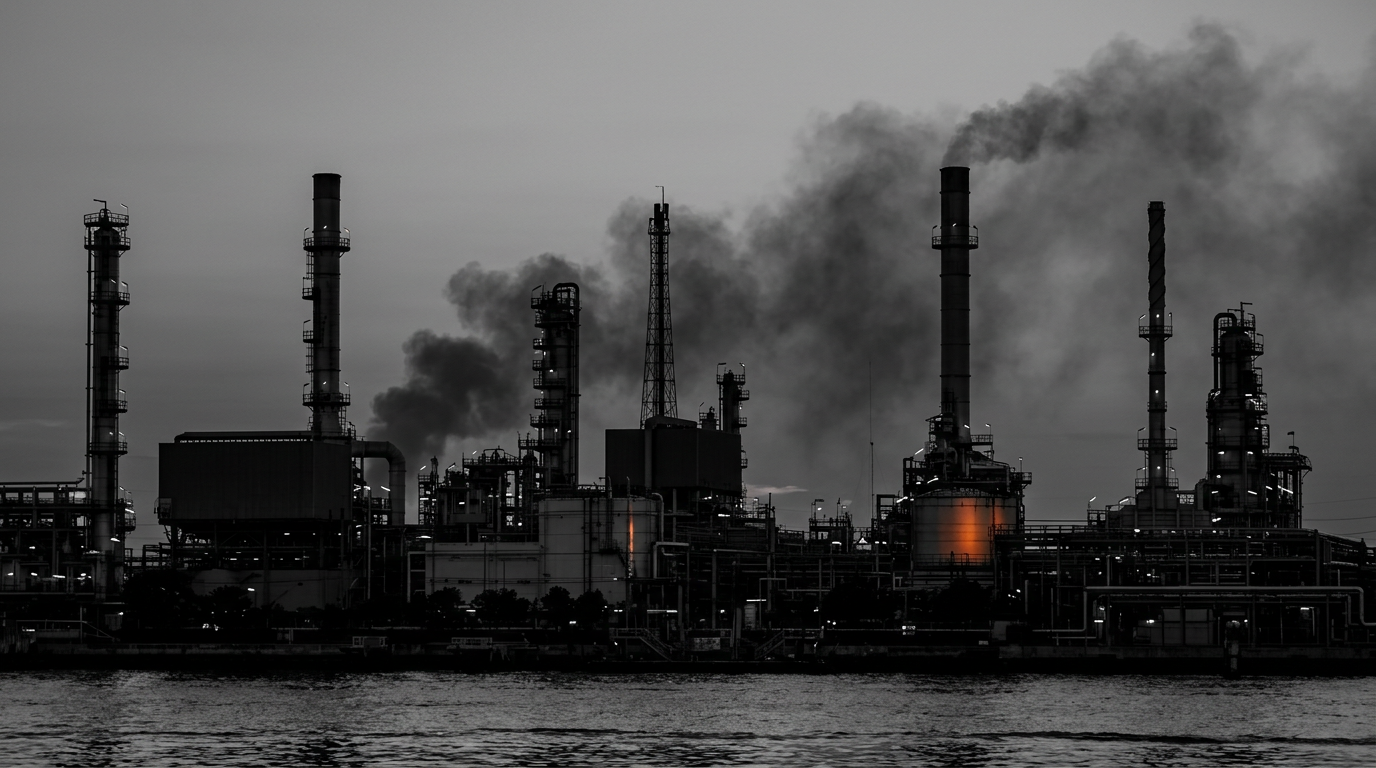
Industrial and transport infrastructure across several Gulf states came under attack on Saturday, May 11, 2024, as a wider confrontation involving the United States, Israel, and Iran intensified.
The incidents included strikes on major aluminum production facilities in the United Arab Emirates and Bahrain, as well as reported drone-related damage in Oman and Kuwait. Multiple workers were reported injured, and operators described significant physical damage at key sites.
What happened across the Gulf
In Abu Dhabi, a key aluminum plant operated by Emirates Global Aluminium was struck, with the company reporting substantial damage and multiple employee injuries. The source material does not specify the number of injured or the extent of operational disruption.
In Bahrain, state-controlled Aluminium Bahrain said its large smelting facility was attacked and that two employees were wounded. No additional details were provided on the scale of damage or whether output was affected.
Oman and Kuwait report drone-related incidents
Oman said it was investigating a drone strike on the southern port of Salalah that injured a foreign worker. The report did not identify the nationality of the worker or provide further information on port operations.
Kuwait’s defense ministry stated that the radar system at the country’s international airport suffered significant damage following an attack involving 15 drones. For the incidents in Oman and Kuwait, the source material says there were no immediate claims of responsibility.
Broader conflict context and competing claims
These attacks were described as occurring amid an expanding regional conflict that has drawn in Yemen’s Iran-backed Houthi movement. The developments have heightened concern about wider economic disruption, particularly risks to maritime traffic in and around the Red Sea.
Separately, Iran accused Israel of targeting its steel production operations. The Islamic Revolutionary Guard Corps also threatened retaliation against the United States and Israel after two Iranian universities were reportedly hit, though the source material does not provide independent confirmation or details of those strikes.
Market relevance: energy routes and industrial supply chains
The escalation has already affected global energy markets, with oil and gas prices rising in response to developments described in the source material. It also states that Iran has effectively closed the Strait of Hormuz, a critical corridor for global energy shipments, which would amplify risks for energy supply and freight costs if sustained.
Beyond energy, attacks on aluminum facilities raise questions for industrial supply chains, given aluminum’s role in construction, packaging, and transport manufacturing. However, the source material does not quantify production losses, shipment delays, or the duration of any outages.
Uncertainties and what remains unknown
Key gaps include who carried out the strikes in Oman and Kuwait, whether additional attacks are planned, and the operational status of the affected industrial sites and airport systems. The absence of immediate responsibility claims for some incidents limits near-term clarity for insurers, shippers, and firms with regional exposure.
For global markets, the central uncertainty is whether disruptions remain localized or broaden across major shipping lanes and production hubs. The combination of industrial damage, port security concerns, and energy-route stress points increases the range of potential outcomes for commodities, logistics, and regional risk pricing.