Trump Backs Iran's 2026 World Cup Participation
U.S. President Trump supports Iran's participation in the 2026 FIFA World Cup, co-hosted by the U.S., Mexico, and Canada.
Lauren Collins ·
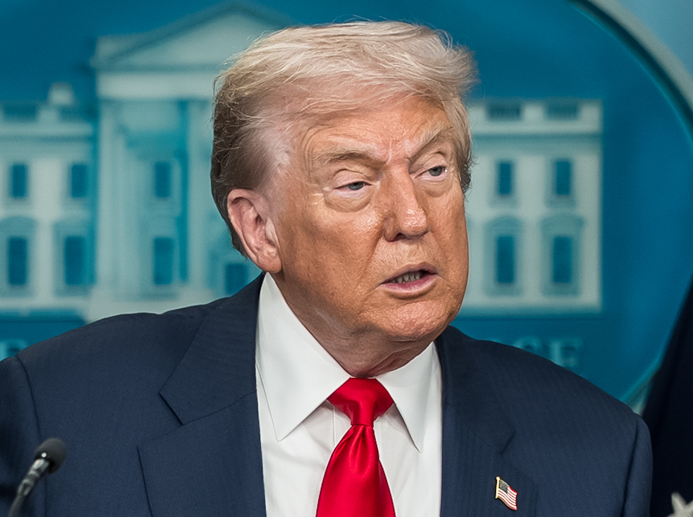
U.S. President Donald Trump has expressed support for Iran's involvement in the 2026 FIFA World Cup, which the United States will co-host with Mexico and Canada. This endorsement was conveyed to FIFA President Gianni Infantino during a recent meeting. The confirmation comes amidst ongoing geopolitical tensions and follows a period of speculation regarding Iran's presence at the tournament.
Infantino publicly stated on Wednesday that President Trump affirmed Iran's welcome to compete. This declaration addresses earlier concerns, particularly after Iran was the only nation not present at a FIFA planning summit held in Atlanta last week for participating teams. The absence had fueled questions about the logistics and political implications of the Iranian team entering U.S. territory.
President Trump had previously indicated to Politico that he was not apprehensive about Iran's participation. He characterized Iran as a "very badly defeated country," suggesting his lack of concern over their presence. This stance provides clarity on the U.S. government's position regarding the team's entry.
Iran secured its qualification for the 2026 World Cup by finishing at the top of Group A in the Asian qualifiers. This marks their fourth consecutive appearance in the global football event. The team's schedule includes two matches in Los Angeles and one in Seattle, all within the United States.
A notable potential fixture could arise on July 3 in Dallas, where the U.S. and Iran might face each other in an elimination match. This scenario would occur if both national teams conclude their respective group stages in second place. Such a match would carry significant sporting and political undertones, given the historical relationship between the two nations.
The decision to host the World Cup across three North American nations aims to leverage extensive infrastructure and fan bases. The inclusion of all qualified teams, regardless of political affiliations, aligns with FIFA's principle of universal participation in its flagship event. This ensures that sporting competition remains separate from broader international disputes, at least in the context of the tournament itself.
Implications
Country Impact: The U.S. decision to welcome Iran's team despite political tensions could be seen as a diplomatic gesture, separating sports from state-level disputes. It might also alleviate concerns about potential visa issues or travel restrictions for the Iranian delegation.
Industry Impact: The sports industry, particularly FIFA and the World Cup organizers, benefits from universal participation, ensuring the tournament's global appeal and integrity. This stance avoids potential boycotts or political interference that could disrupt planning and revenue streams.
Market Impact: While direct market impact is minimal, the certainty around team participation removes a potential source of geopolitical uncertainty that could briefly affect investor sentiment in specific sectors, such as tourism or event management, related to the host cities.