ICE agents to remain at airports as DHS shutdown creates lingering security gaps
ICE presence at airports may continue after TSA pay resumes, as DHS shutdown staffing gaps and long waits persist, officials said on March 29, 2026.
Lauren Collins ·
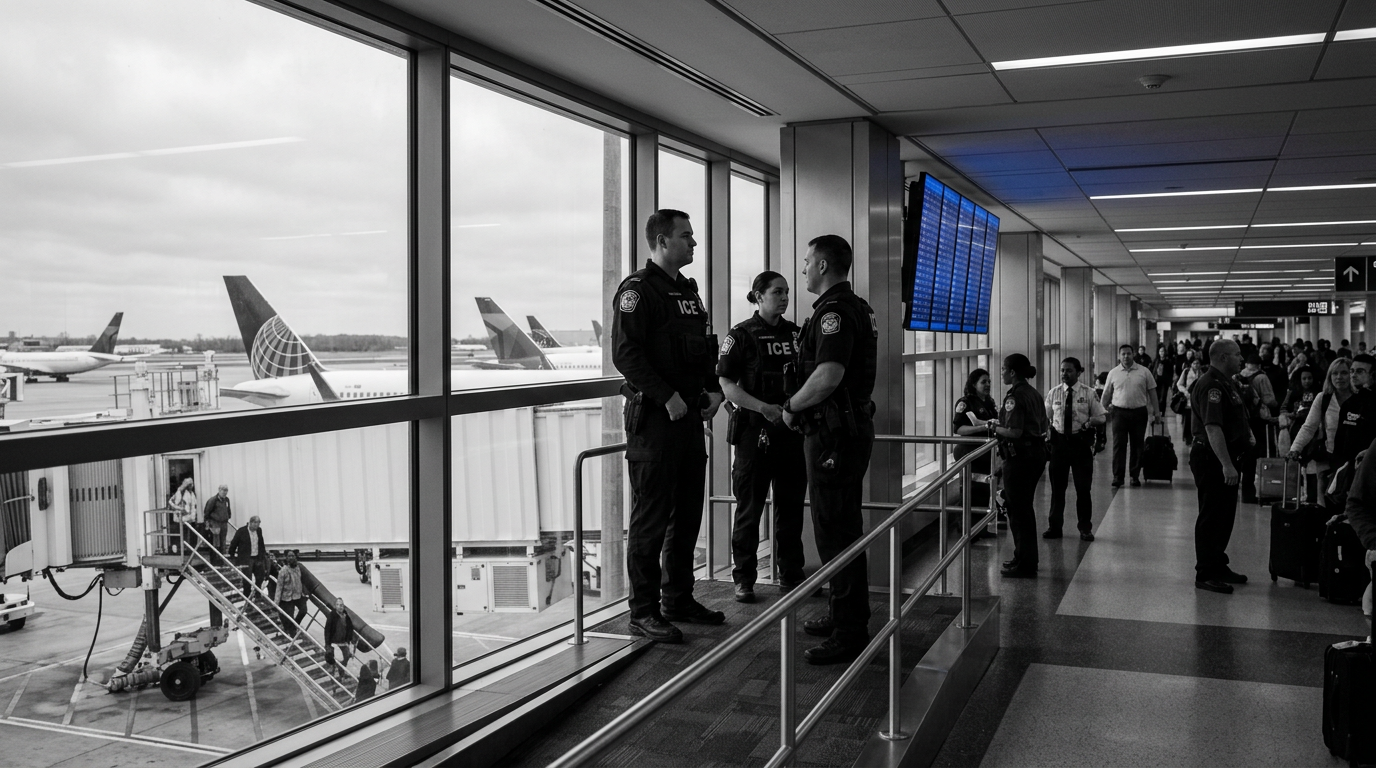
U.S. Immigration and Customs Enforcement (ICE) agents could remain deployed at U.S. airports even after Transportation Security Administration (TSA) employees start receiving pay again, according to White House border czar Tom Homan on Sunday, March 29, 2026. Homan said the decision will depend on how many TSA workers return after a period in which they worked without pay.
The staffing strain stems from a Department of Homeland Security (DHS) shutdown that has reached its sixth week, triggered by a congressional stalemate over funding legislation. During the shutdown, about 50,000 TSA workers have been on the job without pay, and more than 480 agents have resigned. Officials said the disruption has contributed to staffing shortages and longer security lines at airports across the country.
Homan linked the ICE deployment to operational needs at checkpoints, describing a role focused on tasks such as identification checks and addressing other security vulnerabilities. President Trump ordered ICE agents to support airport security operations as absences climbed, reaching as high as 40% at some airports. The stated goal was to free up remaining TSA staff to concentrate on specialized functions, including luggage screening.
A plan is reportedly underway to issue pay to TSA workers by Monday or Tuesday, March 30-31, 2026. Even with that step, the broader question of DHS funding remains unsettled, leaving uncertainty over how quickly staffing levels normalize and whether emergency measures stay in place. Congress is in recess, with the Senate scheduled to return on April 13 and the House on April 14.
Homan said the additional personnel have already helped shorten waits at some locations, pointing to improvements in Houston and Baltimore. At the same time, airport warnings indicate the situation is uneven, with George Bush Intercontinental Airport cautioning that security lines could still exceed four hours. The administration’s approach, as described by Homan, ties the duration of ICE support to real-time staffing and throughput conditions rather than a fixed end date.
For travelers and airlines, the immediate issue is capacity at security checkpoints, where staffing gaps can translate into missed flights and schedule disruptions. For policymakers, the episode underscores how a prolonged DHS shutdown can ripple into day-to-day transport operations, even as lawmakers remain away from Washington.
The next operational inflection point, based on the timeline provided, is whether pay restoration on March 30-31 is followed by a sufficient return rate among TSA workers to reduce reliance on ICE at airports.