HelloFresh Revenue Declines Amid Market Contraction
HelloFresh reported an 11% revenue decline in 2025, with orders falling 12%, signaling a contraction in the meal-kit market.
Atlas Newsdesk ·
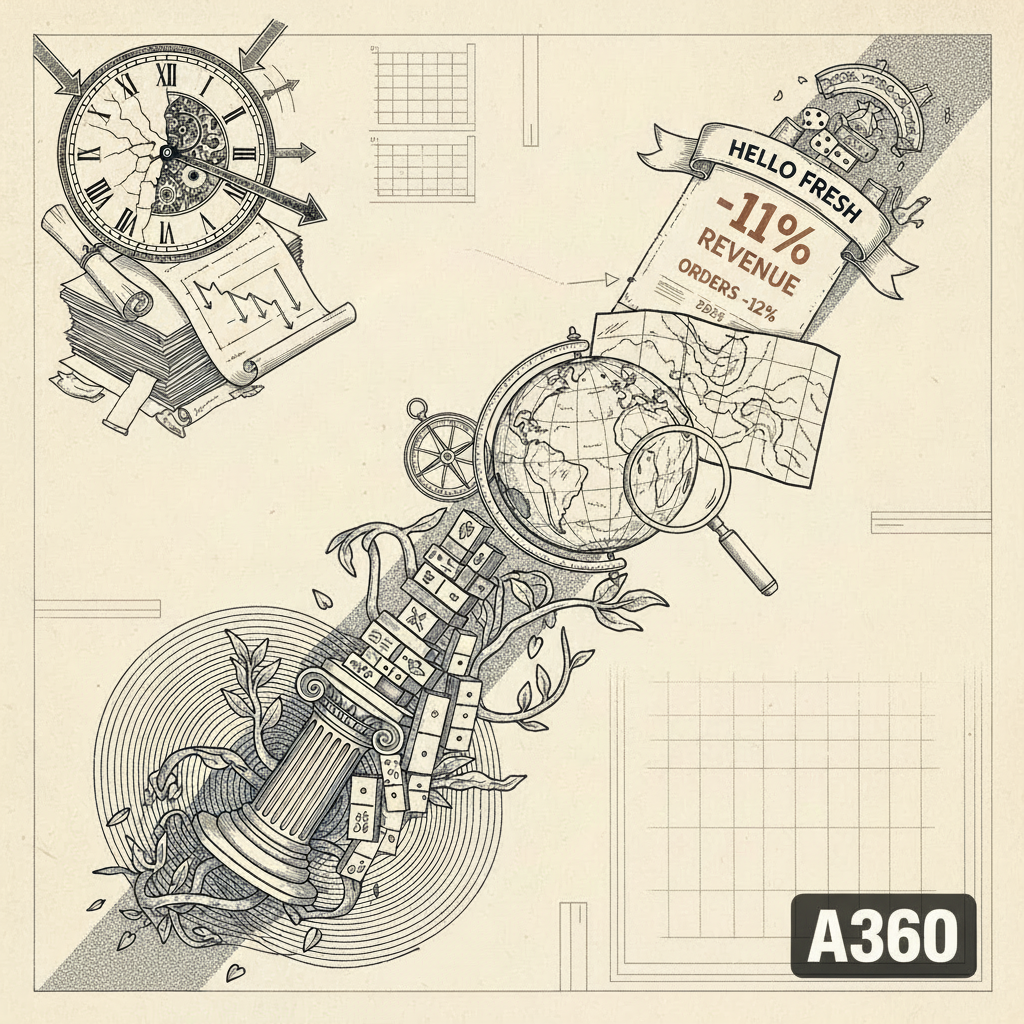
HelloFresh, the Berlin-based meal-kit delivery service, reported an 11% decrease in revenue for 2025, signaling a significant contraction in the global meal-kit market. The company also experienced a 12% reduction in total orders and delivered over 100 million fewer meals compared to the previous year. This downturn follows a period of rapid expansion during the pandemic, with the company now facing challenges from shifting consumer habits and broader economic pressures.
Operational Challenges and Market Exits
The company's market valuation has seen a substantial decline, with its share price falling 93% from its 2021 peak. This erosion reflects reduced demand as consumers grapple with increased cost-of-living expenses, leading to a decreased reliance on convenience-focused meal solutions. HelloFresh initiated a cost-reduction program in 2024, which included the elimination of 900 positions in the United Kingdom and the closure of delivery facilities in Nuneaton.
Further strategic adjustments involved the company's withdrawal from the Spanish and Italian markets due to insufficient profitability. These actions underscore a broader effort to streamline operations and focus on core markets amidst a challenging economic environment.
North American Performance and Future Outlook
In its largest market, the United States, HelloFresh recorded an even more pronounced revenue drop of nearly 17%. The company attributed this sharper decline to manufacturing inefficiencies and concerns regarding meal quality, which negatively affected customer retention rates. These operational issues compounded the impact of a general slowdown in consumer spending.
Looking ahead, HelloFresh projects a continued revenue decline of up to 6% for 2026. This forecast reflects ongoing market headwinds and persistent operational challenges that are expected to influence the company's performance in the near term. The meal-kit sector, which saw a boom during global lockdowns, is now adjusting to post-pandemic consumer behaviors and a more competitive landscape.
Industry Context and Consumer Trends
The meal-kit industry experienced unprecedented growth between 2020 and 2022 as lockdowns increased demand for at-home dining solutions. However, as economies reopened and inflation rose, consumers began to re-evaluate discretionary spending. This shift has led many to reduce subscriptions to services perceived as non-essential, impacting companies like HelloFresh.
The broader economic environment, characterized by high inflation and interest rates, has compelled households to prioritize essential goods and services, often at the expense of premium convenience offerings.
Competitors in the meal-kit space are also navigating similar pressures, with many reporting slower growth or declines. The long-term sustainability of the meal-kit model is now being tested, requiring companies to innovate, optimize supply chains, and demonstrate clear value propositions to retain and attract customers in a cost-conscious market. The focus for HelloFresh and its peers will likely be on efficiency, customer loyalty, and adapting product offerings to meet evolving consumer needs.
Implications
Country Impact: The UK market saw significant job losses and site closures, indicating a challenging operational environment for HelloFresh in key European regions. Withdrawals from Spain and Italy highlight difficulties in achieving sustainable profitability in certain national markets.
Industry Impact: The meal-kit delivery sector is experiencing a post-pandemic contraction, with companies like HelloFresh facing reduced demand. This trend suggests a broader re-evaluation of the industry's growth trajectory and business model sustainability.
Market Impact: HelloFresh's substantial share price decline reflects investor concerns over the company's future profitability and market position. The projected continued revenue decline indicates ongoing pressure on the company's financial performance and valuation.