Hawaii storms have caused $1bn in damage, governor says
Hawaii storms caused about $1bn in damage after up to 50 inches of rain, Gov. Josh Green said Sunday; evacuations topped 230.
Atlas Newsdesk ·
Lead
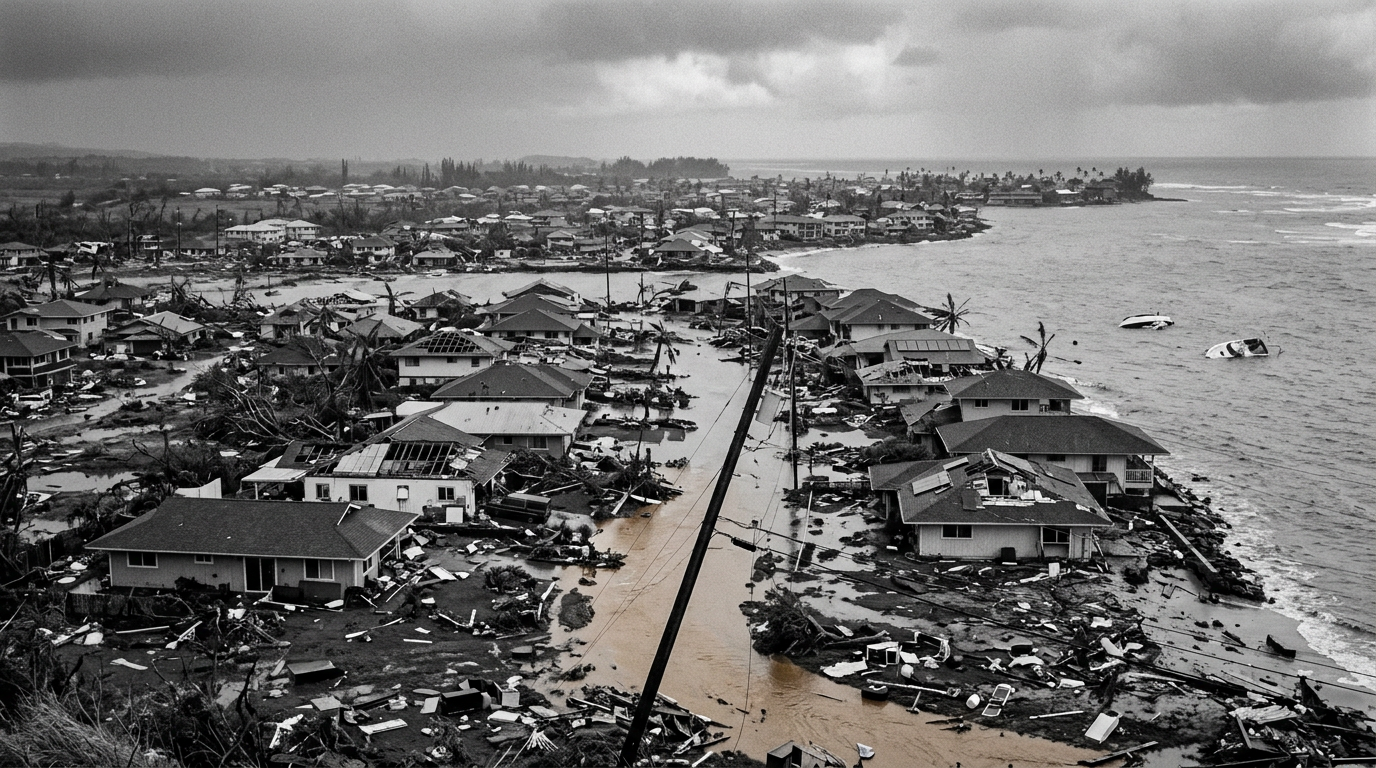
Hawaii is assessing roughly $1 billion in losses after back-to-back storms delivered record rainfall and widespread flooding, according to Governor Josh Green. The heaviest impacts were reported on Oahu, where emergency crews carried out large-scale evacuations as conditions deteriorated.
Green said more than 230 people were moved to safety and that no deaths had been confirmed as of Sunday. Authorities said damage assessments were still underway, meaning the estimate could change as inspections continue.
What happened and where
The storms brought as much as 50 inches (127 cm) of rain, triggering flash flooding and prompting warnings and evacuation orders. By Sunday morning, officials lifted flash flood warnings and some evacuation orders for Oahu, signaling partial near-term relief for the island.
Other parts of the state remained on alert because rainfall threats persisted. On Maui, swift water temporarily shut the Kuihelani Highway before it reopened, while rockfalls were reported on other roads across the island.
Emergency response and infrastructure focus
State and county responders continued to monitor waterways and critical infrastructure. The Hawaii National Guard was watching water levels at the Wahiawa dam after earlier concerns that it could overflow led to evacuations.
Officials said water levels at the Wahiawa dam stabilized over the weekend. Even with that stabilization, authorities indicated the overall scale of damage had not yet been fully determined.
What changed and what comes next
Conditions improved enough on Oahu for some warnings and evacuation orders to be lifted, but the state’s risk picture remained uneven. Maui County anticipated another 8 to 10 inches of rain in the coming days, which could worsen flooding, increase landslide risk, and complicate recovery work.
The White House offered federal assistance as Hawaii continues to evaluate impacts across islands. The timing, size, and specific form of that support were not detailed in the information provided.
Broader context, market relevance, and uncertainties
Green described the flooding as the islands’ most severe weather event since 2004, underscoring the scale of disruption. For households and businesses, the immediate concerns include housing displacement, road access, and the pace at which utilities and public services can normalize.
From a markets perspective, large disaster-recovery bills can affect public finances and insurance costs, while transport interruptions can weigh on local commerce and tourism-dependent activity. However, key details—such as how the $1 billion estimate is distributed across public infrastructure, private property, and insured losses—remain unknown, limiting precision on economic spillovers.
Officials said assessments are ongoing, and additional rainfall forecasts add uncertainty to both damage totals and recovery timelines. For now, the state’s near-term priority remains life safety and stabilizing infrastructure as weather conditions evolve.
💊 Kapsül Analysis
📌 What Happened?
- Two consecutive storms brought up to 50 inches (127 cm) of rain, with major flooding impacts centered on Oahu.
- Governor Josh Green said damages are estimated around $1 billion and more than 230 people were evacuated, with no fatalities confirmed as of Sunday.
- Officials lifted some Oahu warnings by Sunday morning, while Maui saw temporary road closures and rockfalls; monitoring continued at the Wahiawa dam.
🔍 Why It Matters
- A $1 billion damage estimate signals a large recovery burden for households, businesses, and public infrastructure, even as assessments are incomplete.
- Federal assistance has been offered, which can shape the speed and scale of rebuilding once needs are formally documented.
- More rain expected in Maui County (8–10 inches) raises the risk of additional disruption and higher final losses.
📈 Market & Political Impact
- Markets: Disaster costs can influence insurance exposure and municipal/public spending needs, though the loss breakdown is not yet known.
- Macro: Repair activity can shift near-term local demand, while disruptions to transport and services can constrain activity.
- Global: Hawaii’s role in Pacific travel and logistics means prolonged disruption could ripple into tourism flows and supply chains, depending on recovery speed.
👁️ What to Watch
- Updated rainfall and flood guidance, especially for Maui County’s additional 8–10 inches forecast.
- Revisions to the damage estimate as inspections progress across islands.
- Details on federal support mechanisms and timing as assessments are finalized.
📋 Source Status
Single-source
📊 Confidence
Level: Medium — Core figures and actions are attributed to officials, but damage totals and aid specifics are still being assessed.
Implications
Country Impact: Hawaii’s near-term priorities include stabilizing roads, dams, and essential services while damage assessments continue. The offer of federal assistance could affect the pace of recovery, but the form and timing were not specified in the available information.
Industry Impact: Transport and tourism-linked businesses may face interruptions where roads are damaged or access is limited, particularly on Oahu and Maui. Construction and repair services could see increased demand as rebuilding plans take shape, though the scale depends on finalized assessments.
Market Impact: A large disaster estimate can influence insurance exposure and public spending needs, but the distribution of losses between public infrastructure and private property remains unclear. Additional rainfall risk in Maui County adds uncertainty to recovery timelines and final cost totals.