NY21:27
    LDN02:27
    HKG09:27
    TYO10:27
    Gold4,551+1.61%
    Bitcoin77,792+1.57%
    Gold4,551+1.6%
    Bitcoin77,792+1.6%
    LATEST NEWS
    Vergi Hamlesi: Yurt Dışı Gelire 20 Yıllık İstisna12 minutesAT&T Stadium to use blackout curtains for 2026 World Cup match41 minutesU.S. and Taiwan Double Down on Chips to Secure AI Supply Chainsabout 1 hourHudson Institute: Don’t Let Short-Term Frustrations Drive U.S. Policyabout 1 hourGuide to Washington’s Top Free Attractions: Museums, Monuments, and Parksabout 1 hourDC State Advisory Panel on Special Education schedules public meeting April 23about 1 hourAnupama Dathan listed on Georgetown McCourt School directoryabout 1 hourDC-based CDT joins coalition urging Ted Lieu not to preempt state AI lawsabout 1 hourD.C. Policy Center launches Wilkes Fellowship for graduate research on Washingtonabout 1 hourMayor Bowser Unveils Fiscal Year 2027 'Grow DC' Budget Proposal and Prioritiesabout 1 hourNational Gallery of Art opens high-resolution images with expanded Open Accessabout 1 hourD.C. to Use Ranked-Choice Voting in June Primary; Mail Ballots Arriving Nowabout 1 hourNational Gallery of Art lists 'Henri Matisse: Goldfish' exhibition in Washington, D.C.about 1 hourGeorgetown’s McCourt School hosts an ‘About the Joint Program in Public Policy’ pageabout 1 hourNational Gallery of Art’s 'Artworks' database: an online collection guide for DCabout 1 hourVergi Hamlesi: Yurt Dışı Gelire 20 Yıllık İstisna12 minutesAT&T Stadium to use blackout curtains for 2026 World Cup match41 minutesU.S. and Taiwan Double Down on Chips to Secure AI Supply Chainsabout 1 hourHudson Institute: Don’t Let Short-Term Frustrations Drive U.S. Policyabout 1 hourGuide to Washington’s Top Free Attractions: Museums, Monuments, and Parksabout 1 hourDC State Advisory Panel on Special Education schedules public meeting April 23about 1 hourAnupama Dathan listed on Georgetown McCourt School directoryabout 1 hourDC-based CDT joins coalition urging Ted Lieu not to preempt state AI lawsabout 1 hourD.C. Policy Center launches Wilkes Fellowship for graduate research on Washingtonabout 1 hourMayor Bowser Unveils Fiscal Year 2027 'Grow DC' Budget Proposal and Prioritiesabout 1 hourNational Gallery of Art opens high-resolution images with expanded Open Accessabout 1 hourD.C. to Use Ranked-Choice Voting in June Primary; Mail Ballots Arriving Nowabout 1 hourNational Gallery of Art lists 'Henri Matisse: Goldfish' exhibition in Washington, D.C.about 1 hourGeorgetown’s McCourt School hosts an ‘About the Joint Program in Public Policy’ pageabout 1 hourNational Gallery of Art’s 'Artworks' database: an online collection guide for DCabout 1 hour
    Global Affairs

    Google SpaceX talks to launch orbital data centers for AI

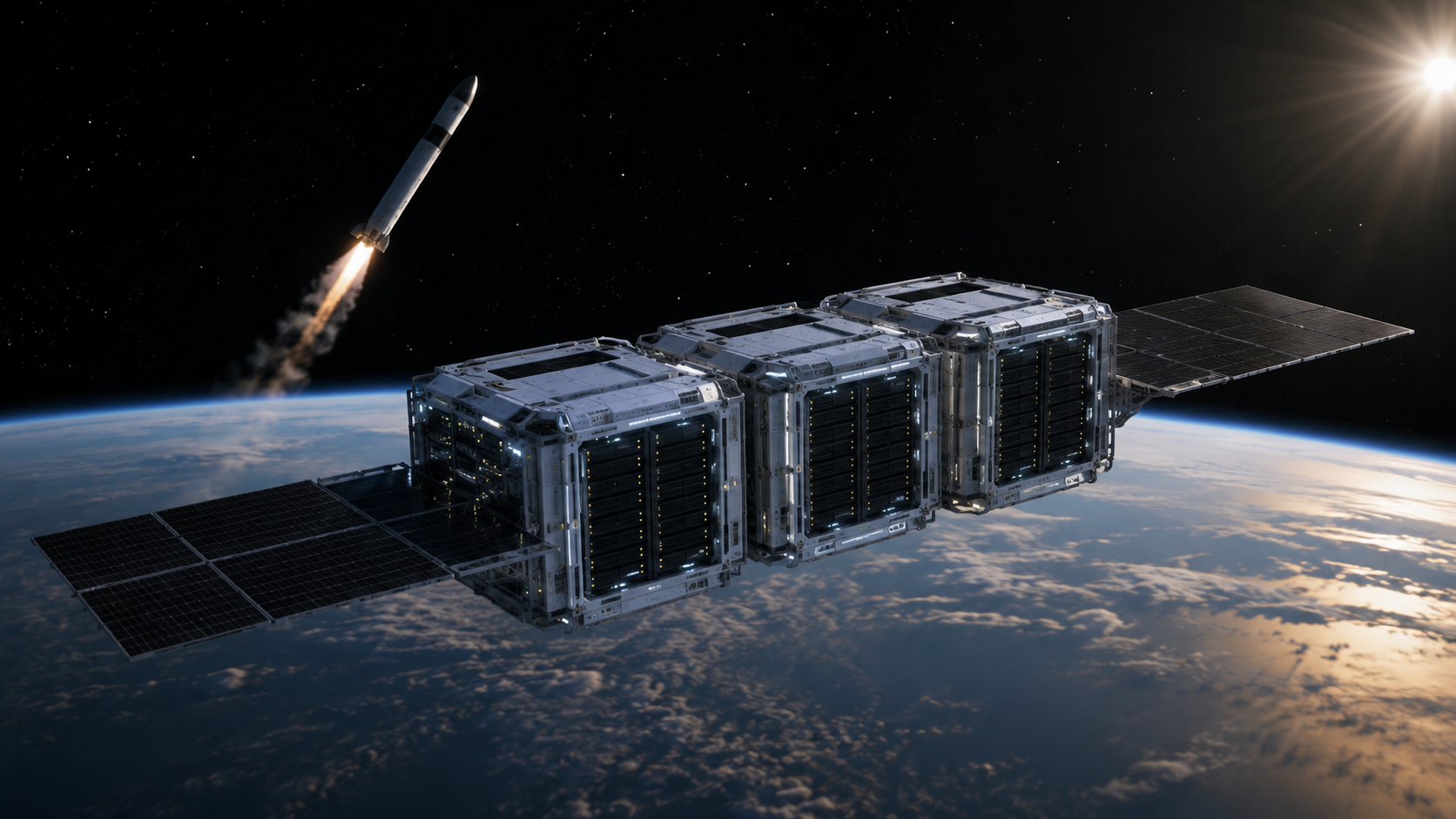
    Google SpaceX are reportedly negotiating launches to place data centers in orbit as the cloud firm explores space-based computing to meet surging AI demand.

    Published13 May 2026, 23:25:53
    Google SpaceX talks to launch orbital data centers for AI
    A360
    Key Takeaways✦ Atlas AI
    01

    Google has explored using SpaceX launches to place data centers in orbit, reflecting a strategy to address AI growth that exceeds terrestrial power and cooling limits.

    02

    SpaceX’s recent Colossus access deal with Anthropic highlights the company’s dual role as a launch provider and compute partner, signaling broader industry convergence.

    03

    Technical obstacles, launch costs, and mounting regulatory scrutiny over orbital congestion and spectrum will determine whether orbital data centers proceed beyond pilot phases.

    Atlas AI

    Atlas AI

    Google SpaceX are reportedly negotiating launches to place data centers in orbit as the cloud firm explores space-based computing to meet surging AI demand.

    Partnership talks and alternative launch options

    According to a report citing unnamed sources, Google has engaged SpaceX in discussions about launching orbital data centers. Those talks sit alongside broader conversations Google is holding with other commercial launch providers.

    Industry players named as possible alternatives include Blue Origin, Rocket Lab and the United Launch Alliance, though the company has not confirmed which firms it has formally approached. Google has not publicly announced contracts or timelines for any orbital deployments.

    Market drivers and recent industry moves

    The push for orbital compute follows rapid growth in AI model size and energy consumption, which cloud operators say is outpacing available terrestrial power, real estate and cooling capacity. Space-based data centers are being considered to tap solar power and vast orbital real estate as a way to scale compute without the same on-ground constraints.

    SpaceX recently opened access to its Colossus supercomputer for AI developer Anthropic, a move that underlines the firm's expanding role as both a launch provider and an active player in the compute ecosystem. Anthropic has publicly indicated interest in deploying "multiple gigawatts of orbital AI compute capacity," citing limits on land, power and cooling on Earth.

    Technical, commercial and regulatory hurdles

    Experts say orbiting data centers face engineering challenges including power generation, thermal management, radiation hardening and satellite servicing. Launch capacity and costs remain central commercial hurdles, even as reusable rockets have reduced per-launch expenses in recent years.

    Regulatory and orbital-debris considerations will also shape any program. National and international regulators are increasingly scrutinizing operations that add mass and traffic to low Earth orbit, and operators will need to secure spectrum and safety approvals before large-scale deployment.

    For Google, winning a launch partner would represent both a strategic advance in cloud infrastructure and a complex procurement and regulatory effort. For SpaceX, negotiating with major cloud providers could expand its business beyond traditional launch and satellite services.

    Analysts will watch upcoming announcements from Google and potential launch contractors for contract terms, planned power architecture and projected timelines. Any formal agreements or regulatory filings will clarify whether orbital data centers are near-term experiments or longer-term infrastructure initiatives.

    Implications include shifts in cloud competition, new supply-chain demands for space-grade hardware, and potential acceleration of space traffic management policies. Observers should expect a mix of technical pilots, incremental regulatory filings and strategic partnerships as next steps.

    Share

    Related Articles

    Atlas360

    Sign up for Atlas Daily

    The daily global news briefing you can trust.

    every weekday·Read it now

    or
    Sign in

    Already subscribed? Sign in and we won't show you this message again.