Newsom Links Iran Conflict to California Gas Prices
California Governor Newsom attributes the state's recent gas price surge to the Trump administration's Iran conflict, as prices hit $5.20/gallon.
Lauren Collins ·
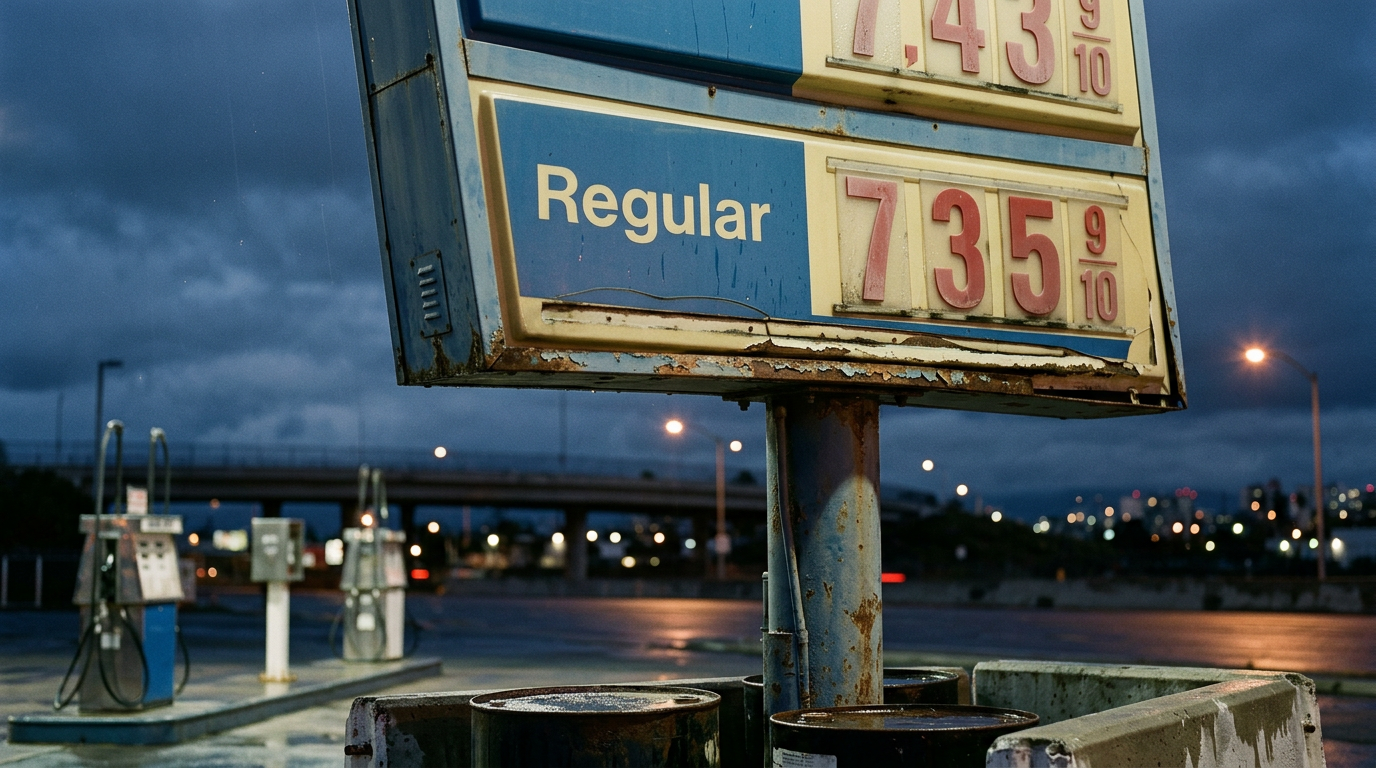
California Governor Gavin Newsom has publicly attributed the recent increase in gasoline prices across the state to the Trump administration's involvement in the ongoing conflict in Iran. On March 13, 2026, Newsom stated that the military actions were a direct cause of the rising fuel costs. This assertion comes as California's gasoline prices climbed significantly, reaching $5.20 per gallon.
This price point represents a 12% increase within a single week and places California's average $0.57 higher than Washington state, which holds the second-highest fuel prices nationally. A spokesperson for Governor Newsom's administration, Anthony Martinez, indicated that California's fuel costs had remained stable prior to the Trump administration's initiation of the conflict, suggesting a lack of a clear strategic plan.
Administration Responds to Accusations
In response, White House spokesperson Taylor Rogers countered Newsom's claims, instead blaming California's state-specific policies for its elevated gasoline prices. Rogers affirmed the Trump administration's approach to maintaining stability in energy markets during "Operation Epic Fury," the codename for the military engagement.
Global Oil Market Volatility
These political exchanges occur amidst considerable volatility in global oil markets. International crude prices recently surged to a four-year high following joint U.S.-Israeli military strikes conducted in Iran. In an effort to stabilize the market and mitigate further price increases, an international coalition subsequently initiated the largest emergency release of oil reserves in history.
Underlying Factors in California Prices
Newsom's public statements are perceived by some as an attempt to redirect criticism regarding California's consistently high gasoline prices. Historically, these elevated costs have been a point of contention, with various political figures, including Republicans and some Democrats, attributing them to the state's stringent environmental regulations and policies affecting the oil and gas industry. These regulations often lead to higher production and refining costs within the state.
Economic and Political Implications
The interplay between geopolitical events and domestic energy prices highlights the complex challenges faced by policymakers. While global conflicts can undoubtedly influence commodity markets, local regulatory frameworks also play a significant role in determining consumer costs. The current situation underscores the political sensitivity of fuel prices, particularly in a state like California with its large economy and high cost of living.
Further developments in the Iran conflict and the effectiveness of the emergency oil release will be critical factors influencing future price trends. Domestically, the debate over California's energy policies is likely to intensify as the state navigates both global market pressures and its own regulatory environment.
Implications
Country Impact: The political discourse surrounding gas prices could intensify, potentially influencing public opinion on both foreign policy and domestic energy regulations. States with high fuel taxes or environmental policies may face increased scrutiny.
Industry Impact: The oil and gas industry faces heightened volatility due to geopolitical tensions, impacting production, refining, and distribution costs. Emergency oil releases, while stabilizing prices, can also signal underlying supply concerns.
Market Impact: Global oil markets are experiencing significant price fluctuations, driven by geopolitical events. This volatility can affect inflation rates, consumer spending, and the profitability of energy-dependent sectors, potentially leading to broader economic instability.