Beijing's Chick-fil-A: A Taste of America for Visa Seekers
Chick-fil-A near the U.S. Embassy in Washington has become a popular pre-interview stop for some Chinese visa applicants, per recent accounts.
Ayla Demirhan ·
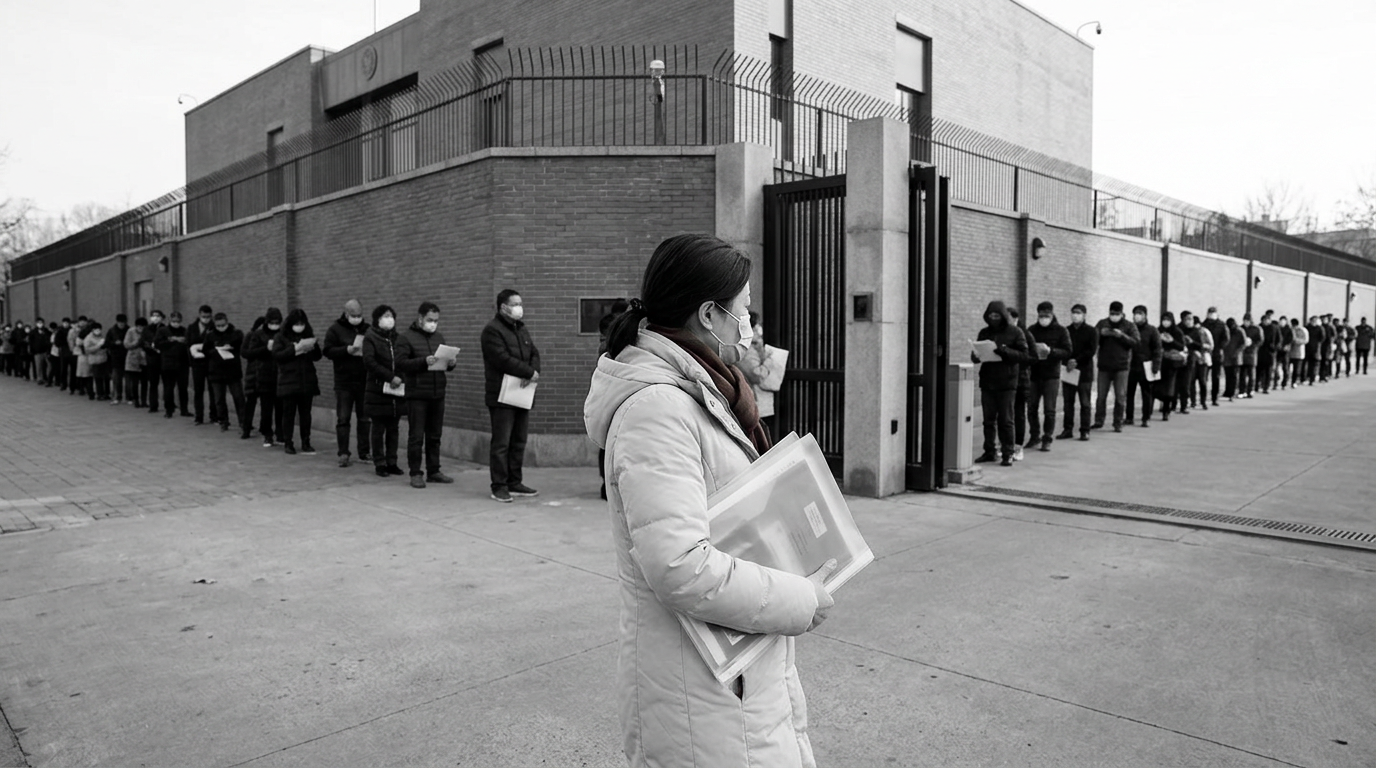
WASHINGTON, D.C. — A Chick-fil-A restaurant in Washington has become an informal gathering point for Chinese nationals preparing for U.S. visa interviews, according to accounts shared by applicants over recent months. The restaurant’s appeal is tied to its location near the U.S. Embassy, where visa interviews take place, and to a growing belief among some applicants that eating there beforehand brings good luck.
The practice was described as starting with Chinese students who said they received visas after stopping at the restaurant and then credited that pre-interview meal as part of their success. As those stories circulated, the idea spread beyond a small circle and began to function as a shared ritual for others facing the same high-stakes appointment.
Applicants have used social media to exchange tips and personal experiences, with WeChat and Xiaohongshu cited as key platforms where the tradition has been promoted. Posts and discussions have encouraged new applicants to follow the same routine, turning a simple stop for food into a recommended step in pre-interview preparation for some travelers.
The restaurant sits about a 10-minute walk from the embassy, making it a convenient place to wait before an interview. Applicants often arrive hours ahead of their scheduled time and use the space to pass the time, settle nerves, and prepare mentally for the meeting. Observers have noted a visible rise in Chinese customers, particularly on weekdays, as interview traffic concentrates during the workweek.
While the belief in an “auspicious” stop is rooted in personal anecdotes rather than any official process, the pattern highlights how communities can create informal customs around formal immigration procedures. In this case, a fast-food location has taken on a symbolic role for a specific group navigating the U.S. visa system in Washington.
What remains unclear is how widespread the practice is beyond those active on the cited platforms, and whether the increase in weekday Chinese customers is sustained over time. Still, the restaurant’s emergence as a cultural reference point underscores how proximity, convenience, and shared online narratives can shape real-world behavior around major administrative milestones.