Fermi lease lifts shares on $6.5 billion AI campus deal
Fermi said TensorWave’s 15-year lease could generate about $6.5 billion, giving Project Matador its first binding customer commitment.
Jason Kwon ·
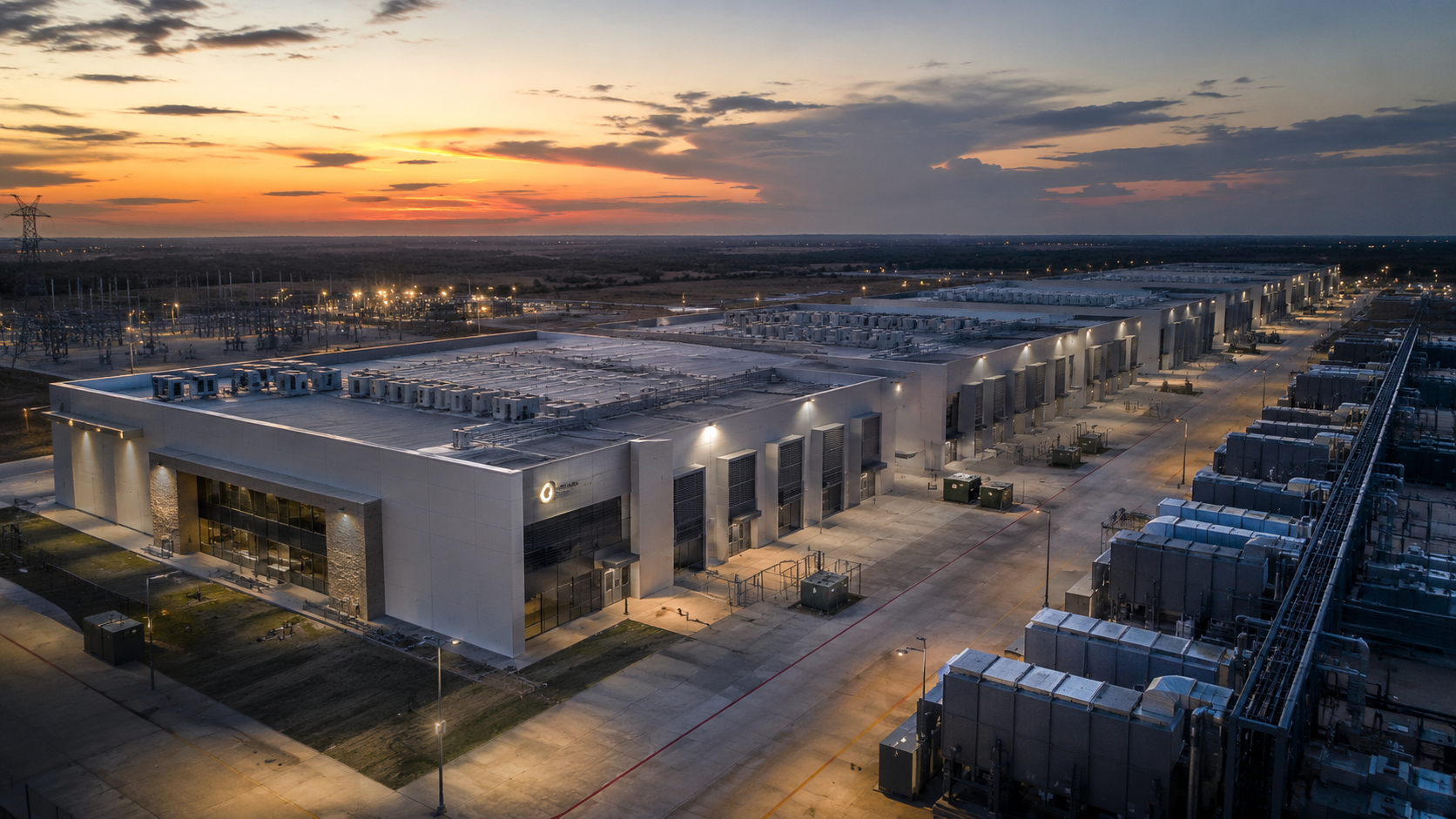
Fermi lease with TensorWave covers 222 MW and about $6.5 billion in contracted revenue, giving Project Matador its first customer.
FRMI rose 19.4% in post-market trading on Monday, August 10, 2026, after Fermi disclosed the binding lease. The company said the initial term runs 15 years, with expansion rights that could lift the relationship above 650 MW across additional data centers.
TensorWave anchors Project Matador
The customer is TensorWave, an AI cloud provider that would use the Texas site for large-scale training and inference workloads. Fermi said the first facility is designed to support tens of thousands of next-generation AMD Instinct GPUs once fully delivered.
The 222 MW figure applies after commencement of the final delivery phase, according to Fermi. That matters in AI infrastructure because power availability, not only server supply, has become a gating item for operators trying to deploy dense GPU clusters.
Fermi Chairman Marius Haas called the agreement "a tremendous vote of confidence in Fermi." He said the project’s developers, guarantors and financing providers were part of a committed partner network, and described TensorWave as the type of anchor customer the campus was built to serve.
Permits frame the buildout
Project Matador is not being pitched as a paper campus alone, according to the company’s description of the site. Fermi said construction is well under way, with about 6 GW of a planned 17 GW already permitted.
The company also said more than $1.5 billion has been invested in the buildout to date, an absolute figure that gives the lease a capital base rather than only a revenue target. First power is targeted for later this year, Fermi said, making the timing of grid connection the next test of the plan.
The customer commitment lands in a market where Fermi said many data center projects are still seeking capital. That framing should be read as the company’s view of its position, not an independent measure of industry funding conditions.
Power delivery sets the risk
The direct company effect is straightforward if Fermi delivers on schedule: a first binding customer gives Project Matador a contracted revenue stream and a reference customer for a campus designed around AI demand. If delivery slips, the same 15-year headline term would still leave investors focused on execution risk at the power, construction and GPU deployment layers.
For TensorWave, the lease offers a route to capacity for AMD Instinct-based AI services at a time when model training and inference require large blocks of electricity and specialized chips. The source material does not state when TensorWave expects to bring customer workloads online, so the operating timeline remains tied to Fermi’s staged delivery.
The industry read-through depends on whether the expansion rights become exercised capacity rather than optional acreage. If the partnership grows beyond 650 MW, it would point to larger AI cloud buyers locking up power-backed campuses earlier in the development cycle; if it remains at the initial 222 MW, the deal is still material but narrower in sector signal.
The macro channel is energy and capital demand, not a verified change in growth forecasts. If first power arrives later this year and the permitted pipeline advances, the project adds another load center to the AI infrastructure buildout; if permitting, financing or interconnection slows, the constraint shifts back from customer demand to physical delivery.
The main open questions are the final delivery schedule, the timing of first power, the conditions attached to expansion rights and the pace at which AMD Instinct GPUs can be installed at scale. Fermi has supplied the revenue, power and investment figures; the next proof point is whether those numbers convert into operational capacity.