Fed rate hike puts Warsh vote talks under fresh scrutiny
Fed rate hike drew President Trump's call for 1% rates after a unanimous FOMC vote, sharpening scrutiny of the White House's posture toward Warsh.
Lauren Collins ·
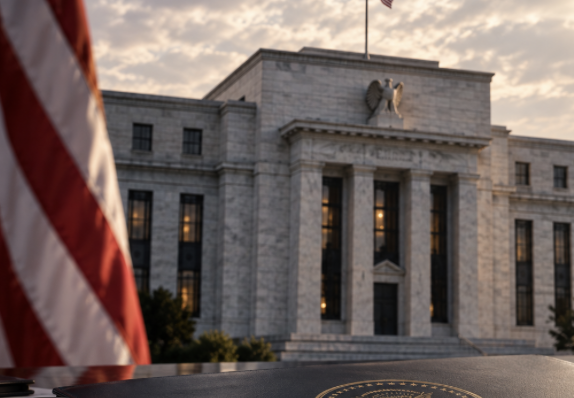
The Fed rate hike drew President Trump's demand for rates of 1% or less after officials lifted the benchmark by 25 basis points Wednesday.
The Federal Open Market Committee approved the increase unanimously, making it the first rise in three years and the first under Chair Kevin Warsh. The vote landed against months of public pressure from Trump, who has argued that borrowing costs should be lower.
Trump told reporters Wednesday evening that he had spoken with Warsh before the decision about how the chair planned to vote. "I talked to Kevin and I said, 'you might as well vote with the board because it's not going to matter,'" Trump said.
Warsh faces a unanimous vote
Warsh avoided addressing the president's account when reporters asked about White House contact during his press conference earlier in the day. "I've got nothing for you on a discussion with the president," Warsh said.
The exchange put fresh attention on the line between presidential pressure and Federal Reserve decision-making. The central bank's rate votes are formally made by the FOMC, not the White House, and unanimity gave Warsh institutional cover even as Trump described the board as hostile to his preferred policy.
Asked whether he retained confidence in Warsh, Trump said he did. He added that Warsh had "a very tough board" and called the FOMC "a bunch of politicians," language that turned a monetary-policy decision into a fight over accountability and control.
Trump presses the deficit argument
Trump's public case for lower rates has rested partly on trade. Before the Fed decision, he wrote on Truth Social that the US trade deficit was a reason to cut interest rates quickly, days after threatening to stop trading with countries running deficits with the United States unless the Fed reduced rates.
The administration's argument links borrowing costs, trade balances and negotiating leverage, though the source material did not provide a central-bank or independent economic assessment of that claim. The Fed, through Warsh's public appearance, did not accept Trump's framing in the quoted remarks available from Wednesday.
A senior White House press aide, Kush Desai, criticized the decision in a television appearance, calling the rate increase a "rather unfortunate decision by the Federal Reserve" and saying it was "not backed by a particularly compelling economic case." That response cut against recent White House efforts to present a more hands-off posture toward the central bank.
Independence becomes the policy hinge
The immediate policy effect is a higher benchmark rate by 25 basis points, a move that can feed through to credit cards, mortgages, business loans and dollar funding conditions. For households and companies, the practical question is whether the Fed treats Wednesday's increase as a one-off adjustment or the start of a tighter path.
If Trump continues to press the Fed publicly, the macro channel runs through confidence in the central bank's independence and expectations for future policy. For the Fed, the institutional risk is that each vote becomes read less as an economic judgment and more as a test of political alignment.
If Warsh keeps the committee united, the Fed can argue that policy is being set through its normal voting process despite presidential criticism. If divisions appear later, banks, rate-sensitive companies and bond investors would have less clarity about whether inflation, growth, trade politics or White House pressure is driving the next decision.
The open questions are concrete: whether Trump escalates his pressure after the unanimous vote, whether Warsh gives a fuller account of his contact with the president, and whether the FOMC's next move is held, raised or reversed. Those answers will shape both the cost of credit and the credibility of the Fed's decision-making process.