Fed meetings cut would reshape market rate calendar norms
Fed meetings could become less frequent after Kevin Warsh raised a six-a-year schedule, a shift that would change rate signaling.
Lauren Collins ·
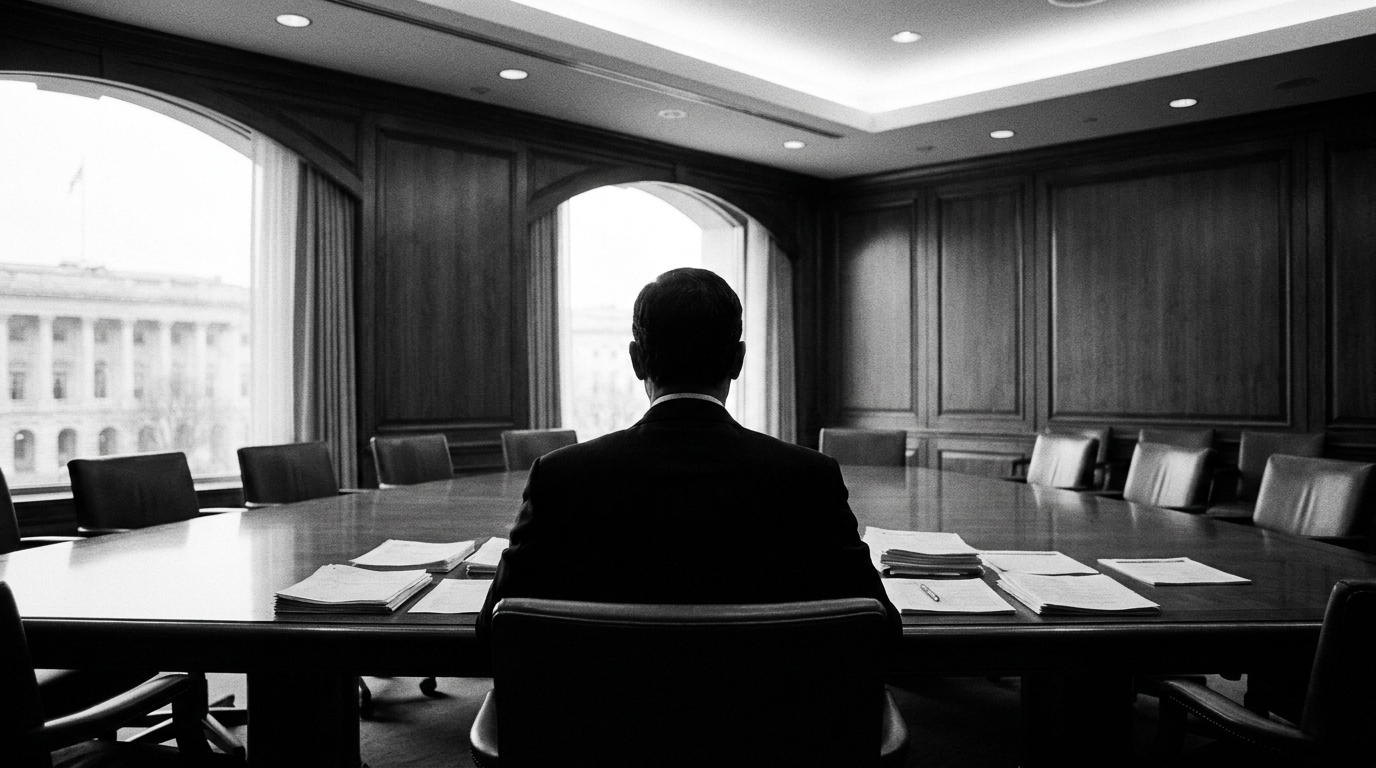
Fed meetings could become less frequent after Kevin Warsh raised a six-a-year schedule with colleagues, a shift that would alter rate signaling.
The idea surfaced during Warsh's second gathering as Federal Reserve chairman, according to people briefed on the discussion. It was not presented as a formal plan, but as a question for the 12-member Federal Open Market Committee to consider.
The FOMC currently gathers in Washington eight times a year to decide the target range for interest rates. A move to six scheduled meetings would reduce the number of fixed points when investors, banks, businesses and foreign central banks look to the Fed for fresh guidance.
Six meetings enter the discussion
Warsh's early chairmanship has already pointed toward a less expansive communications style. In his first two meetings, the committee released shorter policy statements, according to the source material.
He also said this week that he expects to keep holding a news conference after each policy meeting this year. He has not said whether that practice will continue after this year, leaving one of the Fed's most visible communication tools open for later review.
The institutional question is not simply how often officials sit around the table. A thinner calendar would change the rhythm of public signals, market repricing and political scrutiny around monetary policy decisions.
Calendar contracts limit quick change
Near-term mechanics could slow any shift. The Fed published tentative meeting dates through January 2028 last September, and outside events have been planned around that schedule.
Interest-rate futures contracts also reflect the existing calendar, according to people familiar with the issue. Changing the cadence could therefore affect not only policymakers' diaries, but also the market infrastructure built around scheduled Fed decisions.
The legal floor gives the central bank room to meet less often than it does now. Federal law requires at least four FOMC meetings each year, while the eight-meeting pattern has been in place since 1981.
The committee's own procedures also preserve flexibility. The chair, or any three committee members, can call an additional meeting, a safeguard that would matter if the Fed reduced scheduled sessions but faced a shock requiring a faster policy response.
Warsh revisits an earlier argument
Warsh has made a version of this case before. In a 2014 review commissioned by then-Bank of England Governor Mark Carney, he .
The Bank of England accepted the recommendation and shifted to the new schedule in 2016. The rationale was that economic judgments often do not change much over four weeks, and fewer meetings could give policymakers more time to assess data before deciding.
That history matters because it frames Warsh's current question as part of a broader governance view rather than a one-off scheduling preference. At his confirmation hearing, he was asked whether he would preserve the Fed's eight-meeting calendar and did not make a commitment.
Markets lose repeated signals
If the Fed kept the current schedule, the immediate effect would be continuity: markets would retain eight regular decision points, the FOMC would avoid disrupting contracts tied to meeting dates, and global central banks would keep using a familiar U.S. policy calendar.
If officials moved to six scheduled meetings, the macro effect would come through communication rather than the legal power to set rates. Fewer meetings could make each decision carry more weight, reduce opportunities for incremental guidance and leave investors more dependent on speeches, data releases and unscheduled statements.
For the Fed itself, the gain would be more time between decisions and potentially less pressure to fine-tune public language every few weeks. The cost would be a narrower set of routine moments to explain policy when inflation, labor-market data or financial conditions move quickly.
For the wider financial sector, the winners could be institutions that prefer fewer policy events and less calendar-driven volatility. The losers could include traders and firms that price, hedge or communicate around the current eight-meeting structure.
The open questions are practical and political: whether the committee wants the change, whether existing dates through January 2028 can be altered cleanly, and whether investors would treat a quieter Fed as calmer or less transparent. Those answers will determine whether Warsh's discussion becomes an operating change or stays an internal test of how much the central bank should say, and how often.