Fed bets pin euro near one-month low as yields climb again
The euro held near a one-month low as rising Treasury yields and CME pricing put a Fed rate increase on Wednesday close to certain.
Atlas Newsdesk ·
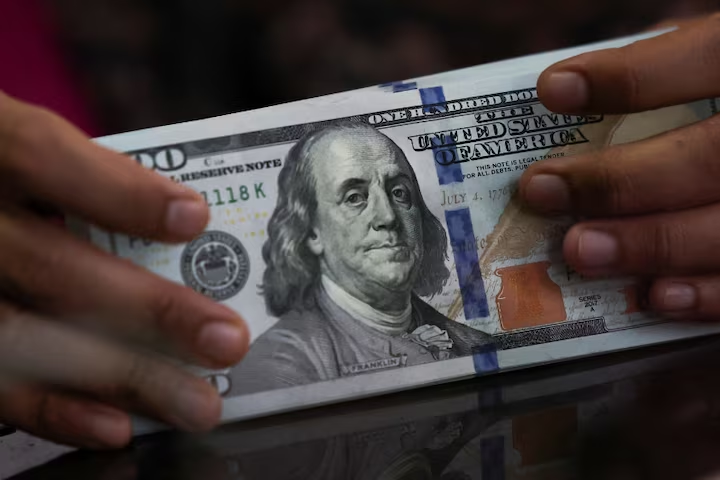
The euro held near a one-month low Tuesday as the dollar gained before a near-certain Fed rate increase. The 10-year Treasury yield hit 5.03%, its highest since 2007.
CME's FedWatch tool put the probability of a Wednesday increase above 94%, after oil prices rose and Treasury yields climbed. The dollar's six-currency index rose 0.1% to 99.61, near a two-week high, while the euro slipped 0.1% to $1.153, close to its weakest since August 14.
5.03% yield reshapes Fed bets
Benchmark US 10-year Treasury yields rose 7.2 basis points on the day to 5.03%, a level last seen in 2007. When yields rise, bond prices fall; that repricing tightened financial conditions before the Fed's Wednesday decision.
Francesco Pesole, FX strategist at ING, said the bond market was sending a warning to policymakers before the decision. “From an FX perspective, we see it as a positive event for the dollar,” Pesole said.
The renewed rate expectations followed a stronger-than-expected US jobs report and a pickup in August consumer prices, according to the source data. Paul Eitelman, global chief investment strategist at Russell Investments, said investors would study the Fed's updated projections to judge whether one move points to more.
Sterling weakens before BOE call
Sterling fell 0.1% to $1.34 before the Bank of England's Thursday rate decision. Data compiled by LSEG showed consensus tilted toward no change this week, while further increases were still expected by year-end.
UK labor figures gave policymakers another constraint before the meeting. Vacancies fell to a four-year low, while pay growth held steady, leaving the rate debate split between a cooling jobs market and persistent wage pressure.
Yen longs meet BOJ risk
The yen retreated from a seven-month high as the dollar rose about 0.4% to 154.94 before an expected Bank of Japan rate increase on Friday. Earlier Tuesday, the yen briefly weakened beyond 155 per dollar for the first time in a week.
Positioning also shifted toward the Japanese currency, with speculators moving net long for the first time since February, according to market data cited in the source material. Elsewhere, the New Zealand dollar dipped 0.1% after touching a two-month low, while the Australian dollar fell 0.2% to $0.712.
The offshore yuan was little changed at 6.714 per dollar, near its strongest level in more than three years. Chinese data showed industrial activity improved in August, while consumption remained soft, giving the currency a different domestic backdrop from the rate-driven moves in the dollar, euro and yen.
Oil and inflation set scenarios
If the Fed raises rates and its dot plot signals more tightening, higher dollar yields would tend to support the dollar through wider rate differentials. That path would keep pressure on the euro, raise dollar-funding costs globally and squeeze importers and rate-sensitive sectors.
If the Fed delivers a hike but frames it as a one-off response to inflation and energy prices, the dollar's advance may lose momentum. In that case, the euro could stabilize if rate spreads stop widening, while commodity currencies would depend more on equity risk appetite and China-linked demand.
If the Bank of England holds while the Bank of Japan raises rates, relative policy shifts could matter more than the Fed alone. Sterling would remain exposed to weak UK labor data, the yen would test whether long positioning can survive volatility, and global currency markets would keep oil prices and bond yields at the center of the next move.