Faster Markets, Faster Crashes: IMF Flags Risks in Blockchain Trading
IMF warns blockchain trading systems could speed up financial crises. Learn about risks, stablecoins, and tokenized finance. Policymakers urged to act.
Atlas Newsdesk ·
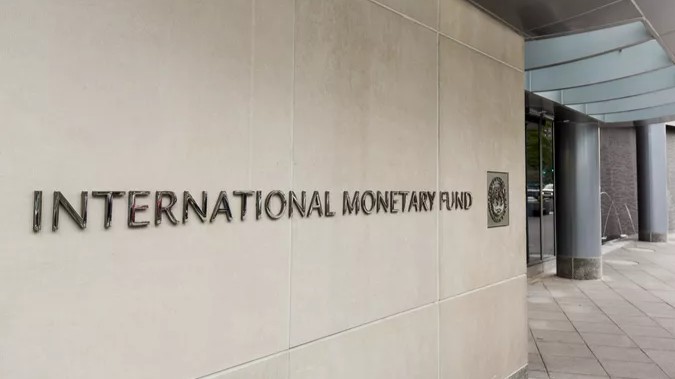
The International Monetary Fund (IMF) has issued a caution regarding the potential for blockchain-based trading systems to accelerate financial crises, outpacing regulators' ability to respond. This warning comes despite the acknowledged benefits of the technology, such as reduced costs and the elimination of settlement delays in financial transactions.
Leading financial institutions, including BlackRock and JPMorgan, are actively exploring blockchain-based trading, seeking to enhance transaction efficiency and potentially boost revenues by simplifying the trading of conventional assets like stocks and bonds. Stock exchanges are also advancing in this area; Nasdaq has applied for regulatory approval to facilitate tokenized stock trading, and the New York Stock Exchange is developing a platform for continuous trading of tokenized equities and exchange-traded funds (ETFs). Paul Atkins, Chairman of the SEC, has voiced his support for these initiatives.
While the acceleration of settlement processes is viewed as a significant advantage, the IMF points out that it could also dismantle crucial protective mechanisms. The current delays in trade settlement serve as buffers, providing regulators and central banks with essential time to intervene during periods of market instability. In a system characterized by instantaneous and continuous trade settlement, crises could intensify rapidly, potentially leaving insufficient time for intervention before margin calls are initiated.
The IMF also underscored the risks associated with the increasing integration of privately issued stablecoins within these systems. The organization drew a parallel between stablecoins and money-market funds, noting that while generally stable, they are susceptible to sudden withdrawals during stressful market conditions.
The IMF further presented three potential trajectories for tokenized finance: a globally coordinated system underpinned by central bank digital currencies, a fragmented landscape of incompatible national platforms, or a system predominantly controlled by private stablecoins offering reduced public safeguards. The institution emphasized the necessity for policymakers to take timely action to address fundamental shifts in risk and trust inherent in tokenization. This includes ensuring that settlement systems are supported by secure assets and clearly defining the legal standing of tokenized securities. The IMF concluded by stressing that the window of opportunity to influence the trajectory of digital finance is narrow, demanding proactive rather than reactive measures.