European Stocks Fall as U.S.-Iran Tensions Push Oil Higher
European markets are dropping as rising U.S.-Iran tensions lift oil prices, threatening growth and reversing recent investor optimism.
Atlas Newsdesk ·
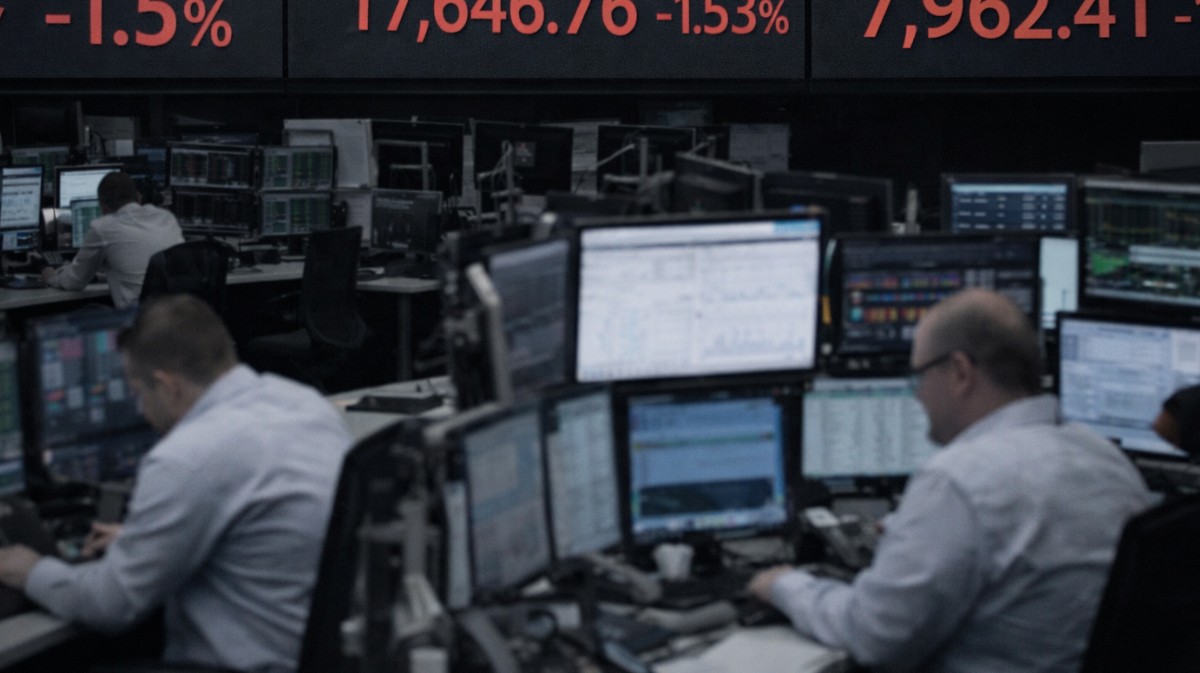
European markets are starting the week on the back foot as renewed U.S.-Iran tensions push oil prices higher and revive concerns over energy supply. Futures tied to the STOXX 600 fell about 1.5%, with Germany’s DAX and France’s CAC 40 also down more than 1%.
The shift follows a rapid deterioration in sentiment after the U.S. seized an Iranian-linked cargo vessel and Tehran warned of retaliation. Hopes for de-escalation have faded, particularly with a ceasefire set to expire Tuesday and Iran signaling it may reject further talks.
The Strait of Hormuz remains central to the market reaction. While Iran has moved to restrict access again, shipping data shows more than 20 vessels transited the waterway on Saturday, the busiest day in weeks. That mixed picture—partial flow but rising risk—is keeping traders cautious.
Direct Impact: Energy Drives the Selloff
Oil prices are climbing on fears of disruption to a route that carries roughly a fifth of global energy supply. For Europe, which relies heavily on imported energy, that translates quickly into inflation pressure and weaker growth expectations.
Energy companies are likely to benefit from higher crude prices, but the broader market impact is negative. Travel, transport, and industrial stocks face rising input costs, while investors reassess earnings outlooks if energy remains elevated.
Macro Angle: Fragile Confidence
The pullback marks a reversal from last week, when European equities posted gains on expectations the Strait would remain open. That optimism is now being tested by geopolitical reality, with markets increasingly sensitive to each development in the Gulf.
What to watch today: oil price momentum, confirmation of whether U.S.-Iran talks proceed, and any disruption to shipping flows through Hormuz. Sustained tension risks deeper market losses, while even a temporary diplomatic breakthrough could stabilize sentiment.