Europe resilience rises as Lagarde cites shock buffers
ECB President Christine Lagarde says Europe's resilience has grown, as tougher financial rules and clean-energy investment help the euro zone absorb shocks.
Atlas Newsdesk ·
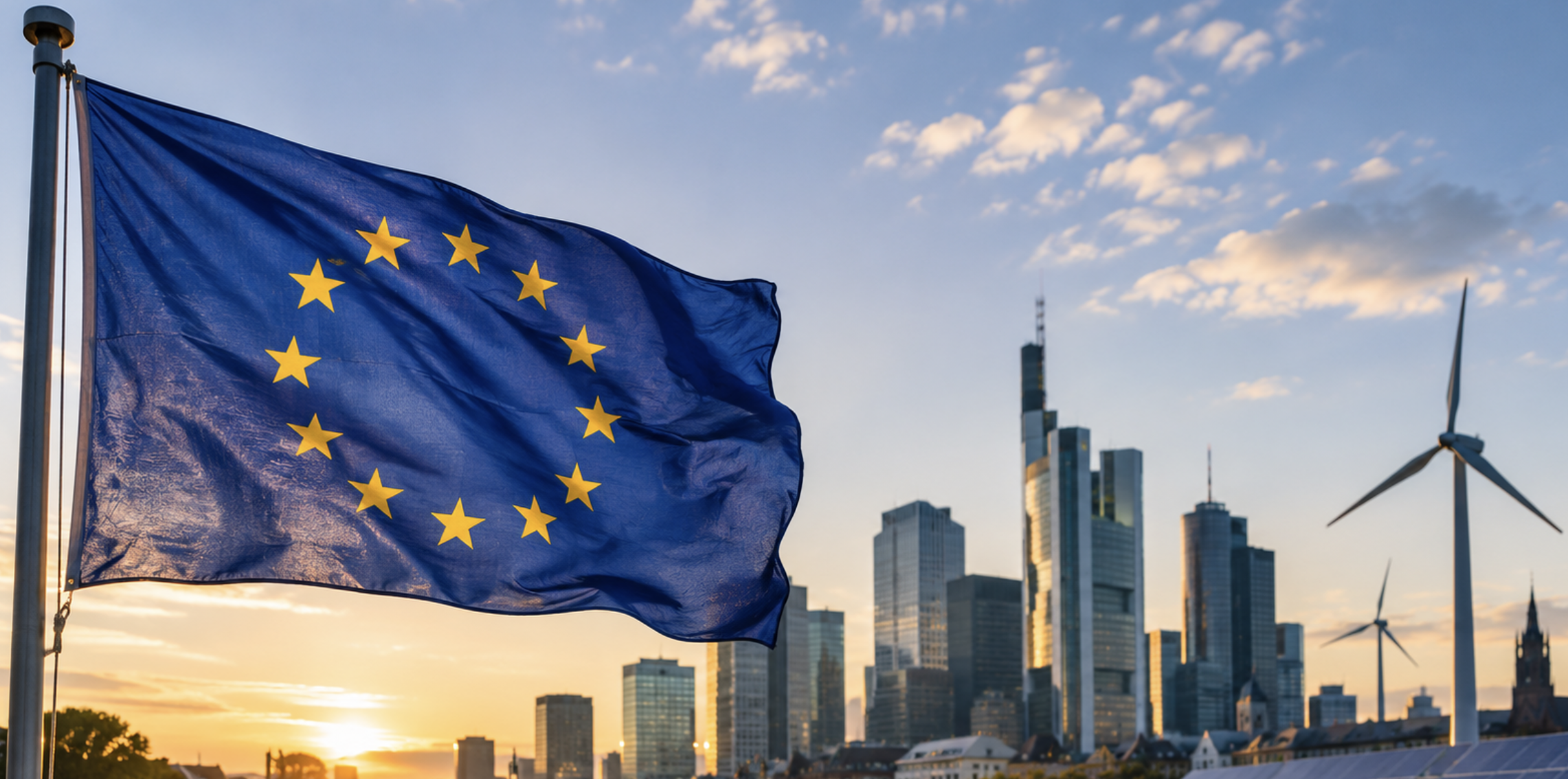
Europe resilience has improved as stronger financial safeguards and clean-energy investment helped the euro area absorb recent global shocks, ECB President Christine Lagarde said.
Speaking on Monday at the European Central Bank’s annual gathering in Sintra, Portugal, Lagarde argued that regulatory upgrades and the green transition have reduced the economic fallout from events that previously could have destabilized inflation and growth.
Lagarde points to banks, trade and energy as stress tests
Lagarde highlighted banking-sector reforms and fiscal frameworks as key elements that have made the region less exposed to external turbulence. She said those changes helped limit spillovers when Silicon Valley Bank collapsed in the United States, with no euro-area lenders destabilized as a result.
She also pointed to earlier trade pressures, saying the euro zone weathered tariff measures introduced by US President Donald Trump without major financial instability. More recently, Europe has endured what she described as an exceptionally large oil-supply disruption, while containing broader economic damage.
Alongside policy changes, Lagarde emphasized investment in low-carbon energy as a contributor to resilience. Reduced reliance on volatile fossil-fuel imports can soften the impact of energy shocks on household budgets, business costs, and inflation dynamics.
Inflation risks persist even as shocks are more contained
Lagarde said Europe may now be more likely to face disturbances that move inflation away from the central bank’s objective, but that the consequences for the real economy are increasingly limited. That, she argued, creates a policy environment where the ECB may confront more situations that are neither easy to ignore nor severe enough to trigger an immediate, aggressive response.
“While we are more likely to face shocks that push inflation away from target, the resilience Europe has built means their effects on our economy are more contained,” Lagarde said. She added that policymakers could “more often find ourselves in an intermediate zone” between temporary disruptions and those requiring a forceful reaction.
The remarks come as officials monitor inflation data closely, with Eurostat figures watched for signs of renewed momentum or cooling in price pressures. The ECB has emphasized that the path of inflation, rather than any single indicator, will guide decisions on interest rates.
Sintra debate shifts to whether more tightening is needed
ECB policymakers are meeting in the Portuguese resort only weeks after raising interest rates in response to price pressures tied to the conflict in the Middle East. The central question now is whether the stance is restrictive enough to return inflation sustainably to target.
Lagarde noted that tensions have eased following a peace deal, though she cautioned that its durability is “far from assured.” That uncertainty keeps energy and supply-chain risks on the policy radar, even as oil prices have retreated since the ECB’s latest rate increase.
Some officials continue to argue that rates may need to rise further. Executive Board member Isabel Schnabel has said borrowing costs probably still have to increase, based on current conditions.
For markets and households, the policy debate matters because further tightening would raise the cost of loans and potentially slow demand. For the ECB, the challenge is calibrating policy when the economy is better insulated against shocks, yet inflation can still be pushed off course by geopolitics, trade disputes, or energy disruptions.
Next steps will hinge on incoming inflation readings, wage developments, and how quickly lower energy costs feed through to prices across the euro area. Policymakers in Sintra are expected to use the retreat to test assumptions about resilience and to refine how the ECB responds when shocks land in Lagarde’s “intermediate zone.”