Euro-Area Growth Slows to 0.1% as Energy Shock Lifts Inflation
Euro-area growth slowed to 0.1% in Q1 as inflation hit 3%. Energy costs & Iran war raise stagflation risks before ECB rate decision.
Atlas Newsdesk ·
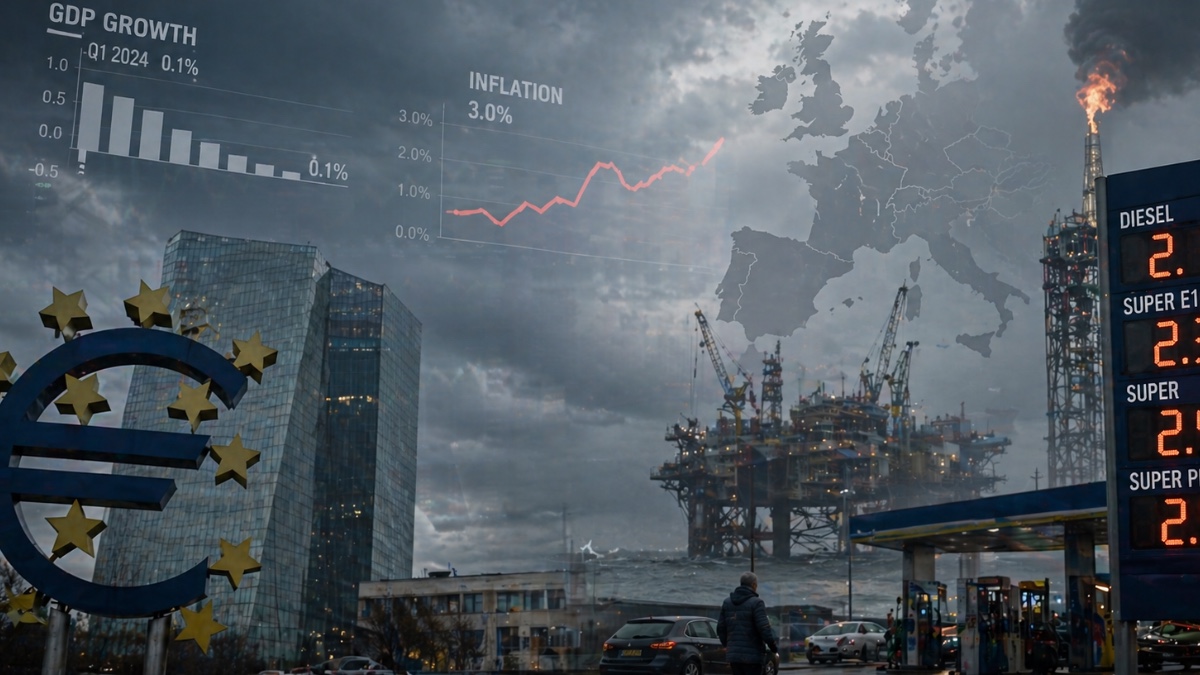
The euro-area economy expanded just 0.1% in the first quarter, falling short of expectations and signaling a loss of momentum at the start of 2026. The figure came in below the 0.2% forecast in a Bloomberg survey. Among major economies, Spain again outperformed with 0.6% growth, while Germany posted a modest 0.3% increase. France delivered no growth, underscoring uneven conditions across the region.
War-driven energy shock builds The slowdown coincides with a sharp rise in energy costs triggered by the conflict involving Iran, which has begun to feed into the region’s economic outlook. The first-quarter data capture only the early phase of the disruption, suggesting the full impact has yet to materialize. Higher fuel and input costs are already weighing on business activity and consumer spending. That pressure is expected to intensify as supply disruptions ripple through markets.
April inflation hits 3% mark Price pressures are moving in the opposite direction of growth, with euro-area inflation accelerating to 3% in April. That marks the fastest pace since September 2023. The increase highlights how energy costs are filtering quickly into consumer prices. It also interrupts the disinflation trend that had allowed policymakers to consider easing monetary policy earlier this year.
Diverging national performance emerges The latest data reveal a widening gap among the bloc’s largest economies. Spain continues to benefit from strong domestic demand and tourism, while Germany’s modest expansion reflects fragile industrial recovery. France’s stagnation points to weaker consumption and investment trends. These divergences complicate policymaking for the European Central Bank, which must set a single policy for a fragmented economy.
ECB faces tightening dilemma today The data arrive just hours before the ECB’s latest interest rate decision, putting policymakers in a difficult position. Slowing growth would عادة argue for looser policy to support activity. However, rising inflation—driven by external energy shocks—limits the central bank’s flexibility. Any premature easing risks entrenching price pressures, while maintaining tight policy could deepen the slowdown.
Stagflation risk returns to debate The combination of weak output and rising prices has revived concerns about stagflation, a scenario Europe has largely avoided in recent years. The region’s dependence on imported energy makes it particularly vulnerable to geopolitical shocks. If energy prices remain elevated, businesses may cut back further while passing costs on to consumers. That dynamic could suppress growth while keeping inflation above target.
Unclear path as conflict evolves Much depends on how the Middle East conflict develops and whether energy markets stabilize. A prolonged disruption could amplify both inflation and growth headwinds in the coming quarters. Policymakers may be forced into reactive measures rather than preemptive ones. For now, the data suggest the euro-area economy is entering a more fragile phase with limited room for policy error.