Drought risk rises as El Niño hits cocoa and coffee in Africa
Cocoa and coffee producers in Africa are bracing for El Niño-driven heat and drought as conflict-related disruptions add strain to farm output and prices.
Atlas Newsdesk ·
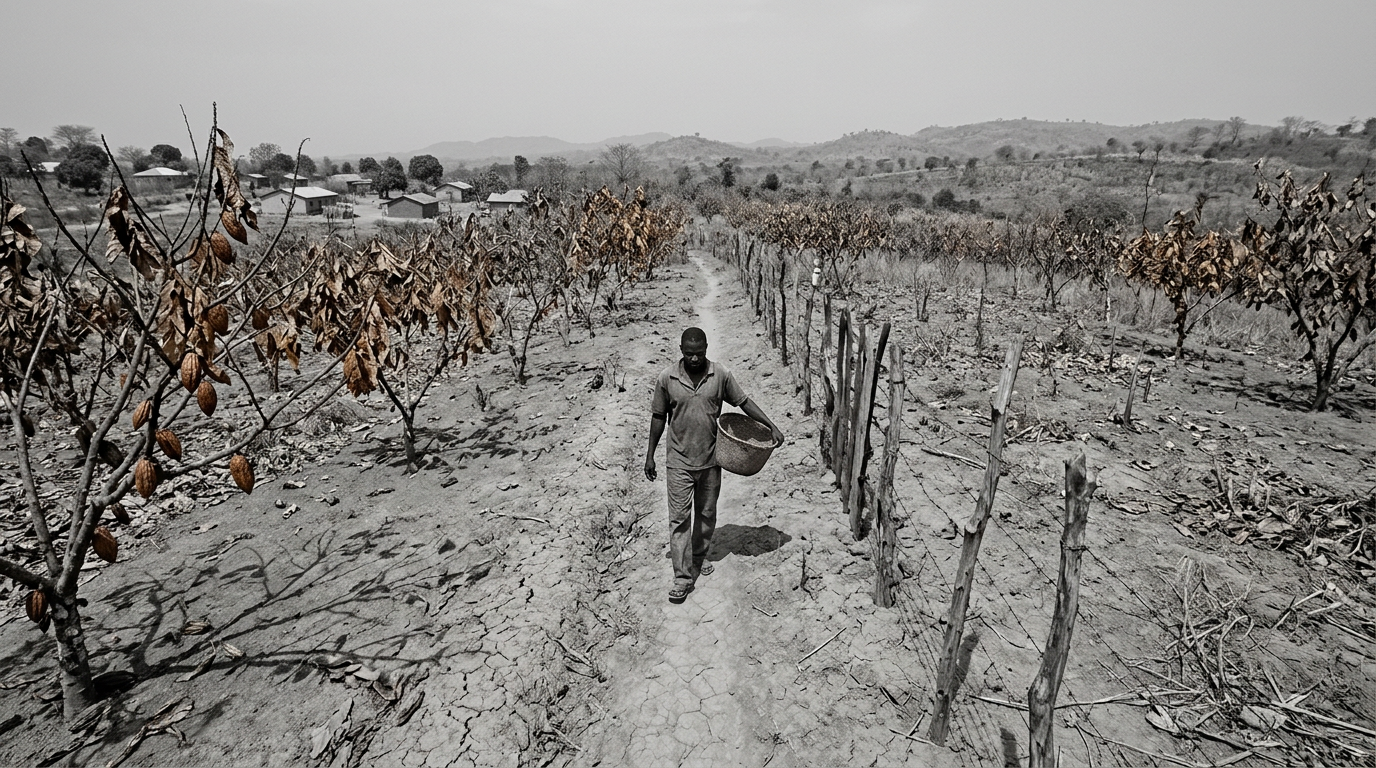
Cocoa and coffee growers across Africa face a renewed weather threat as El Niño conditions raise the risk of heat and drought during key growing periods.
The warning comes as agricultural supply chains are already dealing with spillover from the Iran war, adding pressure to economies that rely heavily on crop exports.
El Niño raises drought risk for major cocoa origins
Scientists have cautioned that the current El Niño phase could be unusually strong, a concern because the pattern typically pushes global temperatures higher and shifts rainfall.
For West Africa, the biggest immediate risk is reduced moisture, which can limit pod development and lower yields for cocoa trees that are sensitive to extended dry spells.
Ghana and Côte d’Ivoire are central to the global cocoa balance, together supplying more than half of world production.
Any material shortfall from those origins can quickly tighten availability for processors and chocolate manufacturers, with the knock-on effect felt in global soft commodities pricing.
Recent shortages showed how fast prices can surge
El Niño-linked dry conditions in 2023 and 2024 were associated with global cocoa shortages that helped propel prices to record highs.
Despite the surge, many farmers in Côte d’Ivoire were unable to capture the full upside because the country’s pricing system sets farmgate rates at the start of the season.
That gap between international prices and what growers receive can affect incentives and investment decisions, especially when producers face rising costs for inputs and labor.
While cocoa has been the headline market, coffee crops are also exposed to unusual heat and rainfall disruptions, increasing the chance of uneven flowering and reduced bean development in some areas.
Conflict-driven shocks add stress to an already tight sector
The agricultural outlook is being complicated by wider economic strains linked to the Iran war, which has contributed to uncertainty in trade, transport, and prices for essentials.
In Africa, those pressures can translate into higher costs of getting crops to ports, reduced access to finance, and greater difficulty planning for the next season.
This week, the International Monetary Fund’s Africa director said the institution would increase support for countries facing conflict-related shocks.
The IMF signaled that these disruptions may persist for months, implying that emergency financing needs and macroeconomic stress could remain elevated alongside weather risks.
For commodity markets, the combination of climate volatility and geopolitical disruption heightens the chance of rapid price swings, with downstream effects on food manufacturers and consumers.
For policymakers in producing countries, the next test will be whether safety nets, pricing policies, and financing tools help farmers manage volatility without undermining longer-term production.
Key watchpoints include rainfall trends in West Africa and how quickly financial support reaches countries and rural communities facing simultaneous climate and conflict-driven shocks.