Doval border account puts US-India security ties back in Washington frame
Ajit Doval’s account of an Indian intelligence team detained by Chinese forces adds a human-scale reminder of why the India-China border remains central to…
Lauren Collins ·
Doval border account puts US-India security ties back in Washington frame
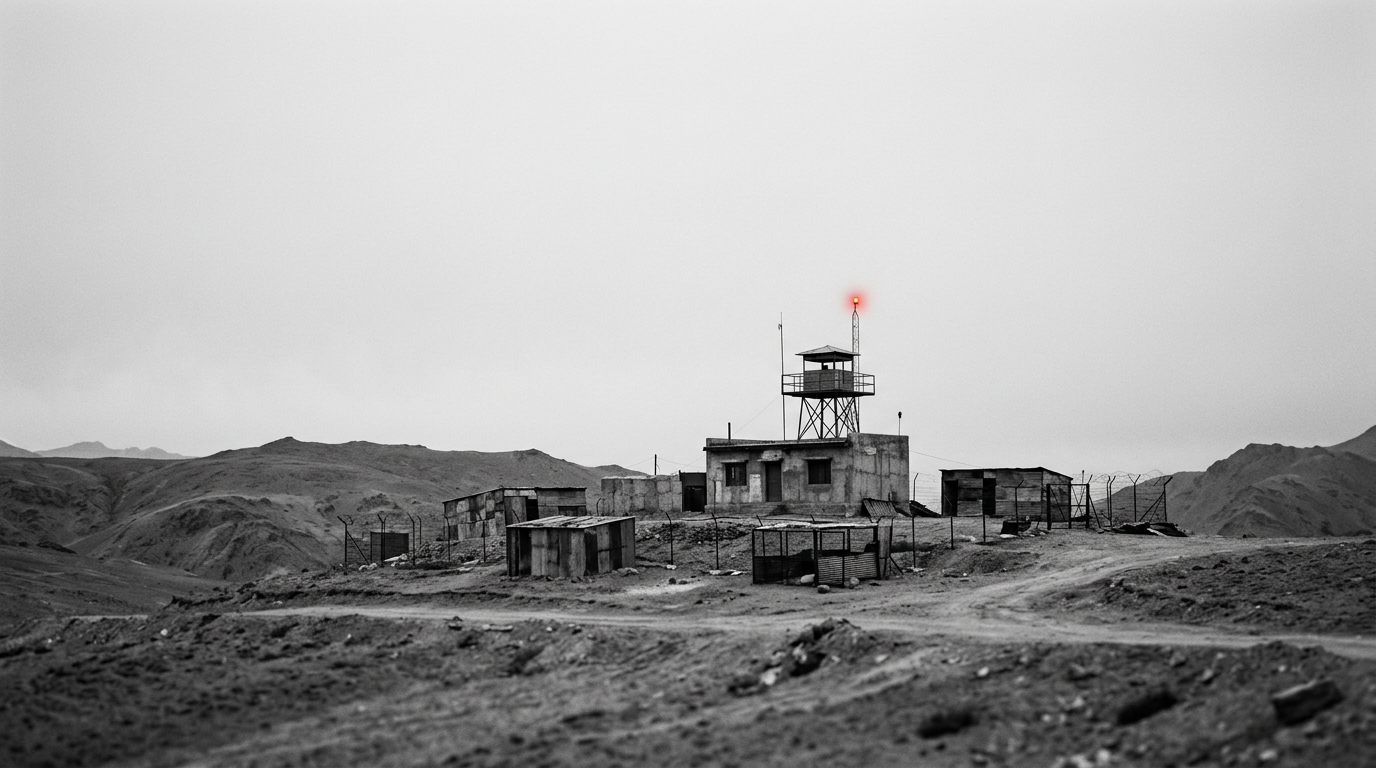
WASHINGTON, September 19, 2026, India’s national security adviser, Ajit Doval, has revived attention in Washington to a durable weak point in Indo-Pacific strategy: the risk that the China-India border can flare even when diplomacy is active. Doval recalled an early intelligence assignment in Sikkim in which Indian personnel were detained, interrogated by Chinese forces and later returned to India, an episode that underscores why US officials treat India’s border security capacity as part of the wider China balance.
Ajit Doval
For Washington, the account matters less as a memoir than as a reminder of operational risk. The US strategy toward India depends on cooperation with a partner that is not a treaty ally, shares US concern about Chinese coercion, and still guards its freedom of action in any crisis.
Doval is not a ceremonial figure in New Delhi’s security system. As India’s national security adviser, he sits near the center of decisions that cut across intelligence agencies, the military, the foreign ministry and the prime minister’s office, giving him influence over how India manages China, Pakistan and domestic security threats. His account of a border team’s detention therefore lands in Washington as more than personal history; it comes from an official associated with India’s hard-security posture.
The Sikkim reference also matters because the India-China frontier has long been a place where patrol routes, maps and political signaling can collide. The two governments have used military talks and diplomatic channels to manage the line, but border management mechanisms do not remove the possibility of local confrontation. For US officials, that creates a planning problem: a crisis between Beijing and New Delhi could pull attention, intelligence assets and diplomatic bandwidth into the Himalayas while Washington is also focused on Taiwan, the South China Sea and alliance coordination in the Pacific.
US-India security ties have expanded over the past two decades through defense trade, military exercises, intelligence-related arrangements and technology cooperation, but the relationship still differs from America’s alliances with Japan, South Korea or Australia. India wants better capabilities and closer coordination with the US; it does not want to be treated as a subordinate part of a US-led bloc. That tension shapes the Washington debate: how to deepen interoperability with Delhi without asking India to accept alliance obligations it has historically avoided.
The border story also sharpens a question for Congress and the Pentagon. If India faces recurring pressure on land from China, US support that is useful in a crisis may look less like symbolic statements and more like surveillance cooperation, logistics planning, secure communications, mountain warfare exchanges and faster defense technology delivery. Those mechanisms can be technical, but they carry strategic weight because they shorten decision cycles when a border incident moves faster than diplomacy.
Think tanks in Washington have long split over how far the US should go. One camp argues that a stronger India complicates Chinese military planning and gives Washington a more resilient Indo-Pacific balance. Another warns that expectations should stay modest because India will cooperate selectively, especially when US priorities do not align with New Delhi’s immediate border, Russia or regional concerns.
The Doval episode sits inside that debate. It gives advocates of closer cooperation a concrete example of why India wants intelligence and military readiness along the frontier; it also reminds skeptics that India’s most urgent China problem is continental, while much of US Indo-Pacific planning is maritime.
The falsifiable test is whether Washington and New Delhi convert this renewed attention into an operational step by December 31, 2026.
If the US and India announce an upgraded intelligence-sharing channel, a joint defense mechanism, a higher-tempo exercise plan or a public Pentagon, National Security Council or Indian foreign ministry statement linking China deterrence to interoperability, the Doval account will have aligned with a broader policy shift. If no such mechanism appears and both sides stay with general language on cooperation, the episode will remain a vivid reminder of border fragility rather than evidence of a new phase in US-India security coordination.