Crusoe and Linum claim 25% cheaper training, but power risk looms
Linum trained a 2B-parameter text-to-video model with 25% lower costs. For CTOs using off-grid GPU clusters, power stability is the hidden budget risk.
Edward Mullen ·
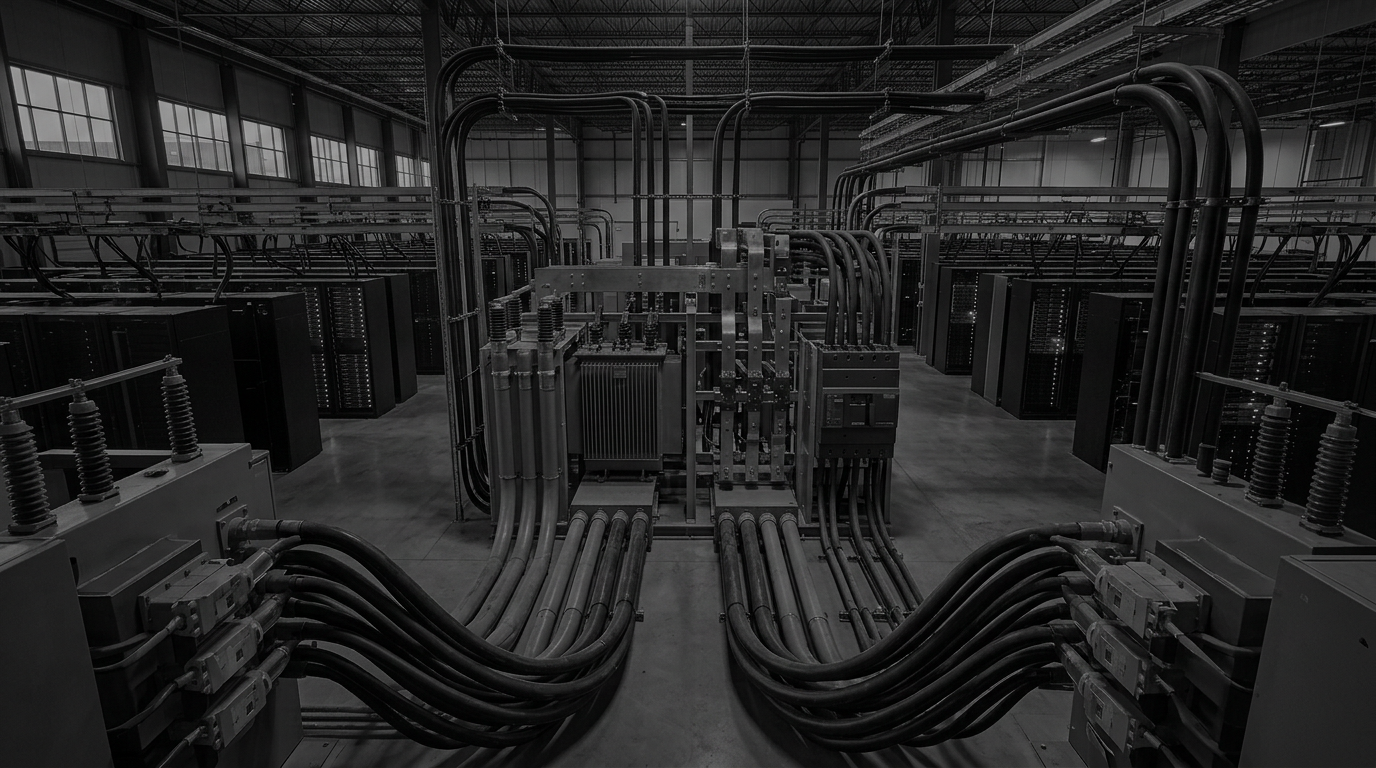
Promising a twenty-five percent reduction in training costs, off-grid infrastructure providers are attracting frontier developers looking to escape hyperscaler pricing. This discount, however, ignores the volatile physical layer of stranded-energy microgrids. Within twelve months, migrating synchronous workloads to these remote clusters will expose teams to localized power sags, driving internal engineering-recovery costs up by thirty percent and erasing the initial savings.
What Crusoe actually says—and what it doesn’t
Crusoe’s blog positions the collaboration as a proof point: a frontier text‑to‑video model trained cheaper and with superior network performance compared with an unnamed baseline. The post attributes the outcome to Crusoe’s infrastructure and the teams’ ability to overcome “significant data densit…” challenges, implying pipeline and systems tuning across storage and interconnect.
But the blog does not enumerate the baseline (which cloud, what interconnect, or which job mix), nor does it break down the cost variance by dollar drivers such as GPU‑hour price, job efficiency, or failure/retry overhead. No one in the reported packet is on the record.
That omission matters. “25% lower training costs” is a headline metric only if we know against what, at what utilization, and with what failure profile. In distributed synchronous training, a single preemption or power flicker can force a global rollback to the last checkpoint, inflating both runtime and engineering hours. The blog is silent on these dynamics.
The missing variable: off‑grid power stability can rewrite your cost curve The consensus read making the rounds is simple: stranded‑energy GPU clusters are cheaper, greener, and operationally identical to hyperscalers. That frames the choice as a price‑per‑GPU‑hour arbitrage.
It also assumes the power profile is functionally the same.
If the provider’s capacity is anchored to off‑grid microgrids—flared gas or remote renewables—localized sags, generator trips, and brief outages are a first‑order operational variable, not an edge case.
In tightly coupled synchronous training runs, those events translate into checkpoint‑restart cycles and corruption‑recovery work that never shows up in list price.
Crusoe’s post highlights “better networking” and 25% lower training costs; it does not disclose power‑event rates, mean time between interruptions, or the checkpointing and recovery stack Linum had to build. For executives, the risk is not that these events never happen—it’s that a handful of them, on the wrong jobs, consume the very 25% you thought you’d saved. The blog gives no telemetry to falsify that concern.
Why this is a procurement problem, not just an ops one If you buy the savings as‑is, you will write the wrong contract. The unit that governs budget predictability here is not the GPU‑hour—it is the cost per successful training step at your target throughput and failure rate.
Hyperscalers expose preemption classes and availability SLAs in ways your finance team can price; off‑grid providers must match that with clear, auditable power‑stability guarantees and remedies. When the marketing claim centers on “25% lower training costs” without a line for recovery engineering, your team will end up carrying that cost internally—rewriting schedulers, tightening checkpoint cadence, and building idempotent data loaders to survive flickers.
Those are real headcount and timeline hits that erase list‑price advantage.
This is not an abstract reliability rant. In multi‑week synchronous runs, a failed checkpoint or an unclean shutdown can cascade: hours spent validating model and optimizer state, re‑hydrating sharded datasets, and for video models, re‑gathering long‑context samples that were mid‑batch.
None of that appears in a provider’s $/hour. The blog’s silence on power resilience, combined with its emphasis on network performance, is a tell: the hard part for buyers is not bandwidth—it is uptime under load.
The counter‑read—and what would prove it right
Skeptics of the instability concern will argue that off‑grid operators engineer around power noise with buffering, automatic failover, and aggressive checkpointing; that network determinism and data‑pipeline tuning dominate cost; and that the residual power‑event rate is de minimis. If they are right, we should see transparent training telemetry for large (10B‑plus parameter) models showing power‑related preemptions consuming under 2% of total compute time over extended (90‑day) windows.
We would also expect providers to publish SLAs on power‑event frequency on par with hyperscaler preemptible/spot disclosures. Crusoe’s post offers none of this.
A second way the counter‑read could win: the provider pivots to utility‑grid interconnections for the bulk of capacity, making microgrid volatility a corner case rather than a design premise. If a leading stranded‑energy vendor were to state that over 80% of its fleet is grid‑tied, the mispriced‑risk thesis weakens. The blog, again, does not address interconnection mix.
What changes for video‑first studios in the next 12 months If you are a creative CTO budgeting your own or a vendor’s frontier text‑to‑video training, treat the 25% figure as a starting bid. Ask for power‑event telemetry and checkpoint overhead for the exact job scale you run; price the difference between cost per scheduled hour and cost per completed epoch, then decide whether the networking gains offset the recovery tax your team would bear.
The operational playbook—shorter checkpoints, resilient data loaders—may be necessary either way, but who pays for the engineering is a procurement choice, not fate.
Expect contract language to evolve. Instead of generic availability, buyers will push for power‑stability metrics, credits for power‑related preemptions, and disclosures that separate networking wins from power‑layer losses. Providers that publish step‑level throughput under induced fault conditions will have an advantage with risk‑aware buyers. In that market, “better networking” is table stakes; “measured stability under long‑run synchronous jobs” becomes the differentiator.
The testable signals to watch
Three signals will reveal whether the 25% headline travels or collapses under real workloads. First, whether any off‑grid provider publishes end‑to‑end training traces for a >10B‑parameter model demonstrating that power‑related preemptions account for less than a rounding error of compute time over a quarter.
Second, whether vendors quietly shift capacity toward utility‑grid interconnects, a tacit admission that the instability tax is real. Third, whether storage prices or control‑system advances halve the cost of industrial buffering, effectively smoothing microgrid noise; if that happens, the procurement calculus shifts back to pure price‑per‑GPU‑hour.
Until then, Crusoe’s blog is a useful case study—but it is not a replacement for the telemetry your finance team needs to trust the savings.