

Counting Begins in Hungary’s High-Stakes Election After Record Turnout
Hungary's election: Orbán's Fidesz vs. Magyar's Tisza. High turnout, uncertain results. Nationalist vs. reformist platforms.
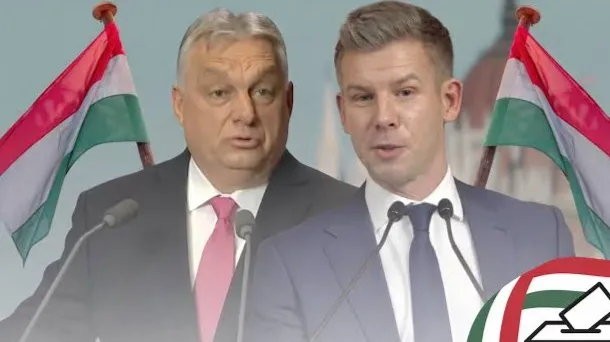
Polls closed at 7 p.m. local time in Hungary’s parliamentary election on Sunday, marking what is widely viewed as the most competitive contest Prime Minister Viktor Orbán has faced since returning to power in 2010.
Counting is now underway in a closely fought race between Orbán’s right-wing populist Fidesz party and opposition leader Péter Magyar’s center-right Tisza Party. Analysts caution that Hungary’s electoral system — which has been criticized as favoring the incumbent — could still produce a tight or unexpected result, even if national vote totals are close.
Early data pointed to exceptionally high voter participation. Turnout reached nearly 78%, according to officials, making it the highest in Hungary’s post-Communist democratic history. The surge in participation underscores the intensity of the race and suggests strong mobilization across the political spectrum.
The election pits Orbán, in power for 16 years and seeking a fifth consecutive term, against Magyar, a former insider within Hungary’s political establishment who has rebranded himself as an anti-corruption reformer. Magyar’s campaign has focused on governance, economic pressures, and closer alignment with the European Union.
Pre-election polling from several independent firms indicated that Tisza entered election day with an advantage. Surveys conducted in the days leading up to the vote suggested a meaningful lead among decided voters, though estimates varied and Hungary’s electoral system introduces significant uncertainty in translating votes into parliamentary seats.
Despite those polling trends, no official results were available immediately after polls closed. Vote counting had only just begun, and final outcomes — including absentee and diaspora ballots — were expected to take additional time to process.
Orbán framed the election as a defense of national sovereignty, particularly against European Union influence. A nationalist leader often described as maintaining close ties with Russia, he has also drawn international attention and support from figures such as U.S. President Donald Trump, who has publicly endorsed him and praised his political model.
Given these dynamics, the outcome remained uncertain at the close of voting. High turnout and competitive polling point to a potentially significant shift, but any conclusions about a decisive political change depend on official results, which were still pending as counting got underway.
How does Hungary’s election work?:
Parliamentary elections in Hungary are held every four years, using a mixed electoral system that combines district-based and proportional representation.
Voters cast two separate ballots. One vote is for a candidate in their local constituency. There are 106 of these single-member districts, and each is decided using a first-past-the-post system, similar to the United Kingdom.
The second vote is cast for a party list at the national level. These votes determine the allocation of the remaining 93 seats in parliament, which are distributed proportionally.
This hybrid system means that overall results depend not only on national vote share but also on performance in individual districts — a factor that has historically benefited larger, well-organized parties.
In the 2022 election, Viktor Orbán’s Fidesz party won 135 out of 199 seats, securing a two-thirds supermajority. That threshold is politically significant, as it allows the government to amend the constitution.
Hungary previously used a different electoral system with 386 parliamentary seats. The current structure was introduced after Orbán and Fidesz returned to power in 2010, reshaping how votes translate into political control.
More stories
- US, China discuss reciprocal nuclear-facility visits
- Burnham says Brexit vote faced Russian meddling in 2016
- Russian strikes hit Ukraine plants after Trump ceasefire statement
- Saudi flights divert after Dammam airport targeted
- US said to threaten Ukraine weapons, intelligence aid
- Riyadh airport hit again as Trump weighs US role
- Trump Orders Hormuz Strait Blockade Amid Iran Tensions
- Nuclear Talks Stall: No US-Iran Deal
- Trump's Iran Ultimatum: Hormuz Strait in Focus
- Ukraine Renews Ceasefire Offer Amid Attacks