Chinese wind turbine makers pursue Europe factory deals
Chinese wind turbine makers are exploring European partnerships after a blocked £1.
Mateo Fernandez ·
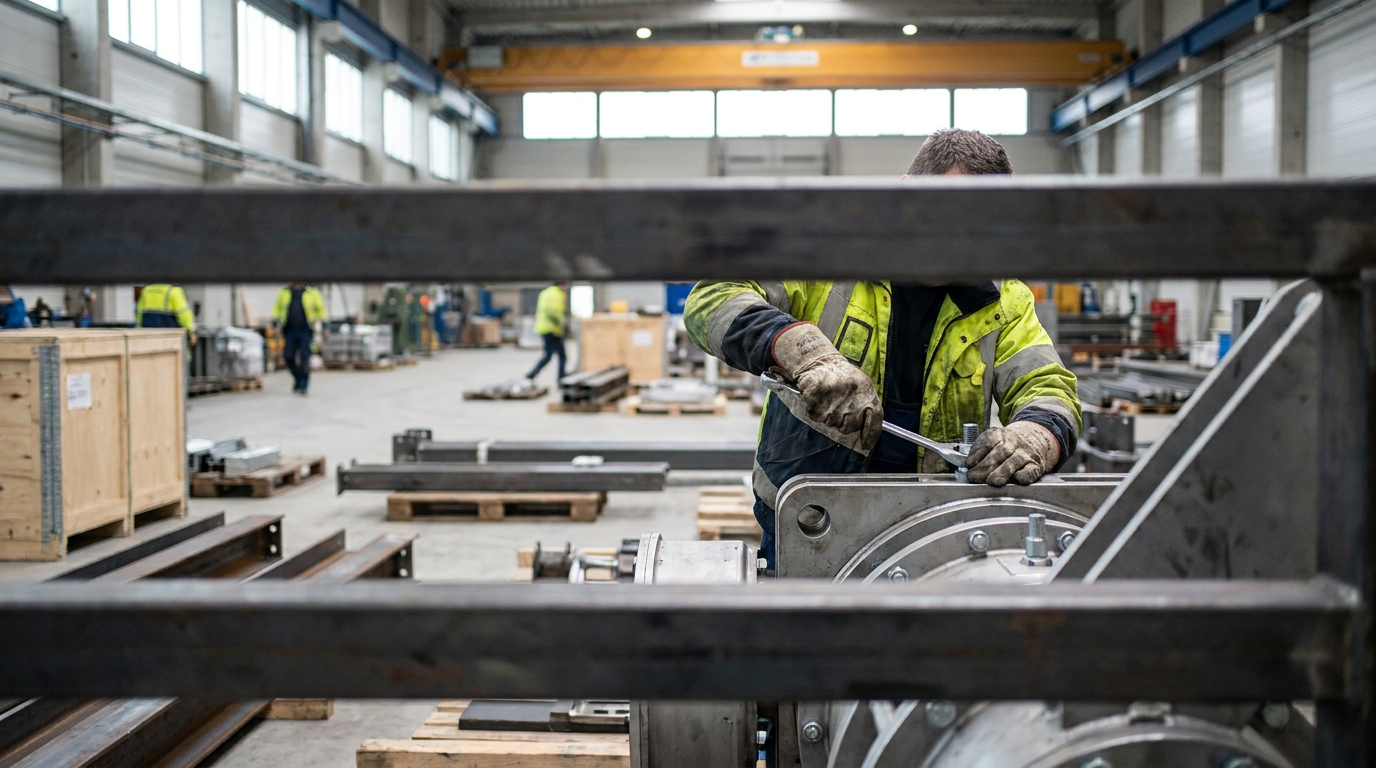
Chinese wind turbine makers are weighing European partnerships after a blocked £1.5 billion factory plan exposed barriers to Europe.
Europe factory route narrows
Ming Yang Smart Energy Group Ltd. and Envision Group are considering tie-ups with companies in Europe to create a manufacturing base in the region, according to executives from the companies. The talks point to a more local approach as Chinese turbine suppliers seek a larger role in a market still dominated by established European manufacturers.
The push comes after Chinese companies built leading positions in solar power equipment and batteries, while wind turbines remained a field where western manufacturers still hold major ground. In western Europe, major wind projects have continued to source equipment from Vestas Wind Systems A/S, Siemens Energy AG and Nordex AG rather than Chinese suppliers.
Local production would give Chinese manufacturers a possible answer to two obstacles at once: buyer preference for regional supply chains and political scrutiny of strategic infrastructure. It would also move the competition from export sales into industrial policy, where jobs, factories and security reviews carry weight alongside turbine cost and performance.
Envision weighs joint ventures
Yimin Lou, chief product officer at Envision Energy, said at the Wind Energy Hamburg industry fair that partnerships are on the table. “We are prepared and willing to do those kinds of partnerships,” Lou said. “How to do it is a different story. Joint venture is an option.”
Lou did not identify a potential partner or give a timetable for any agreement. Christian Schrimpf, Envision’s executive vice president for offshore wind, indicated discussions may have begun, saying: “We might have started, but we cannot speak about it.”
The model resembles a route already used in autos, where Ford Motor Co. and China’s Geely Automobile Holdings Ltd. struck a deal to produce electric vehicles at a factory in Spain. For turbine makers, a European partner could provide industrial credibility, political familiarity and a local operating base that direct exports have not delivered.
Such a structure would not remove every barrier. European governments are treating energy equipment as part of a broader security and supply-chain debate, especially in offshore wind, where turbines connect to critical power networks and large projects often depend on public support.
Scotland block shapes choices
The clearest warning came when the UK blocked Ming Yang’s plan to invest £1.5 billion ($2 billion) in a turbine factory in Scotland on security grounds. The decision kept the company out of the largest offshore wind market outside China, according to the source material, and gave other European governments a precedent to consider.
For Ming Yang, the Scotland decision left a strategic gap: a local factory was meant to anchor its European expansion, but the rejection showed that industrial investment alone may not overcome security concerns. For Envision, the same lesson points toward structures that share control or production with European partners.
The immediate effect is to strengthen the position of Vestas, Siemens Energy and Nordex in major western European projects. Their advantage is not only technical; they operate inside the region’s procurement, service and regulatory systems, which can matter for developers choosing suppliers for long-life power assets.
Security reviews set the range
If European governments accept joint ventures with clear local governance, Chinese suppliers could gain a narrower but workable entry route. That would add pricing and technology pressure on incumbent turbine makers, while giving Europe another supply option for wind deployment.
If security reviews remain the controlling factor, the macro effect would be slower diversification in clean-energy supply chains. Ming Yang and Envision would face higher entry costs and longer sales cycles, while European manufacturers would keep an important buffer in their home market.
A third path is a limited opening, with Chinese groups allowed into manufacturing partnerships but kept away from the most sensitive offshore projects. That would leave the industry with more factory investment onshore, more due diligence around ownership and a slower contest for Europe’s highest-value wind contracts.