China PMI Drop Hits Factories as Weather Saps Output in July
China PMI fell into contraction in July as manufacturing, services and construction weakened, testing Beijing’s limited appetite for fresh stimulus.
Mei Lin ·
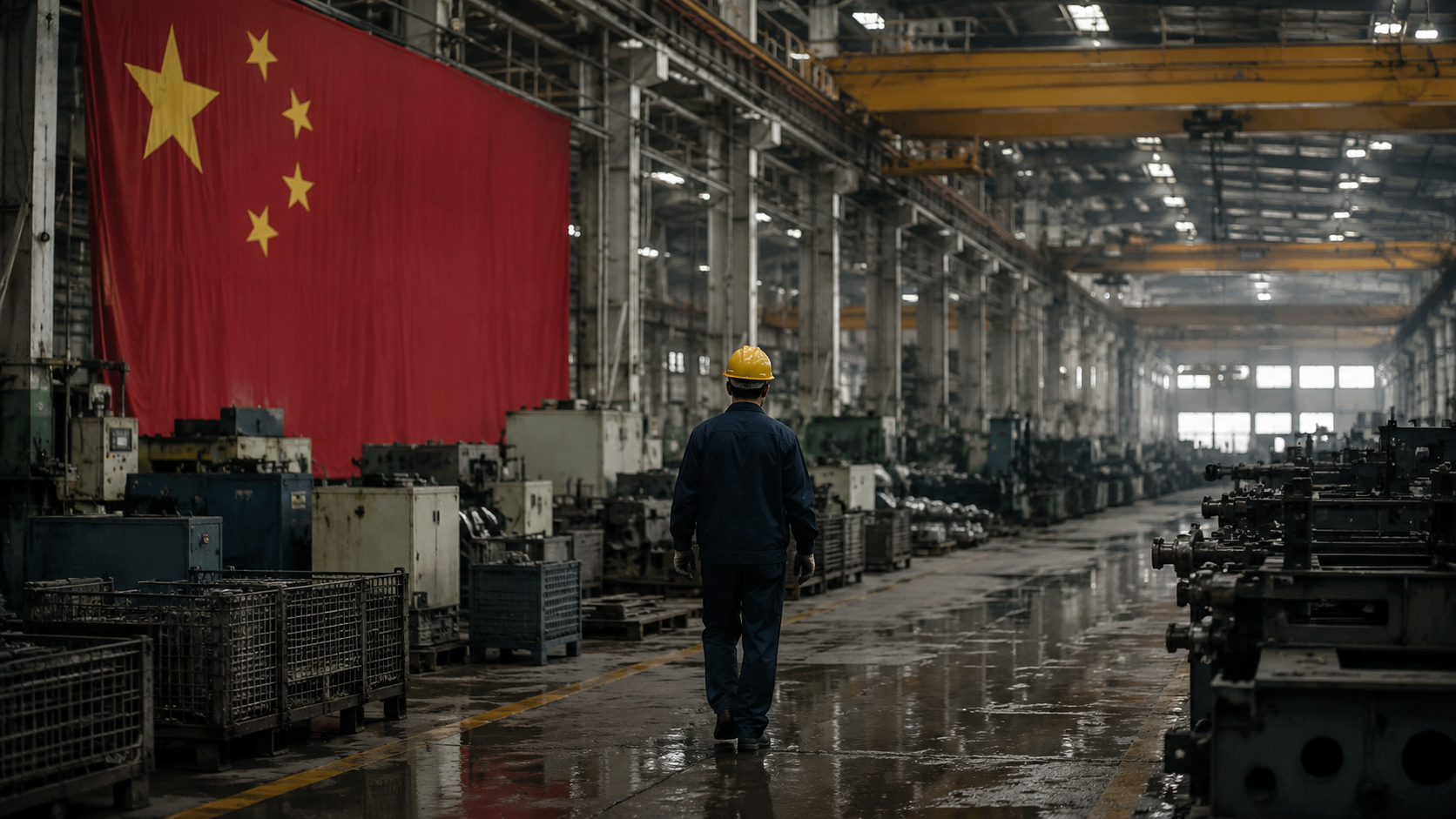
China PMI fell into contraction in July, with factory, services and construction gauges all below 50 as weather and weak property demand hit activity.
The official manufacturing purchasing managers index declined to 49.2 from 50.3 in June, the National Bureau of Statistics said Friday. A reading below 50 signals that activity is shrinking rather than expanding.
July gauge breaks five-month run
The July reading ended a five-month stretch in which the manufacturing indicator had stayed in expansion territory. It also gave an early signal of how China’s economy entered the third quarter after a softer April–June period.
Huo Lihui, a senior government statistician, attributed part of the weakness to a tougher comparison with earlier rapid growth and the start of the usual production lull in some industries. Extreme weather also disrupted factory activity, according to the official account.
The manufacturing setback matters because exports have helped cushion China’s broader slowdown this year. Demand from overseas, including shipments linked to artificial intelligence supply chains, has supported factories even as domestic spending has lagged.
Services and construction lose momentum
The softness was not confined to industrial plants. The official nonmanufacturing PMI, which includes services and construction, fell to 49.0 in July from 50.2 a month earlier, the lowest level since December 2022.
The services subindex dropped to 49.3 from 50.4, indicating that consumer-facing activity also slipped below the expansion line. Construction weakened further, with its subindex at 47.0 after 49.0 in June.
The construction figure points to one of Beijing’s most persistent economic drags: the multiyear property downturn. A weaker real estate sector can curb building work, pressure local government finances and weigh on household confidence because housing has long been central to family wealth.
China’s second-quarter data had already shown the economy losing speed, according to official figures cited in the source material. The April–June expansion was described as the weakest in more than three years, with lower government and private spending offsetting strength in exports.
Beijing weighs bonds over easing
The policy signal remains cautious. Chinese leaders have indicated that large-scale easing is not imminent, even as the July PMIs show broader pressure across factories, services and construction.
Economists cited in the source material expect Beijing to focus on faster government bond issuance rather than new stimulus tools. That approach would aim to move public spending into the economy more quickly without shifting toward a broader rescue package.
If exports remain strong, policymakers may judge that targeted fiscal acceleration is enough to support activity. In that path, global trade flows tied to China’s factories would remain steadier, manufacturers would get partial relief from public demand, and industrial suppliers would avoid a sharper inventory correction.
If domestic demand weakens further, the pressure on Beijing would rise through a different channel. Slower services spending and weaker construction would feed into employment, household confidence and local revenue, leaving companies exposed to thinner order books and the wider property-linked supply chain facing another drag.
The near-term questions are concrete: whether August factory output rebounds after weather disruptions, whether bond issuance turns into visible spending, and whether the property slump keeps pulling construction deeper below 50. Those indicators will show whether July was a temporary setback or a broader warning on China’s growth mix.