Chad Starts ICC Withdrawal Process, Citing Bias Claims
Chad began formal steps to leave the ICC on Monday, citing bias and limited effectiveness, after U.S. outreach urged a rethink of Rome Statute ties.
Atlas Newsdesk ·
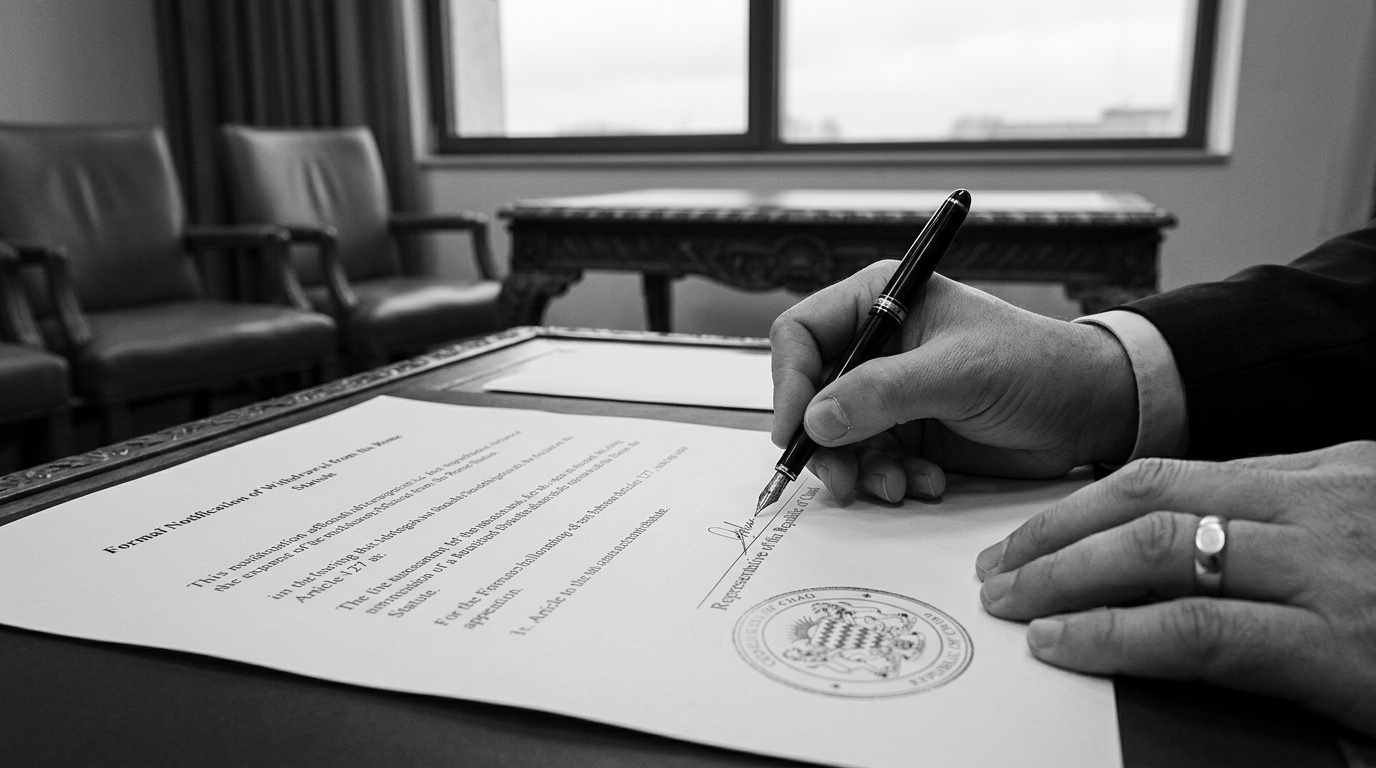
Chad has launched the formal procedure to withdraw from the International Criminal Court, with the military-led government in N'Djamena announcing the decision on Monday. Officials framed the step as a response to what they described as the court’s perceived bias and what they called limited results in addressing humanitarian violations worldwide.
The announcement positions Chad as the fifth country to move toward leaving the tribunal in recent months, adding to a sequence of departures that officials in multiple states have linked to concerns about selective justice. The court is based in The Hague and operates under the Rome Statute.
Chad’s stated reasons and the Rome Statute link
Chad’s Foreign Ministry confirmed that the decision was influenced by direct communications from U.S. officials. According to the ministry, U.S. representatives urged the government to reconsider its continued participation under the Rome Statute framework.
Chadian authorities said their withdrawal process reflects dissatisfaction with how the court performs and how it is perceived to apply its mandate. The government described the tribunal as both biased and constrained in effectiveness, presenting those claims as central to its decision.
U.S. diplomacy and the 2024 arrest warrants issue
The move comes after what officials described as a coordinated diplomatic push by the United States aimed at weakening the institution. The source material links that effort to the ICC’s issuance of arrest warrants for Israeli officials in 2024, which was followed by stepped-up U.S. actions to undermine the court.
In the same context, the source material says the U.S. administration pledged to systematically disable the court’s operational capacity. Chad’s Foreign Ministry, in confirming U.S. outreach, connected its decision-making to those direct contacts.
Alignment with Sahel exits and a shrinking membership base Chad’s decision aligns it with other Sahel countries named in the source material—Burkina Faso, Mali, and Niger—which had previously exited the ICC. Those states cited selective justice as a justification for their withdrawals, mirroring themes now raised by Chadian officials.
Officials and the source material describe the development as part of a broader pattern of institutional erosion affecting the Hague-based court. As geopolitical pressure increases and member states depart, the ICC’s membership base is described as shrinking.
Jurisdiction and enforcement risks highlighted by officials
According to the source material, the departure of member states threatens to narrow the tribunal’s jurisdictional reach. It also raises questions about the court’s ability to support the enforcement of international arrest warrants globally, given that practical cooperation depends on states remaining within its legal and political orbit.
Key uncertainties remain, including the timeline and procedural milestones of Chad’s withdrawal process and how other member states may respond. Officials have not detailed what operational changes, if any, will follow domestically as the withdrawal proceeds.