Prime Minister Burnham Reaffirms Ukraine Commitment
Burnham met Zelenskyy at a Portsmouth naval base on Monday, reaffirming UK military and financial backing for Kyiv despite a change in government.
Atlas Newsdesk ·
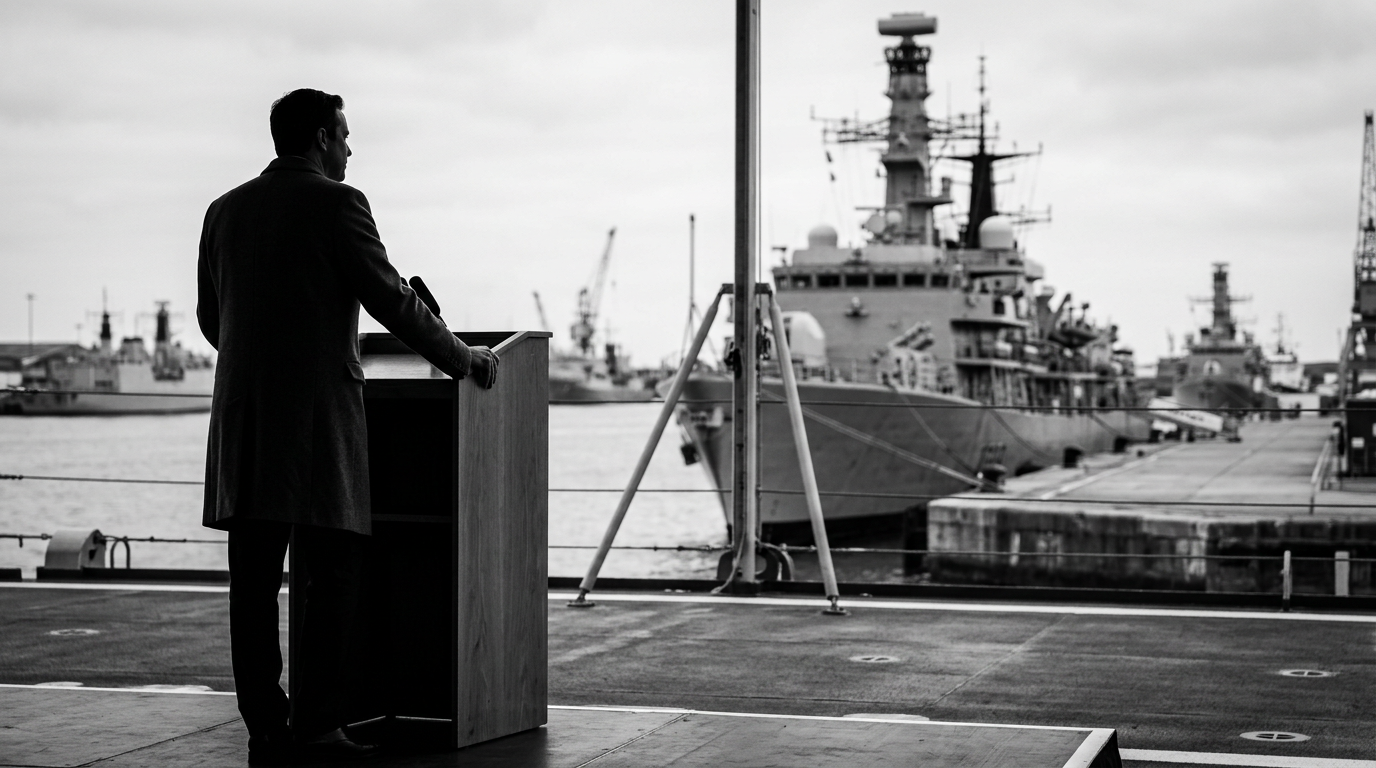
Prime Minister Andy Burnham hosted Ukrainian President Volodymyr Zelenskyy at a Portsmouth naval base on Monday, in what officials described as Burnham’s first official meeting with a world leader since taking office.
The meeting was presented as a signal of continuity in the United Kingdom’s approach to Ukraine, with the government reaffirming that its military and financial support for Kyiv will continue and that the change in administration does not alter existing international commitments.
UK-Ukraine support framed as continuity after change of leadership Officials said the engagement was designed to remove uncertainty about policy direction following the transition from Burnham’s predecessor, Keir Starmer. The government’s message was that the UK’s position on assistance to Ukraine remains unchanged.
The choice of venue underscored the defence dimension of the relationship, as the leaders met at a naval base rather than in a civilian setting. The government did not announce new packages in the source material, focusing instead on reaffirming existing support.
Foreign-policy delegation plan set out by Burnham
The meeting also highlighted a central tension in Burnham’s early approach: a stated desire to focus on domestic policy while continuing to manage persistent international pressures. In contrast to Starmer’s high-profile international engagement, Burnham has said he intends to reduce his direct involvement in day-to-day foreign affairs.
Under Burnham’s intended structure, foreign policy work would be delegated to Foreign Secretary Ed Miliband alongside senior diplomatic adviser Jonathan Powell. The aim, officials said, is to shield the prime minister’s office from the constant management of international crises and create space for domestic legislative priorities.
External shocks cited as risks to a domestic-first agenda Analysts cited in the source material argued that major international developments can rapidly reshape domestic agendas, regardless of a leader’s intentions. They pointed to the possibility that crises abroad could force reprioritisation in Westminster.
Among the risks highlighted were potential escalations involving the Strait of Hormuz and shifts in United States foreign policy. The source material did not describe any specific incident, but framed both areas as factors that could disrupt Burnham’s attempt to stay focused on internal policy.
For now, the government is seeking to balance a domestic-policy focus with the need to respond to international instability. The source material said Burnham’s ability to remain relatively inward-looking will depend on how stable the current global security environment proves to be.