Cerebras' GPT-5.6 trio shifts compute margins toward workload-specific efficiency
Cerebras Systems introduces GPT-5.6 variants—Sol, Terra, and Luna—to balance AI speed, cost, and intelligence. Discover how these models impact enterprise.
Edward Mullen ·
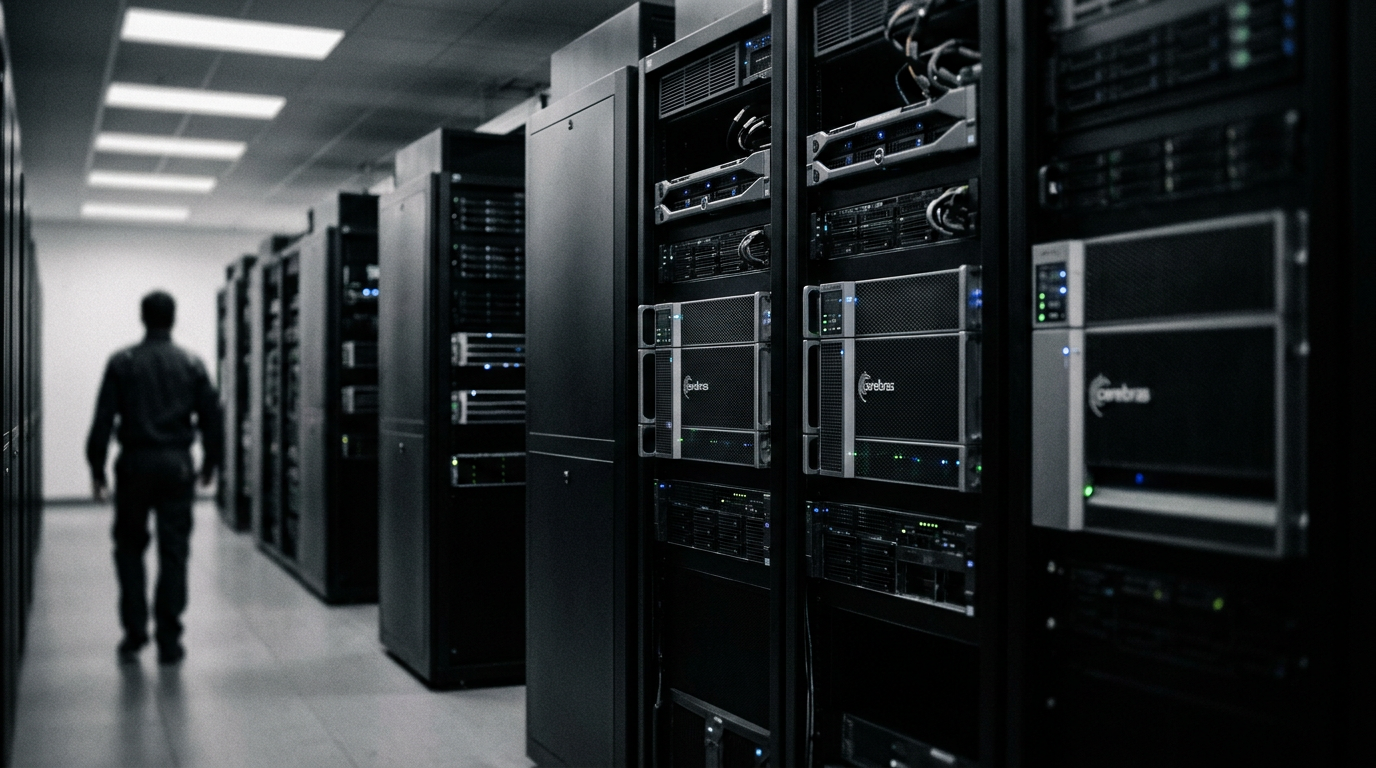
Conventional wisdom dictates that more AI compute always translates to better results, with companies pouring resources into ever-larger models. Yet, a recent blog post by Cerebras Systems challenges this monolithic view, suggesting a future where scaling isn't a singular pursuit. Instead, Cerebras proposes a more nuanced approach, advocating for tiered GPT models optimized to balance speed, cost, and intelligence for specific workloads.
A triad aimed at different workflows The signal here is that Cerebras is marketing a three-model family deliberately tuned for distinct task profiles: Sol handling more demanding reasoning and complex tool use, Terra offering a middle ground, and Luna targeting lower cost and latency. The blog emphasizes balance among speed, cost, and intelligence, suggesting enterprises could pick a tier by task rather than defaulting to a single largest model.
But the post offers no public, apples-to-apples benchmarks across workloads, no pricing tables, and no field data from customers to substantiate the claimed symmetry between capability and cost.
Margin math in plain terms What matters for Margin math in plain terms What matters for the business is the implied margin structure: frontier-scale models deliver peak accuracy but at high compute and energy costs, with latency as a potential bottleneck in customer-facing apps. Tiering could, in theory, convert a single, multi-billion-parameter model into a portfolio of choices, each with its own cost-per-task profile. Yet the Cerebras post stops short of providing a cost-per-task calculation, a calibration curve, or a normalization method across hardware settings. In practice, the lack of concrete pricing and hardware baselines leaves the claim at the level of potential rather than proven impact.
A skeptical read: fragmentation versus governance Some readers will worry that a tiered, vendor-specific lineup could complicate procurement, toolchain compatibility, and governance across a large enterprise. The post does not address cross-vendor interoperability or the operational overhead of managing multiple model variants across teams.
In other words, even if Sol, Terra, and Luna deliver favorable per-task economics, the ancillary costs—integration, monitoring, model-version control, and vendor lock—could erode the savings. This is a real counter-read: without a transparent, multi-vendor governance path, tiered models risk creating a new form of optimization debt for large organizations.
What this could mean
for procurement and deployment in the next 12–18 months
If the market accepts these tiered offerings, procurement and deployment teams may shift from chasing a single “best” model to orchestrating a portfolio strategy. Enterprises would need to map workloads to model tiers, design monitoring around per-task economics, and negotiate pricing that reflects utilization patterns rather than list price.
That shift would place a premium on visibility into load, usage, and latency across tasks, and on the ability to switch tiers without destabilizing production pipelines. It also heightens the importance of pre-layout simulation and design-space exploration when planning AI-enabled workflows, because the marginal cost of switching a workload from Luna to Sol could rival the cost of keeping it on the largest model in certain regimes.
Watchpoints for the next 6–12 months First, look for customer adoption data or case studies that quantify savings per task when using Sol, Terra, or Luna versus a single large model. Second, track whether major cloud providers or AI platforms begin offering formal tiered-model pricing or cross-workload orchestration features, which would signal a broader industry shift toward margin-driven compute strategies.
Third, seek independent benchmarks or third-party evaluations that compare per-task performance and cost across the trio on representative enterprise workloads. In the absence of such data, the blog’s promise of margin-shifting remains a hypothesis anchored in vendor framing rather than a proven market trend.
The load-bearing omission is obvious: pricing, adoption, and real-world performance benchmarks are not provided in the post, raising questions about how quickly and where the claimed economics will materialize.
What this means for the enterprise over the longer run If the tiered approach demonstrates durable, task-specific efficiency at scale, it could recalibrate how firms budget AI compute—favoring opex-optimized, per-task spend over a capex-at-scale gamble on one flagship model. But that hinges on credible traction, interoperable tooling, and transparent economics that customers can verify beyond a marketing framing. Until then, the article remains a credible pointer to a potential margin-shift, not a confirmed industry-wide reallocation of compute spend.