CEO Christiansen draws Lego AI line after 21% sales gain
Lego said AI will not design its sets, even as first-half revenue rose 21% to 41.9 billion kroner and human-led product work continues.
Mateo Fernandez ·
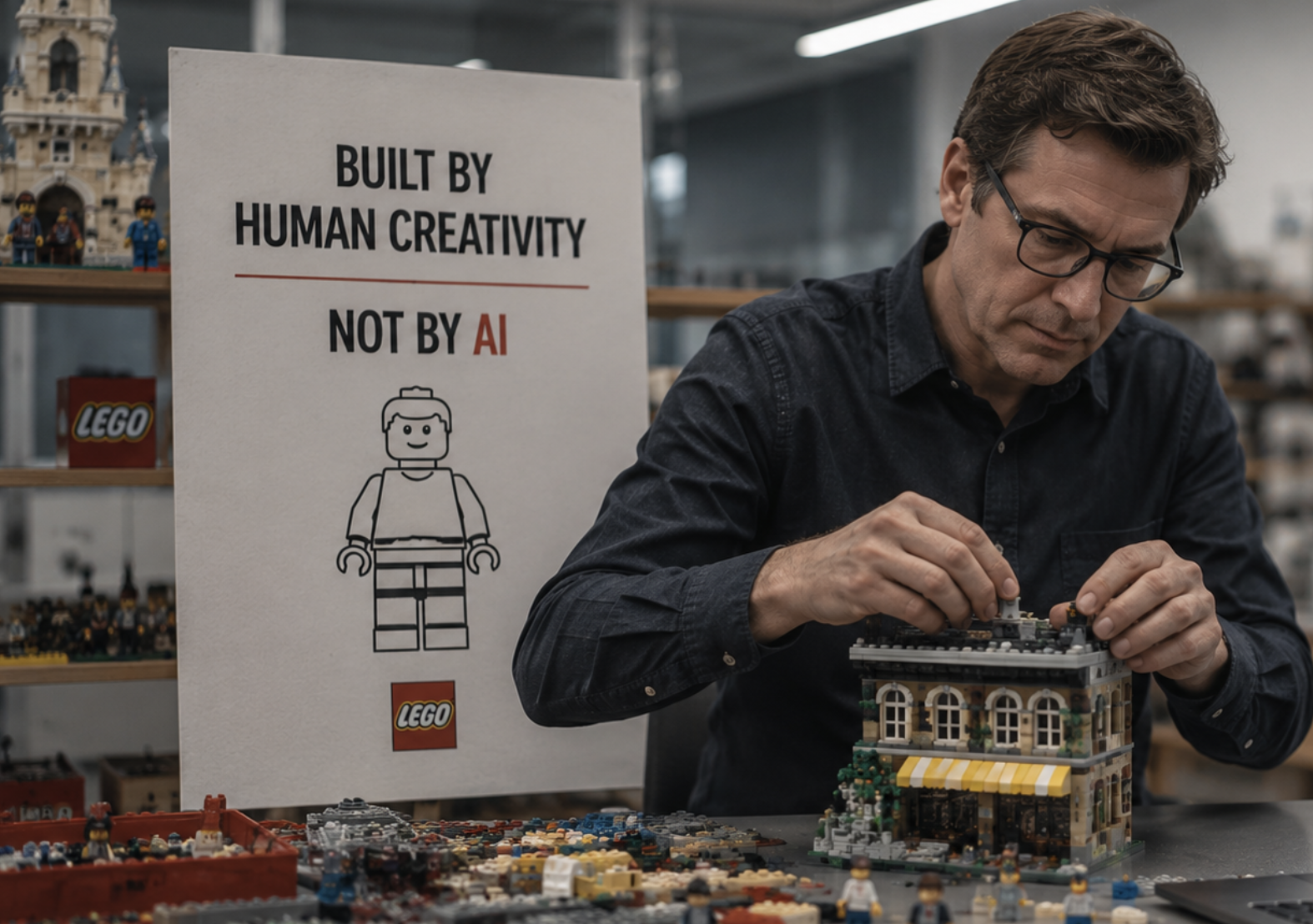
Lego AI limits will keep set design with people after first-half revenue rose 21% from a year earlier, anchoring growth in human creativity.
Lego A/S reported first-half revenue of 41.9 billion kroner ($6.5 billion), up from the prior-year period, and said profit also reached a first-half record. Chief Executive Officer Niels B. Christiansen said the Danish toymaker is using artificial intelligence in other areas, but not as the author of its core products.
Christiansen keeps design human
Christiansen drew a firm boundary around product concepts. "You’re never going to have a product that’s only made by AI," he said. "It will always be the designer who does the creative work."
The position puts Lego on a narrower path than companies that are testing generative tools across advertising, images, video and early product ideas. Lego is not rejecting the technology; Christiansen described it as useful for administrative work and repeatable tasks around the design process.
One example is the production of building manuals, where standardized steps can be handled with software tools, according to Christiansen. The intended gain is productivity: designers can spend less time on routine production work and more time developing themes, characters and physical play systems.
Record revenue widens Lego's gap
The first-half sales figure was more than three times the revenue level cited for Hasbro Inc. and Mattel Inc., giving Lego a larger sales base than the two major listed US toy rivals in the period. The comparison is based on the company’s reported 41.9 billion kroner total and its peer framing.
Christiansen said Lego continued to gain market share even as households faced pressure from wars, trade tensions and a less predictable economic backdrop. He said the first-half performance was broad rather than tied to one geography, with strength in the US, Asia and Europe.
The numbers give Lego more room to keep spending on stores, brand marketing and product development while rivals manage a toy market shaped by licensing cycles and tighter consumer budgets. For the wider sector, Lego’s results suggest that physical play can still draw spending when the product pipeline gives parents and children frequent reasons to return.
China tests the expansion plan
China remains the weaker point in Lego’s map. Christiansen said shoppers there have stayed cautious after several softer years, and the company is not seeing the same growth pace it reported across other large regions.
Lego is still opening stores and investing in the brand in China while it waits for demand to improve. "There are really, really a lot of children in China, and it’s a super interesting market," Christiansen said, adding that uncertainty had made consumers more reluctant to spend.
If demand in the US, Europe and much of Asia holds, Lego’s human-led design model gives global consumer goods a limited counterweight to weaker discretionary spending elsewhere. For Lego, that would support continued store investment and design hiring; for the industry, it would keep pressure on rivals to refresh product lines without relying only on screen-based engagement.
If Chinese consumers remain cautious, the company’s expansion there would take longer to translate into sales growth, and brand spending could weigh more heavily on near-term returns. At the macro level, that path would fit a broader pattern of uneven household demand; across toys, it would make China a slower source of growth for international brands.
If AI tools improve the production work around manuals, images and internal processes without replacing designers, Lego could widen margins or shorten development timelines while preserving a human-led product identity. The main open question is how far standardized creative support can go before customers, designers or management see it as crossing into product authorship.