India gig economy faces wide gender gap in digital jobs
India’s gig economy is set to reach 23.5 million workers by 2029-30, but women remain held back by digital, safety and mobility gaps.
Raj Patel ·
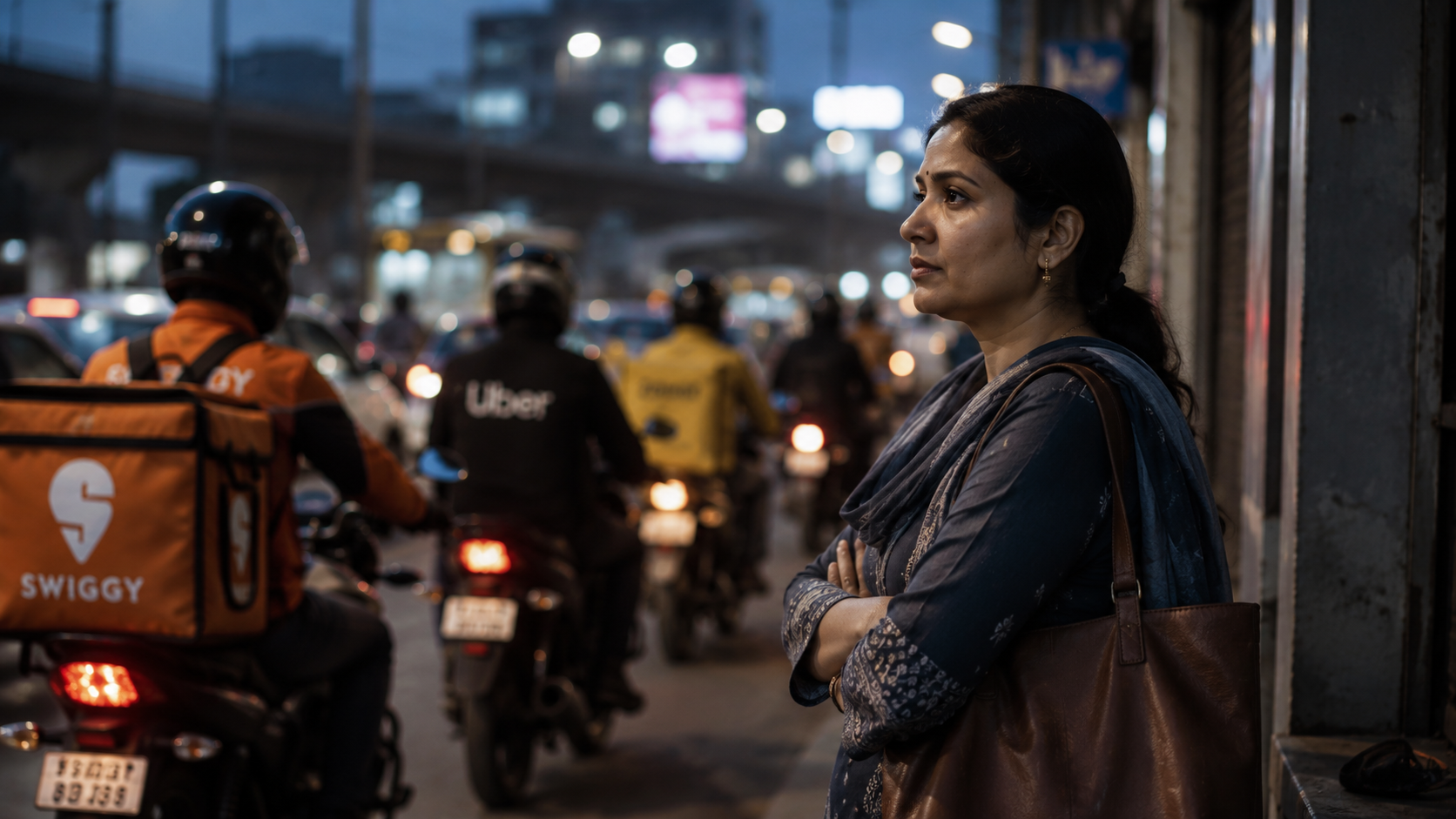
India’s gig economy is expanding toward 23.5 million workers, but a new labor study says women remain largely outside app-based jobs.
The International Labour Organization and the National Council of Applied Economic Research said the gap spans digital skills, mobility, safety and social norms. The report released Monday examined platform work tied to services such as ride hailing, quick food delivery and home services.
Women miss app-based hiring
Companies named in the report include Uber Technologies Inc., Swiggy Ltd. and Urban Company Ltd., whose platforms have become part of urban consumption and household services. The researchers said women remain "under-represented and unevenly distributed" across the app-based ecosystem.
India has narrowed the gender gap in basic bank-account ownership, according to the report, but that has not translated into equal access to paid work arranged through apps. For gig platforms, the shortfall limits the labor pool just as fast-delivery and on-demand services are expanding into more cities.
The constraint is also a macroeconomic one. India’s female labor-force participation rate was about 32% in 2025 on an internationally comparable measure, against almost 78% for men, according to ILO estimates compiled by the World Bank.
Digital finance gap remains wide
A 2025 government study cited in the report found that only 56.2% of Indian women age 15 and above own a mobile phone, and 37% can conduct online banking transactions. Those figures mark the practical boundary between having a formal account and being able to use digital tools for work, payments and credit.
The gap is wider in digital banking. In 2024, 32% of men in India had a digital banking account, compared with 14% of women; the researchers said India’s gender divide was three times the corresponding global gap.
The barrier is practical: platform work often requires a smartphone, app navigation, digital payments and the ability to travel independently. The report attributed women’s lower participation to technology gaps, safety concerns, mobility restrictions and social norms rather than to a single cause.
Growth target meets labor constraint
The size of the market gives the issue its economic weight. A government estimate cited in the report said India’s gig workforce is projected to nearly double to 23.5 million by 2029-30 and contribute 2.35 trillion rupees ($24.5 billion) to annual economic output.
The World Bank has estimated that lifting women’s labor-force participation to 50%, from about 32% in 2025, could add about one percentage point to India’s annual economic growth. That would support India’s stated ambition of reaching developed-economy status by 2047, though the estimate depends on job quality, wages and sustained demand.
For workers, the report said gig earnings can also create digital income records. Those records may help banks assess loan applications from women who lack land, property or other collateral, and could support access to insurance, savings and pensions products.
Platforms face three routes
If app companies and policymakers reduce the digital-skills and safety barriers, the mechanism is straightforward: more women can qualify for platform onboarding, complete jobs and build income histories. For the macro picture, that would add labor supply and household income; for Uber Technologies Inc., Swiggy Ltd. and Urban Company Ltd., it would widen recruitment channels; for the sector, it could deepen trust in app-based work.
If the barriers hold, gig growth could continue while reproducing India’s wider labor-market split. That path would leave the macro gain from higher female participation largely unrealized, keep companies reliant on a narrower worker base and slow the sector’s shift from informal earning to fuller financial inclusion.
A middle path is also possible if women enter some categories faster than others. Home services, delivery and ride-hailing carry different safety, timing and mobility requirements, so uneven adoption would shape which companies benefit first and which parts of the platform industry face the largest hiring constraint.