Bitcoin rally sends token to May high as dollar slips again
Bitcoin rose to a May-level high after a 23% weekly gain, with traders reassessing dollar weakness and the debasement trade.
Jurgen Goldmeier ·
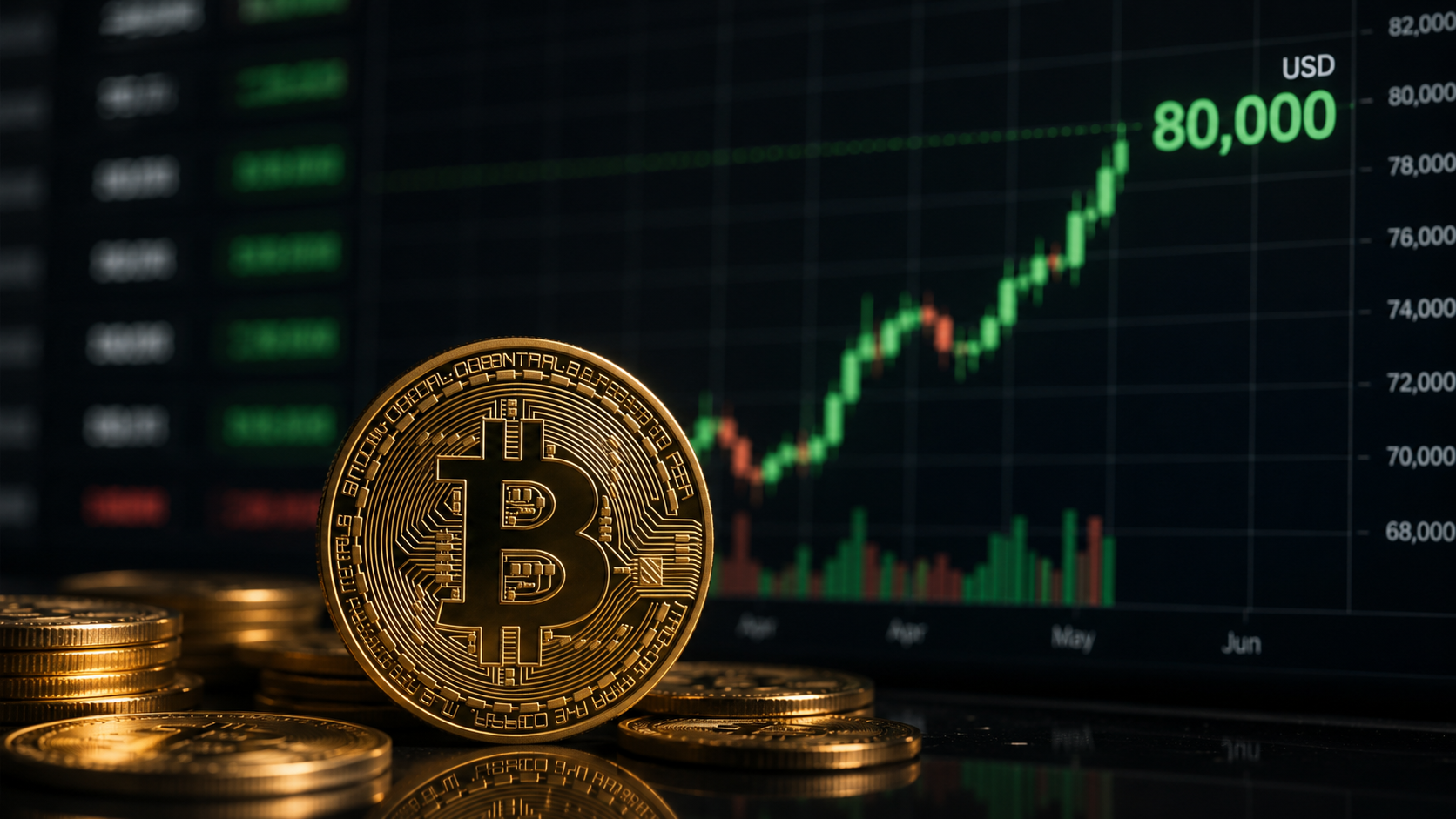
Bitcoin rose to $81,257 in Asia Tuesday, a level last seen May 15, after a 23% weekly rally and renewed dollar weakness.
The token was quoted around $80,700 at 1:45 p.m. in Singapore, after gaining as much as 2.9% from the prior session. Its seven-day advance through Sunday was the largest weekly increase in about three years, according to the market figures cited in the source material.
The recovery leaves Bitcoin below its October high of about $126,000, with the Tuesday afternoon quote roughly 36% under that peak. That gap matters for traders trying to judge whether the latest move is a reversal of a long drawdown or a rebound inside a market that remains far from its record.
May 15 level returns
The latest rise followed a period in which crypto sentiment had been weighed down by falling prices and stretched leveraged positioning. A move of this speed can pressure traders betting against the asset, since bearish leveraged positions may need to be closed when prices move past risk limits.
The source material referred to forced liquidations in leveraged bets but did not provide a verifiable issuer for the total. The safer reading is that positioning likely amplified the price move, while the precise liquidation scale cannot be independently anchored from the provided material.
Bitcoin often trades as both a risk asset and a monetary hedge, which makes its short-term direction sensitive to shifts in rates, the dollar and investor appetite for leverage. This week’s move placed the second of those narratives back in focus.
Treasury buybacks revive hedge debate
The macro trigger cited by market participants was US Treasury Secretary Scott Bessent’s announcement the prior week that the US would expand repurchases of longer-dated bonds. The stated aim was to push down long-term yields, and the announcement was followed by renewed dollar selling.
Some skeptics treated the buyback plan as evidence that President Trump’s administration had not yet moved toward deeper fiscal tightening. That interpretation matters for Bitcoin because the asset’s original design was tied to distrust of fiat-currency debasement and inflation linked to central bank money creation.
Lacie Zhang, a research analyst at Bitget Wallet, tied the move to that broader monetary discussion. "The macro backdrop turned more supportive after the Treasury’s expanded long-dated buyback plan helped weaken the dollar and revive the ‘debasement trade’ across Bitcoin and gold," Zhang said.
The debasement trade refers to buying assets viewed as harder to expand than paper currencies when investors expect governments or central banks to tolerate weaker money. In this case, Bitcoin and gold were grouped together by Zhang as beneficiaries of that theme.
Leverage tests crypto exchanges
For crypto trading venues, a fast rally can lift volumes while also increasing stress around margin, collateral and liquidation systems. If price swings remain wide, exchanges and wallet providers may see stronger user activity, but they also face higher operational and reputational risk when leveraged positions unwind quickly.
For miners and other companies tied to Bitcoin’s market price, the immediate effect is different. A higher token price can improve revenue translated into dollars, while volatility can complicate treasury management for firms that hold Bitcoin on their balance sheets.
The wider digital-asset sector also takes signals from Bitcoin’s dominance during rebounds. If buyers remain concentrated in Bitcoin, smaller tokens may lag; if risk appetite broadens, liquidity can move into exchanges, stablecoins and crypto-linked equities.
The global macro channel is conditional. If the dollar keeps weakening and long-term yields move lower after Treasury buybacks, the debasement argument may continue to support Bitcoin and gold, while companies tied to crypto trading could benefit from higher activity and the broader sector could regain liquidity.
If the dollar steadies or bond yields rise despite the buyback plan, the same trade may lose force. Under that path, Bitcoin would depend more on spot demand and leverage conditions, crypto firms would face a thinner volume tailwind, and the industry’s rebound would be easier to reverse.
The main open questions are whether the Treasury plan has a lasting effect on long-term yields and whether investors treat fiscal concerns as a reason to hold scarce assets. Bitcoin’s next test is whether it can hold the May 15 price area after its fastest weekly advance in about three years.