Canada tariffs threaten $900 billion trade relationship
Tariffs on $20 billion of Canadian goods took effect after U.S.-Canada talks failed, with Canada preparing matching duties in September.
Jurgen Goldmeier ·
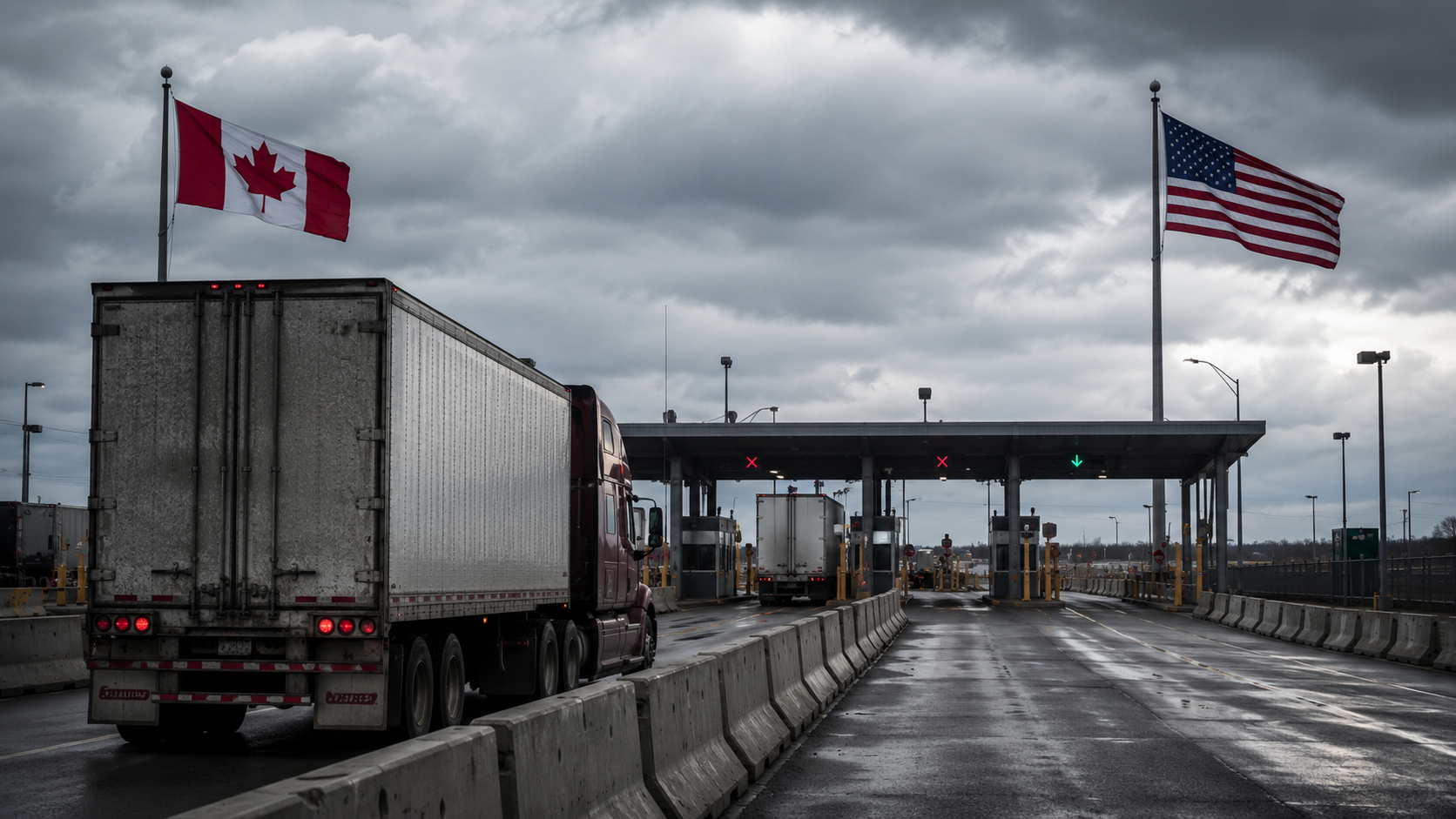
Tariffs took effect on $20 billion of Canadian goods after U.S.-Canada talks failed, pressuring a $900 billion trade relationship.
The duties followed a three-day pause President Trump announced late Tuesday, less than two hours before the measures were due to start. The delay gave negotiators until late Friday to settle terms that officials on both sides had described as close.
$20 billion tariff line
After midnight, U.S. levies of 50% applied to about $20 billion of Canadian products, a pool equal to roughly 5% of Canada’s exports to the U.S., according to statements from U.S. officials. The size of the targeted flow matters because the two countries trade nearly $900 billion in goods and services a year, leaving even a narrow tariff list with room to affect prices and contracts.
U.S. Trade Representative Jamieson Greer said Canada left the talks and added new demands before the deadline. He did not specify those demands, but said Washington had offered Canada the best terms available to any major exporter into the U.S. market.
Carney rejects U.S. terms
Prime Minister Mark Carney gave a different account, saying Canadian negotiators worked in good faith and that the U.S. introduced terms Ottawa viewed as unfair. Carney said the U.S. proposals would have limited Canadian sovereignty and exposed the boundaries of Washington’s commitment to an economic partnership.
Canada plans to answer with matching tariffs on selected U.S. goods, including steel, dairy products and appliances, on September 8. That timing gives both governments several weeks to reopen talks before retaliation reaches U.S. exporters.
The breakdown came after public signals had pointed in the other direction. Carney said earlier that negotiators had made progress, while Canadian trade minister Dominic LeBlanc and Greer appeared together the following day and said several bilateral issues had been resolved.
USMCA pressure returns
The dispute puts new strain on the U.S.-Mexico-Canada Agreement, the trade pact designed to stabilize North American supply chains after replacing the North American Free Trade Agreement. A tariff fight between the U.S. and Canada does not automatically change the pact, but it can weaken the predictability that companies use when sourcing parts, setting prices and planning production runs.
The sectors named by Canada point to politically sensitive markets on both sides of the border. Steel tariffs can move through construction, machinery and autos, while duties on dairy and appliances can reach consumers more directly through grocery and retail channels.
For the broader economy, the immediate issue is not the full $900 billion relationship but whether the 50% tariff rate spreads beyond the current $20 billion product pool. If the dispute remains contained, companies exposed to the listed goods face higher compliance and sourcing costs while the wider North American trade system absorbs a narrower shock.
September 8 becomes deadline
If negotiators return to the table before September 8 and suspend the 50% duties, the macro effect would likely center on relief for North American trade expectations rather than a large shift in global demand. Canadian exporters hit by the current list would gain time to reroute orders or renegotiate contracts, while steel, dairy and appliance producers would avoid a second round of retaliation.
If the duties remain in place and Canada’s countertariffs begin as announced, the pressure moves from a bilateral tariff notice to a wider commercial dispute. The open question is whether either government narrows the product lists before September 8, and whether USMCA dispute channels are used to limit damage to cross-border supply chains.