Brent reaches $107 after Saudi pipeline attack
Officials said attacks disabled Saudi Arabia’s East-West pipeline, adding a supply-risk premium to crude markets.
Mateo Fernandez ·
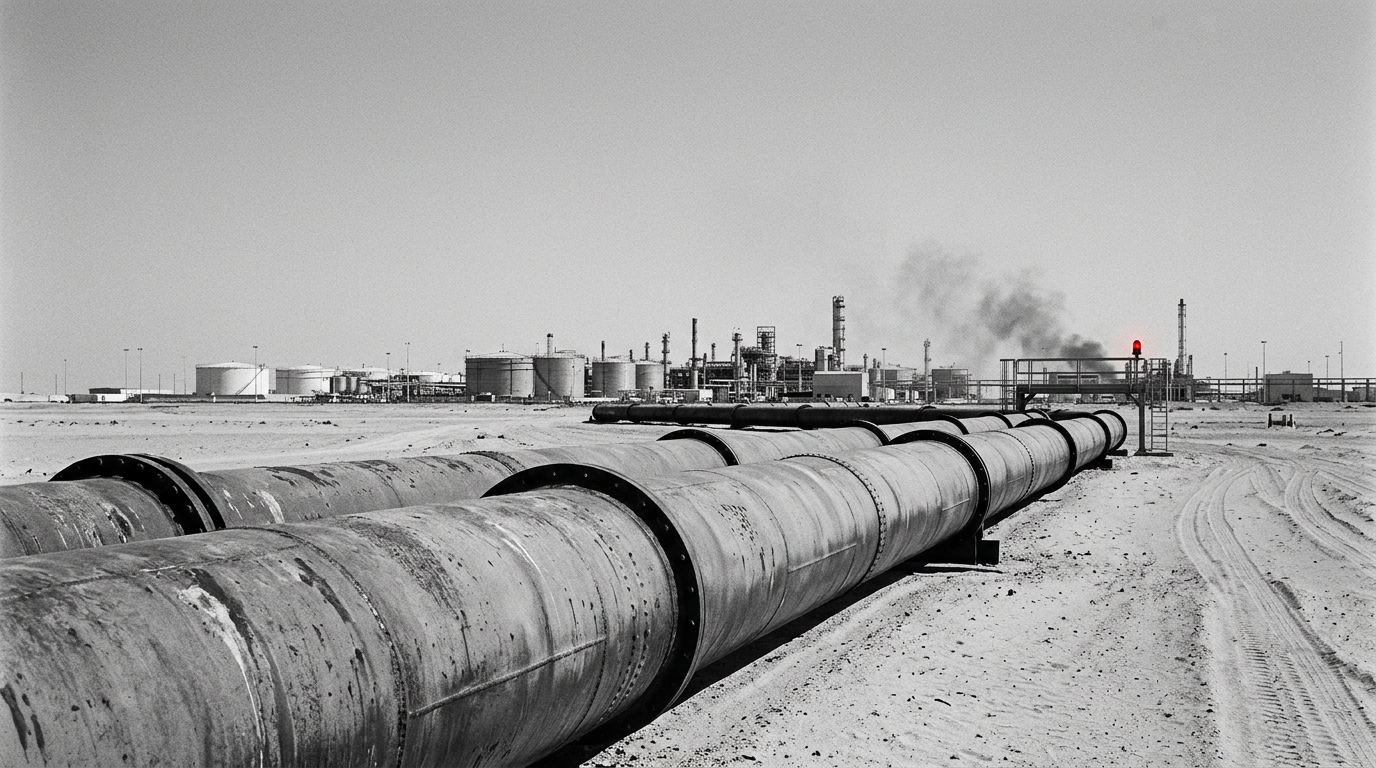
Brent crude rose to $107 a barrel after officials said attacks disabled Saudi Arabia’s East-West pipeline, putting regional supply risk back into oil markets. The move followed reports of strikes on Saudi energy infrastructure and a rise in regional tension.
The East-West line is strategically important because it gives Saudi Arabia a route to move crude across the kingdom without relying solely on Gulf export paths. A disruption there can matter beyond Saudi supply volumes if traders price a higher probability of interruptions to shipping, refining feedstock or spare capacity deployment.
Saudi pipeline outage lifts crude risk
Officials said the pipeline was taken out of service after the attacks. The available information did not give a restart time, an outage volume or an estimate of physical export losses, leaving the market reaction tied mainly to risk pricing rather than confirmed supply cuts.
For the global macro picture, sustained oil gains would feed into energy import bills and inflation assumptions, especially for economies exposed to dollar-priced crude. For Saudi Arabia, the near-term issue is whether alternative routes and inventories can keep exports stable while repairs proceed.
For refiners, airlines and petrochemical producers, the mechanism is input cost pressure. If Brent holds near $107, margins tighten first for buyers unable to pass through fuel costs quickly; if officials confirm a rapid restart, the risk premium can narrow even before physical flows normalize.
By September 16, 2026, the key test is whether officials provide a repair timetable and whether Brent holds above $107 in active trading.