Bolivia Faces Clashes as Food Shortages Ignite Protests
Violent clashes erupt in Bolivia as food shortages fuel widespread protests against President Paz's government.
Lauren Collins ·
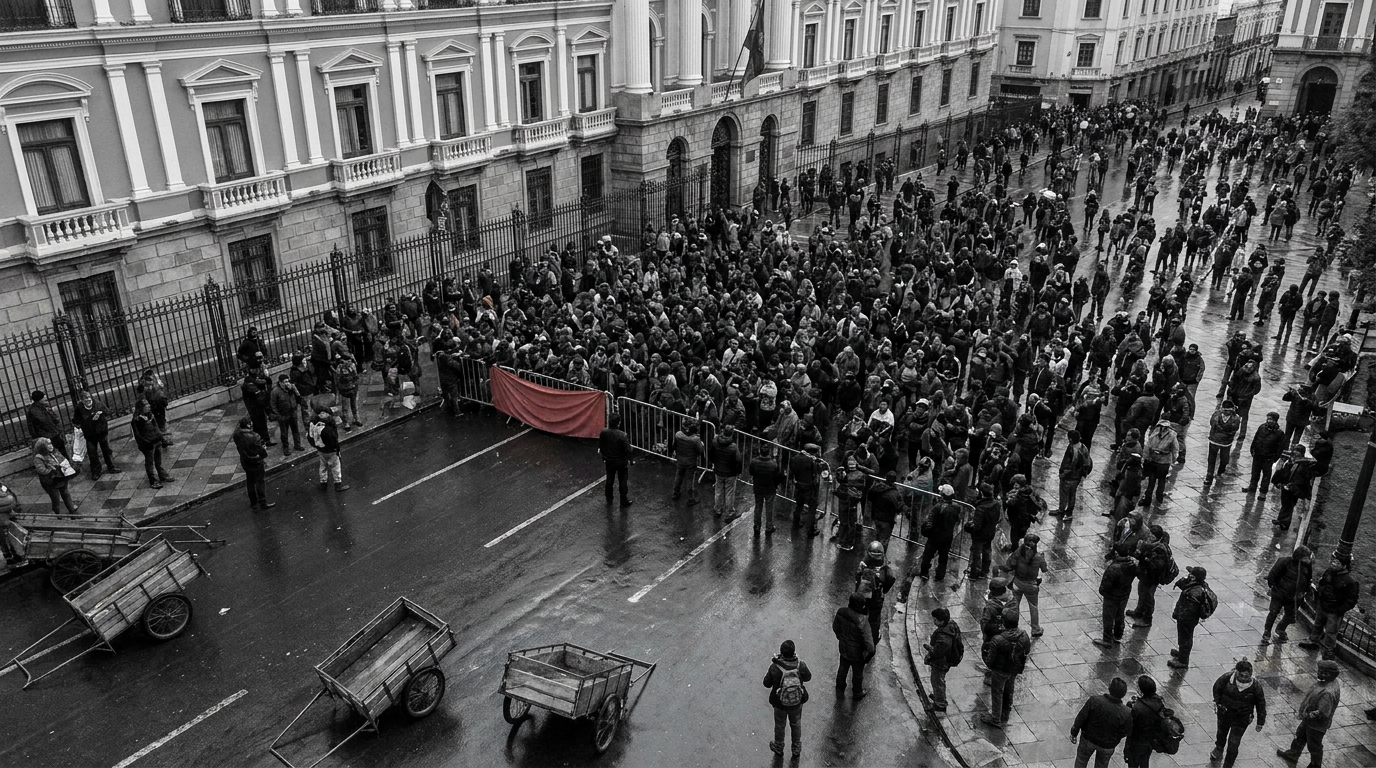
Bolivia is experiencing escalating civil unrest, marked by intense confrontations between protesters and security forces in the capital city of La Paz. The demonstrations, primarily driven by severe food shortages and widespread anger over the economy, have led to calls for President Rodrigo Paz’s resignation just six months into his term.
Labor and Morales Supporters Converge on Capital
Monday saw a significant convergence of demonstrators in La Paz, including Bolivia’s national labor union, highland farmer federations, and supporters of former socialist President Evo Morales. Their objective was to voice deep frustrations with Paz’s administration. Accounts from the scene described instances of protesters throwing stones at police, while clashes with counter-protesters further inflamed tensions.
Security forces responded by surrounding the government palace, deploying tear gas to prevent a full-scale incursion. Despite these measures, some protesters managed to breach the main courthouse, where they were observed taking chairs. The government has claimed that the demonstrations are being financed by Evo Morales and unspecified drug trafficking organizations.
Economic Crisis Fuels Discontent
The current turmoil follows Paz’s election last year, which ended two decades of socialist governance. His victory came after a period where voters expressed exhaustion with a prolonged economic crisis. This crisis was characterized by soaring inflation, a critical shortage of foreign currency, and a decline in the nation's vital natural gas output.
The situation has been exacerbated by three weeks of persistent blockades in and around La Paz. These disruptions have directly contributed to a sharp rise in grocery prices. While authorities temporarily opened a “humanitarian corridor” last weekend to permit the passage of essential supplies like hospital goods and fuel, the blockades have since resumed following the withdrawal of security forces.
Escalating Tensions and Government Response
Local media reports documented instances of property damage, including a police vehicle being engulfed in flames. Protesters have established barricades in key areas, such as Murillo Square. Government spokesman José Luis Gálvez has issued warnings about the presence of armed individuals among the protesters.
The Paz government faces a significant challenge in quelling the unrest while addressing the underlying economic grievances. The coming weeks will be critical in determining the administration's ability to restore order and provide tangible solutions to the economic hardship facing Bolivian citizens.