Bilateral pact widens South Korea-Japan defense links
South Korea-Japan defense talks in Seoul set plans to deepen cooperation, with a focus on AI and continued trilateral coordination with the United States.
Atlas Newsdesk ·
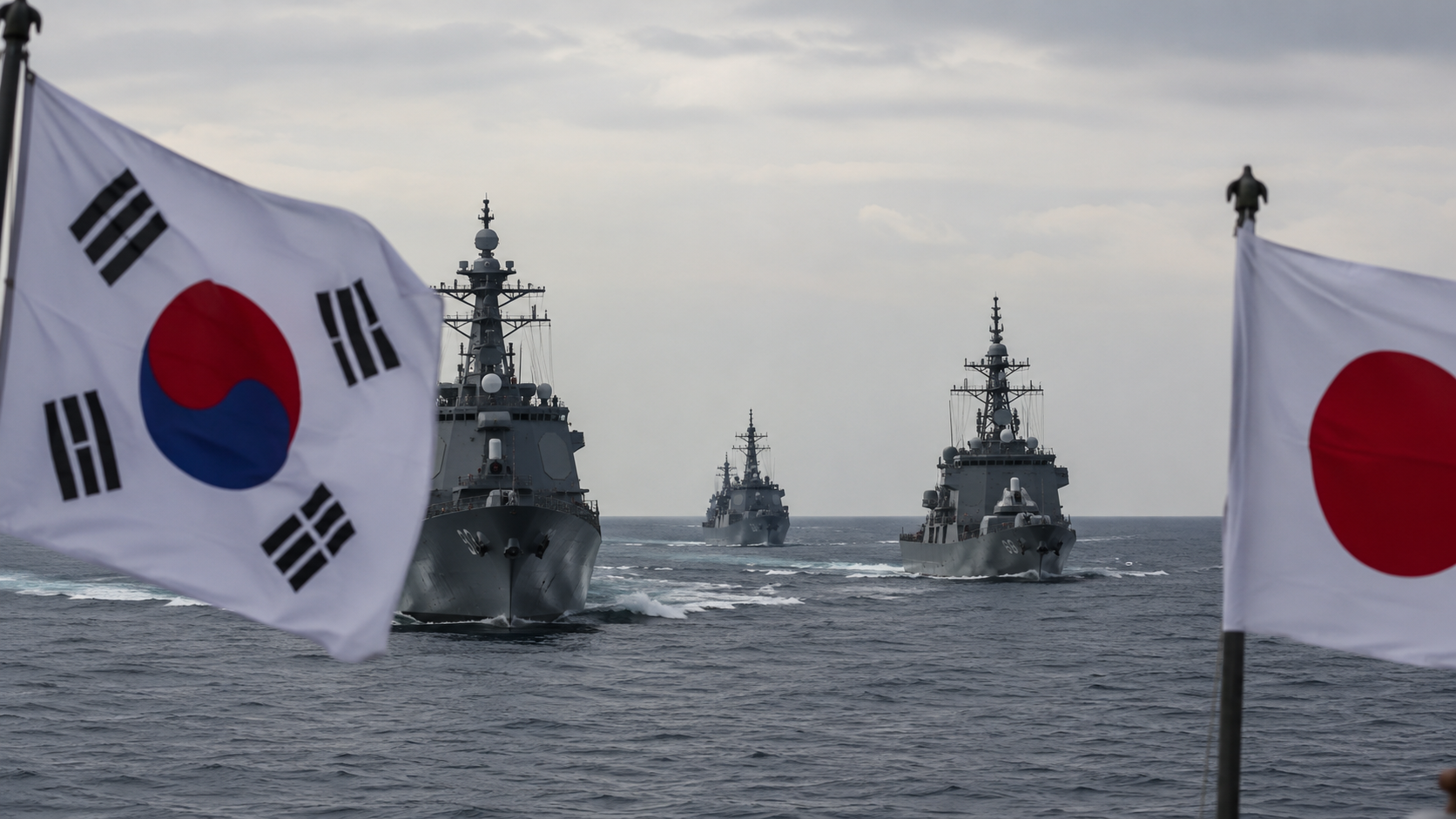
South Korea-Japan defense talks in Seoul brought both governments’ defense chiefs together to advance military cooperation, with a new emphasis on artificial intelligence.
South Korea’s Defense Minister Ahn Gyu-back met Japan’s Defense Minister Koizumi Shinjiro in the South Korean capital, according to a statement from Seoul’s defense ministry cited by Yonhap News Agency.
AI and advanced technology move to the center
The two ministers agreed to keep building momentum in defense collaboration between the neighboring countries, the ministry said. Their discussions highlighted expanding joint efforts in advanced science and technology, particularly AI.
While the statement did not outline specific programs, placing AI at the forefront signals a push toward capabilities increasingly central to modern militaries, including data-driven decision support, surveillance analysis, and autonomous or semi-autonomous systems.
South Korea and Japan have both accelerated investment in high-tech defense tools in recent years, as regional security dynamics have evolved. The Seoul meeting framed technology cooperation as a practical pillar for wider military coordination.
Shared position on denuclearization and lasting peace
According to the ministry, Ahn and Koizumi reaffirmed their commitment to the complete denuclearization of the Korean Peninsula. They also repeated support for achieving a durable peace framework in the region.
Denuclearization remains a long-standing policy objective for South Korea and Japan, both of which view nuclear and missile developments in Northeast Asia as a direct security concern. Reiterating this stance in a ministerial setting indicates that the issue remains central in bilateral defense dialogues.
The statement did not reference any new diplomatic initiative, timeline, or verification approach. Instead, it underscored continuity in goals alongside an expansion of practical cooperation areas.
Trilateral cooperation with the US remains a priority
Beyond bilateral coordination, the ministers agreed on maintaining trilateral cooperation among South Korea, the United States, and Japan to support regional peace and stability, the statement said.
That three-way framework has become a key channel for coordinating security policy, intelligence sharing, and joint readiness in the region. Keeping it active suggests Seoul and Tokyo see value in aligning more closely with Washington while managing shared challenges.
The Seoul meeting also comes against a backdrop of fluctuating South Korea-Japan relations, which have periodically been strained by historical disputes and domestic politics. Defense engagement has often been treated as a stabilizing track, especially when aligned with wider regional security objectives.
For policymakers, the immediate next steps will likely include translating the ministers’ agreement into working-level consultations on AI and other advanced technologies, as well as scheduling follow-on dialogues that connect bilateral projects to the broader trilateral agenda.
Observers will watch whether these commitments produce concrete deliverables—such as joint research pathways, interoperability standards, or coordinated training concepts—while maintaining consistent messaging on denuclearization and regional stability.