

Turkey Establishes Technology Education Hubs Across the Balkans
Turkey has signed agreements with Bosnia-Herzegovina and North Macedonia to launch specialized technology training centers for local youth.
Expanding Regional Technological Cooperation
The Turkish government has formalized agreements to develop science and technology training facilities within Bosnia-Herzegovina and North Macedonia. This initiative involves a collaborative effort between the Turkish Cooperation and Coordination Agency (TİKA), the T3 Foundation, and various academic institutions located in the Balkans.
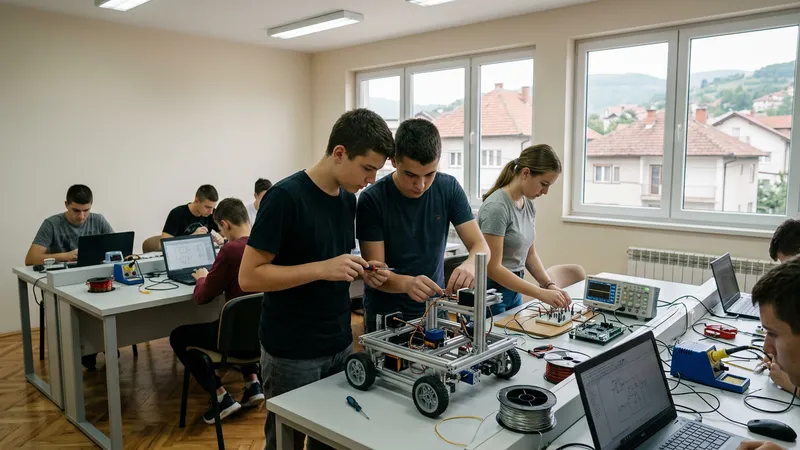
These new educational bases are currently being established in Sarajevo and Skopje. The project aims to provide students with hands-on experience in modern technical fields, serving as a bridge for knowledge transfer between Turkey and its regional partners.
Curriculum Focus and Specialized Training
In Sarajevo, the planned facility will host three distinct workshops dedicated to mathematics, design, and aerospace studies. These programs are designed to offer practical skill development for participants interested in high-growth technical sectors.
Simultaneously, the center in Skopje will operate under a partnership with the International Balkan University. The curriculum there is set to prioritize advanced subjects, including artificial intelligence, robotics, and core engineering disciplines.
Strategic Objectives and Future Outlook
The primary goal of this initiative is to enhance the technical proficiency and project-management capabilities of youth in the region. By fostering these skills, the organizers hope to better prepare local students for the evolving global labor market.
Analysts view these centers as a strategic move to deepen Turkey’s academic and technological influence in the Balkan peninsula. While the project represents a significant investment in human capital, the long-term impact on regional employment and local industry integration remains to be seen.
The success of these hubs will likely depend on sustained funding and the ability to align training programs with the specific needs of the local economies. As the centers prepare to open, stakeholders are monitoring how these partnerships will evolve in the coming years.
More stories
- Russian strikes hit Ukraine plants after Trump ceasefire statement
- Saudi flights divert after Dammam airport targeted
- US said to threaten Ukraine weapons, intelligence aid
- Riyadh airport hit again as Trump weighs US role
- Houthis hit Riyadh airport after 12 killed
- Yemen Cabinet backs Houthi terrorist label after 12 deaths
- AI's Mental Toll? Rapid Adoption Raises Brain Health Questions
- Direct Digital Amends Debt, Adds $1M Revolving Credit Line
- Hormuz talks stall as Trump rejects Iran’s seven-day plan
- CDU Loses Key Seat to AfD in East German Election