Australian War Graves Damaged in Gaza Conflict
Australian Senator David Pocock reported significant damage to Australian war graves in Gaza, likely from Israeli bulldozing, affecting 146 of 263 sites.
Lauren Collins ·
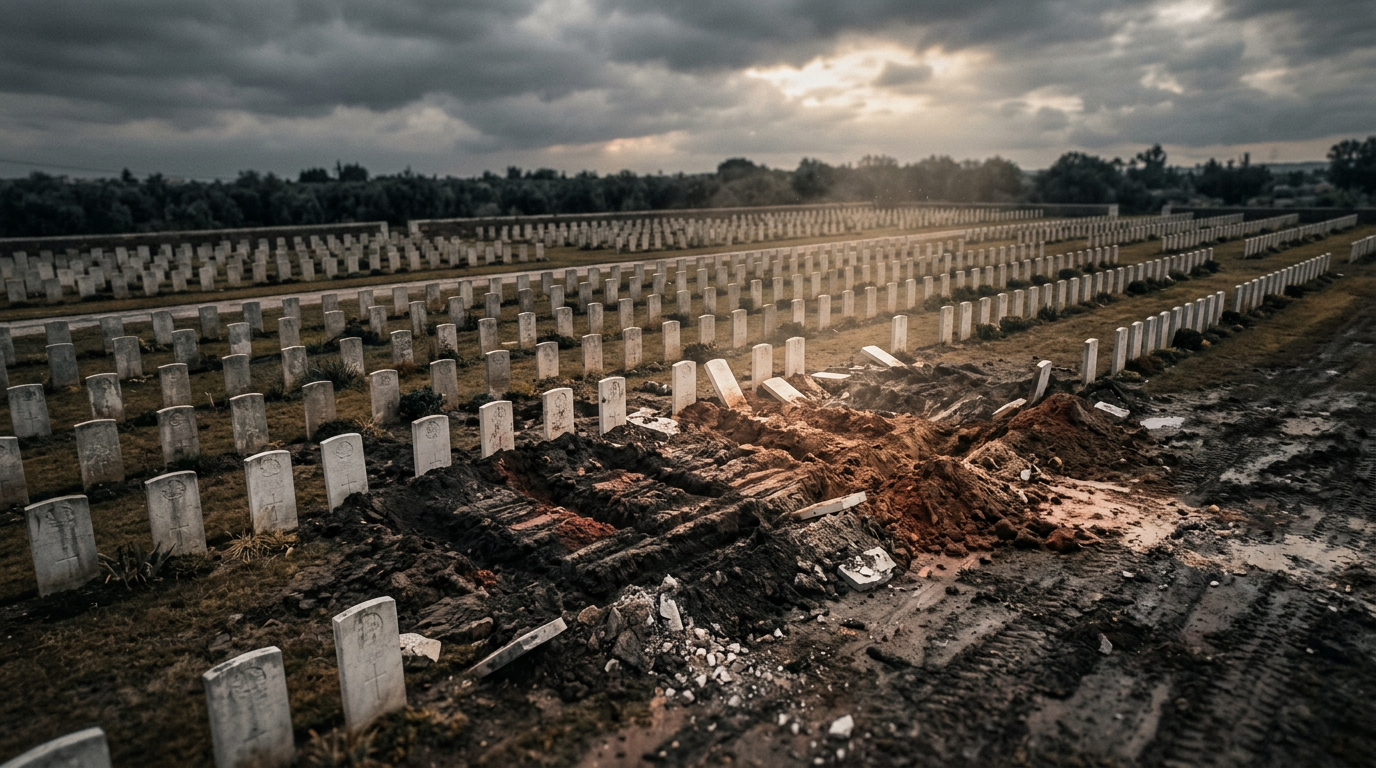
Australian Senator David Pocock recently informed the Australian Parliament that photographic evidence indicates significant damage to Australian war graves located in Gaza. The damage, affecting approximately 146 of 263 graves, primarily from World War I and World War II, occurred in the Tuffah area of Gaza City.
Major General Wade Stothart, director of the Office of Australian War Graves, acknowledged the possibility of human remains being disturbed, though direct confirmation necessitates on-site investigation. The damage, concentrated in the southern section of the cemetery, reportedly took place between April and May of the previous year.
IDF Operations and Cemetery Damage
The Israel Defense Forces (IDF) confirmed conducting "operational measures" in the vicinity of the cemetery during the specified period. These actions were aimed at neutralizing threats from militants reportedly utilizing structures near the site. A Canadian media outlet previously reported that the IDF excavated up to 30 meters deep within the cemetery grounds to dismantle a Hamas tunnel.
International Response and Investigations
Australian families affected by the damage have voiced strong condemnation, seeking both an apology and reparations from the Israeli government. In response, Israeli President Isaac Herzog reportedly pledged to initiate an investigation into the matter with relevant authorities.
Historical Context of War Graves
The Commonwealth War Graves Commission (CWGC) maintains war graves and memorials for military personnel from the Commonwealth nations who died in the two World Wars. These cemeteries are protected under international humanitarian law, specifically the Geneva Conventions, which mandate respect for the dead and their burial sites during armed conflict. The Tuffah cemetery in Gaza holds historical significance as a resting place for soldiers who perished in conflicts dating back over a century.
Outlook and Repair Challenges
Currently, there are no immediate plans or established timelines for the repair of the damaged graves. The ongoing conflict in the region presents significant logistical and security challenges to any potential restoration efforts. The situation underscores the broader complexities of preserving historical sites and respecting international protocols during active military engagements.
Diplomatic and Humanitarian Implications
This incident carries diplomatic implications for relations between Australia and Israel, as well as humanitarian concerns regarding the treatment of war memorials. The call for investigation and reparations highlights the international community's expectation for adherence to conventions protecting cultural and historical sites, even amidst conflict. The long-term resolution will likely depend on the cessation of hostilities and subsequent diplomatic engagement.
Future Monitoring
Further developments will hinge on the progress of the Israeli investigation and any subsequent diplomatic discussions. The Australian government and affected families will likely continue to monitor the situation closely, advocating for accountability and the eventual restoration of the graves.
Implications
Country Impact: The incident could strain diplomatic relations between Australia and Israel, prompting calls for accountability and reparations from Australian officials and families. It highlights the challenges of protecting historical sites in conflict zones.
Industry Impact: No direct industry implications are immediately apparent. However, the broader context of conflict and damage to infrastructure can indirectly affect reconstruction and heritage preservation sectors post-conflict.
Market Impact: No direct market implications are anticipated from this specific incident. Global markets are unlikely to react to localized damage to war graves, though broader geopolitical tensions in the region can influence market sentiment.