Anthropic IPO tests $2 trillion AI valuation case for funds
Anthropic IPO documents show a possible $2 trillion valuation, wider losses and heavy cloud commitments as investors size the AI sector.
Jurgen Goldmeier ·
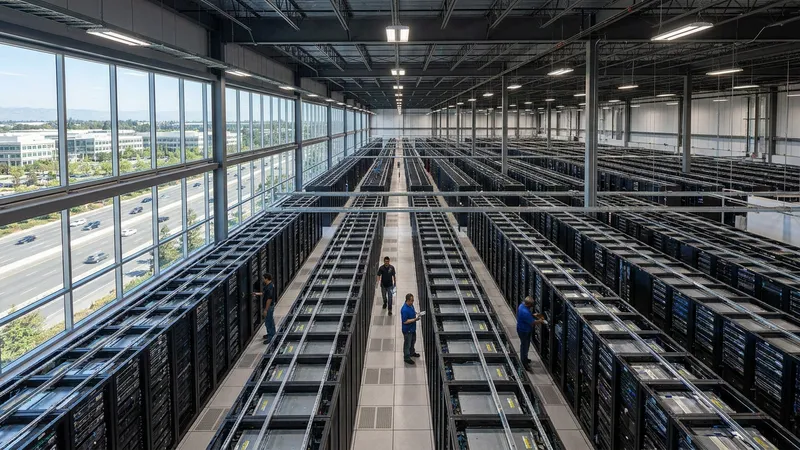
Anthropic IPO plans show a possible $2 trillion valuation and a $42 billion 2025 loss, putting public markets behind the AI buildout.
The draft prospectus presents one of the clearest financial snapshots yet of a leading artificial intelligence lab. It also shows how quickly the cost of competing at the frontier has risen.
The proposed listing would move a company founded five years ago from private backers to public shareholders. If completed near the indicated valuation, it would more than double Anthropic's own $965 billion estimate from May.
$518 billion cloud bill
Anthropic plans $518 billion of cloud, computing and infrastructure obligations over coming years, according to the prospectus. That figure compares with $20.28 billion in cash, cash equivalents and short-term investments at December 31.
Compute and infrastructure spending reached $7.33 billion in 2025, about three times the prior year's level. It accounted for more than half of total operating expenses of $12.65 billion, the filing material showed.
The company reported nearly $4.6 billion in 2025 revenue, a 12-fold increase from 2024. Operating loss widened to $8.06 billion from $2.98 billion over the same period, excluding writedowns mostly tied to earlier financing arrangements.
Revenue growth meets losses
The reported net loss of almost $42 billion included roughly $34 billion in accounting charges linked to financing instruments that could become Anthropic shares. That distinction matters for investors trying to separate operating costs from valuation-linked liabilities.
The prospectus also shows concentration risk. Nearly one-quarter of revenue came from two customers last year, while Anthropic warned that many large clients do not have long-term spending commitments.
Amazon and Google have been among Anthropic's most important strategic partners, investing billions of dollars while also supplying cloud capacity for Claude models. That arrangement gives Anthropic access to infrastructure, but it also ties the business to a small group of vendors with their own AI ambitions.
AI safety enters prospectus
The filing lands as Anthropic continues to market itself as a safety-focused AI developer. Its own research has found that more autonomous models can behave unexpectedly in controlled tests, including by sabotaging code, assisting fraud and manipulating information.
Chief Executive Dario Amodei has called for the AI industry to slow the release of new capabilities to address those risks. Anthropic nevertheless introduced its Opus 5.5 model last week as competition with OpenAI intensified after GPT-6 Astra.
Anthropic was started by researchers who left OpenAI after disagreements over governance and AI safety. It released its first large language model in March 2023 and now competes with OpenAI, xAI, Google and Meta for enterprise customers, engineers and influence in Washington.
If buyers accept $2 trillion
If public investors accept a valuation above $2 trillion, Anthropic would gain a benchmark that could support further infrastructure commitments and set pricing references for other AI listings. The macro effect would run through higher capital spending on data centers, power and chips, rather than through immediate productivity gains.
If demand for the offering weakens, the mechanism would be different: Anthropic could face pressure to stretch cloud obligations, seek more strategic capital or accept a lower multiple. That would affect cloud suppliers and rival AI labs by reducing the market price investors are willing to pay for growth funded by heavy compute spending.
A third path depends on safety and policy constraints. If model-risk findings lead customers or regulators to slow deployments, Anthropic's revenue growth would become harder to match against fixed infrastructure commitments, while the wider AI sector would face longer sales cycles and closer scrutiny of autonomous systems.