Antarctica temperature swings set new cold and warm marks
Antarctica temperature swings hit -119.4°F at Concordia on July 18, 2026, after 59.7°F at Esperanza in June, officials said.
Atlas Newsdesk ·
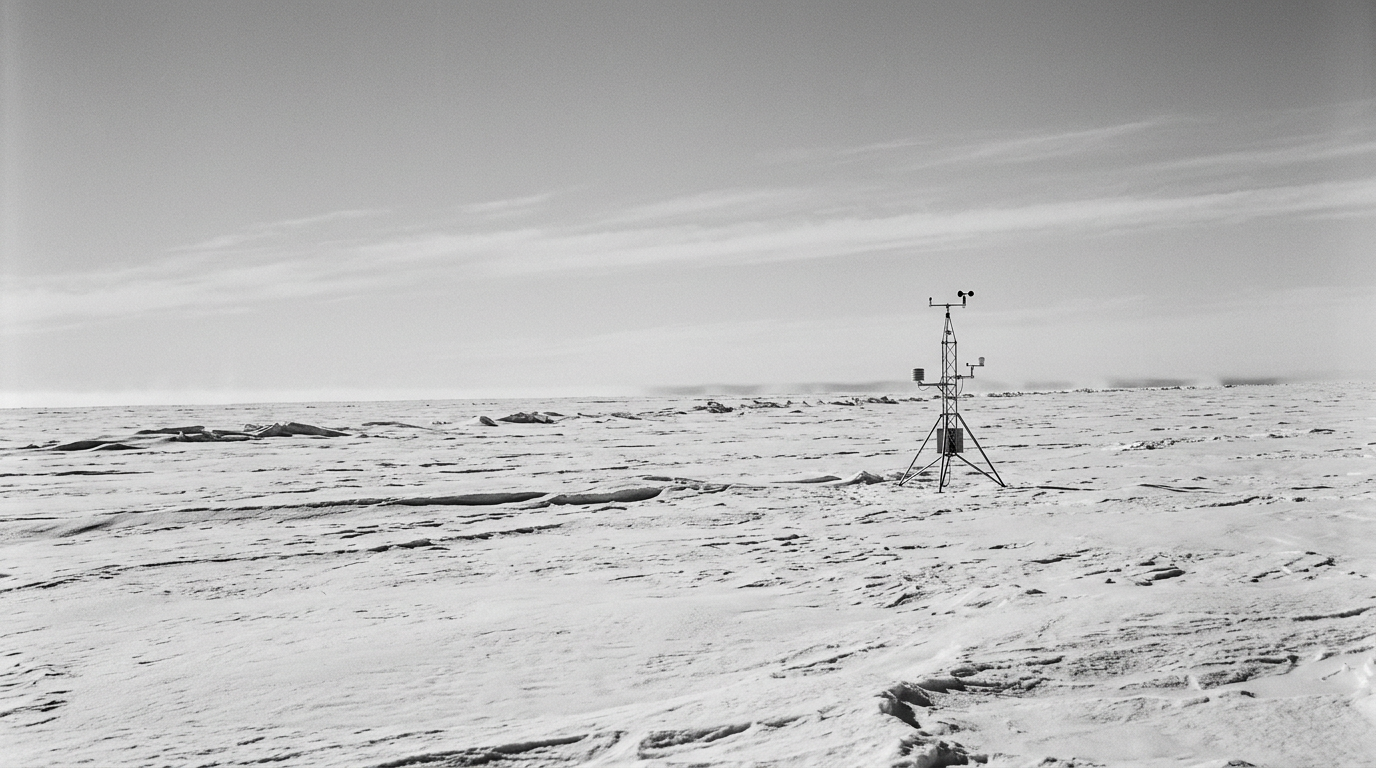
Antarctica posted sharp temperature contrasts in the 2026 winter season, with one inland station logging the coldest reading on Earth since 2012 and a coastal-area base reporting unusually warm conditions weeks earlier, according to scientific assessments.
The Concordia research station in the Antarctic interior measured minus 119.4 degrees Fahrenheit on July 18, 2026. Officials said the station sits on the Antarctic Plateau, about 600 miles from the coastline.
Cold extreme at Concordia marks a post-2012 low
The July 18 reading at Concordia was described as the lowest temperature recorded on Earth since 2012. The station’s location deep in the interior places it in one of the continent’s coldest environments, where wintertime conditions can be especially severe.
While the single-day measurement is notable, scientific assessments stressed that such localized extremes are not, by themselves, a measure of the planet’s overall climate direction. Officials said the broader context remains shaped by longer-term warming trends.
Antarctic Plateau setting and the reach of polar air Concordia’s placement on the high Antarctic Plateau means the station can be affected by intense pools of cold air. The July event was presented as an example of how extreme conditions can still occur even as the larger climate system changes.
Earlier warmth on the Antarctic Peninsula added to volatility The extreme cold arrived after a stretch of record-high winter temperatures on the Antarctic Peninsula. In June 2026, the Esperanza base reported a temperature of 59.7 degrees Fahrenheit, which was roughly 36 degrees above the seasonal norm, officials said.
The juxtaposition of these readings—one exceptionally warm for winter and another exceptionally cold—was cited as evidence of strong atmospheric volatility across the region. Scientific assessments described the patterns as divergent, underscoring that conditions can vary sharply across Antarctica at the same time.
Why short-term swings do not settle the long-term question Scientific assessments stated that an extreme cold event in one area does not cancel wider observations tied to global warming. The continent continues to see long-term ice loss and warming of the Southern Ocean, officials said.
Implications flagged for ecosystems and planning
Officials said the ongoing environmental shifts carry risks for regional ecosystems. They also said the combination of long-term change and episodic extremes can complicate climate adaptation strategies, especially when used to inform infrastructure decisions and policy planning over multi-decade time horizons.
Scientists emphasized that the most meaningful signals come from sustained observations of ice conditions and ocean temperatures, rather than from any single cold snap or warm spike. Even so, the 2026 readings at Concordia and Esperanza were presented as prominent markers of the region’s ability to produce dramatic extremes within a short period.