Algebris Investments Bets Against Turkey Bonds Amid Economic Strain
Algebris Investments buys default protection on Turkey bonds due to heightened economic risks from regional conflicts and domestic financial instability.
Claire Dubois ·
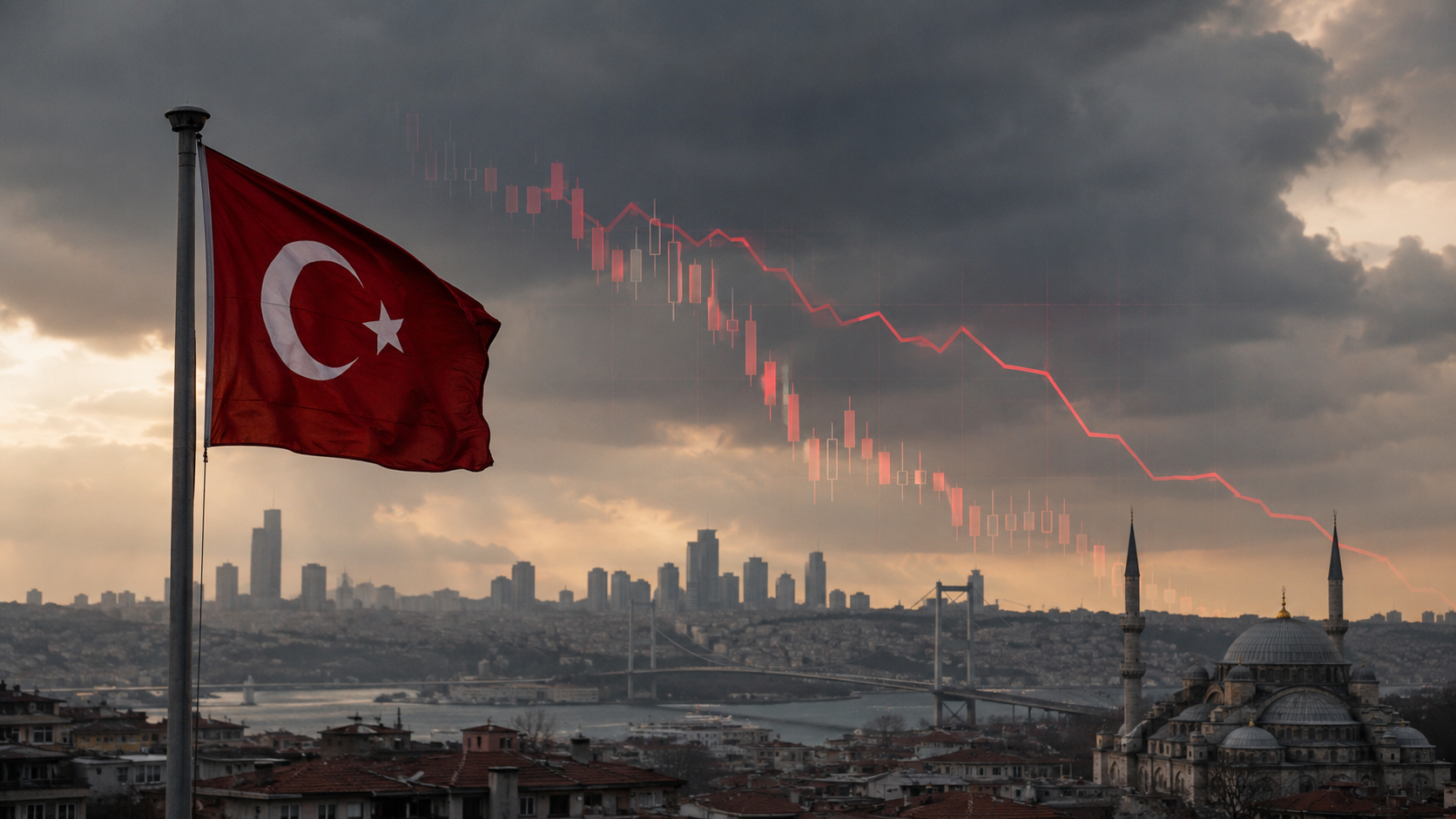
Algebris Investments is actively seeking default protection on Turkish sovereign bonds, reflecting increasing concerns over the nation's economic stability. The firm's assessment indicates an elevated probability of a credit event, largely attributed to escalating strains amplified by the ongoing conflict in Iran.
Gabriele Foà, who manages significant assets for Algebris, highlighted Turkey's precarious economic position. Key factors contributing to this fragility include a widening current account deficit, surging energy prices, and dwindling foreign reserves, all of which heighten the risk of dollarization within the economy.
Worsening Economic Indicators
Turkey's economic landscape presents a challenging outlook for investors, according to Algebris. Mr. Foà noted that current valuations for Turkish credit and fixed income offer insufficient compensation for potential risks over the coming years. This perspective suggests a strategic shift from acquiring to divesting Turkish assets.
Market data supports a bearish trend among various investors regarding Turkish debt. Since late February, foreign holdings of local-currency securities have decreased by nearly 40% in value, according to central bank figures. This decline coincides with the intensification of regional geopolitical tensions.
Underperforming Debt Market
Turkish lira bonds have delivered a 3.2% loss this year, contrasting with a 1.1% gain across broader emerging markets. Similarly, Turkey's dollar-denominated sovereign debt recorded a 0.3% loss, while developing country debt on average saw a 1.5% gain. These figures underscore Turkey's underperformance in the global debt market.
The nation's gross foreign exchange reserves have also seen a substantial reduction, falling by one-third this year to $53 billion by May 29. This represents the lowest level since June 2021, further illustrating the severe pressure on the country's financial buffers. Low reserves compared to local dollar deposits and total debt obligations create a vulnerable scenario.
Asymmetric Risk Profile
Despite a lack of immediate distress signs in the credit market, Mr. Foà emphasized that prevailing yields do not adequately compensate investors for the inherent risks. He described credit default swaps (CDS) as an "extremely asymmetric" trade, noting that Turkish CDS, currently at 250 basis points, could surge significantly. Potential upward movements could see levels reach 350, 450, or even 550 basis points if default risk escalates.
Conversely, the current low reserve levels make a substantial drop in CDS to 150 basis points unlikely. While a default in Turkey is considered challenging to predict, Mr. Foà stated it is not an outcome that can be entirely discounted. The combination of low reserves and high debt obligations creates conditions where such an event, though difficult, remains a possibility.